
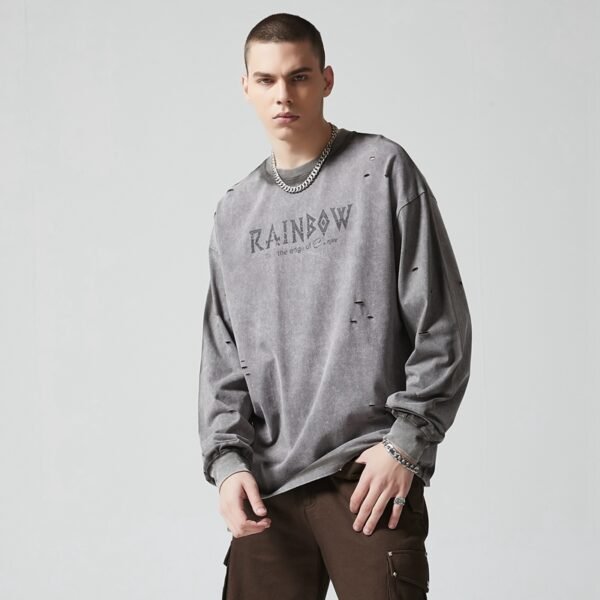
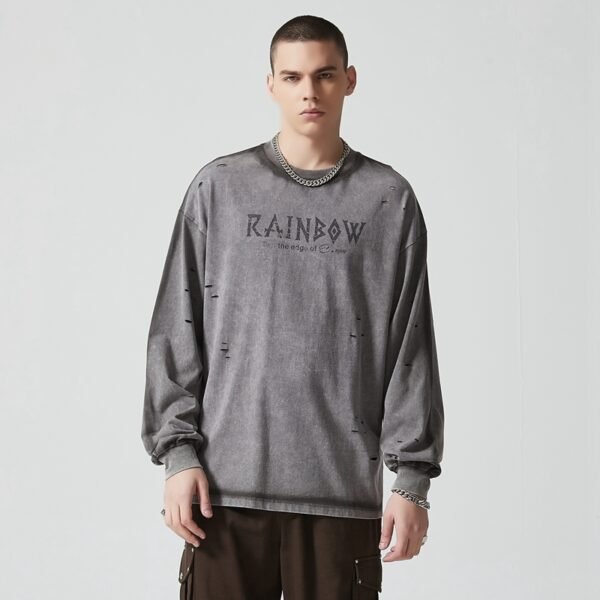
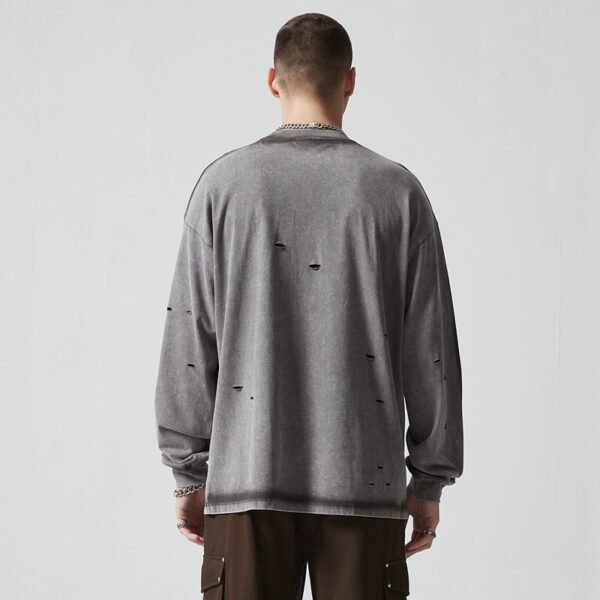
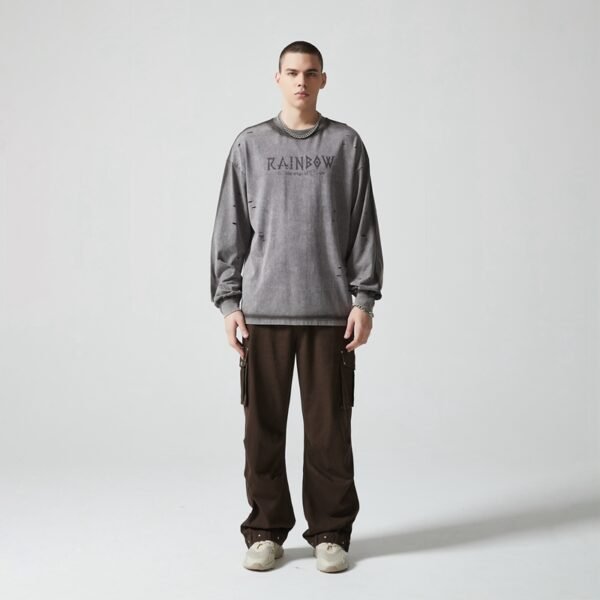





This long-sleeve T-shirt relies on washed character, distressed openings, and printed contrast, but those treatments can change the fabric weight after processing. The buyer should approve finished GSM separately from pre-process fabric weight so the final hand, drape, opacity, and graphic balance remain commercially consistent.
Why Finished GSM Is the Commercial Reference
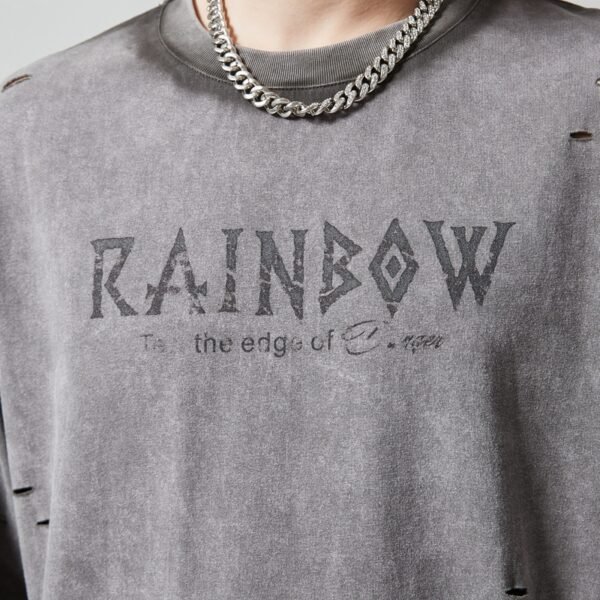
Fabric weight can change when washing, fading, drying, and distressing remove surface material or alter moisture content. The supplied image shows a softened grey body, so the buyer should judge the finished garment rather than assuming the loom-state specification predicts final drape.
Pre-process GSM remains useful for material selection, but it is not the final customer experience. Finished GSM should be recorded after the complete treatment sequence, alongside hand feel, opacity, recovery, and dimensional measurements, before the style is approved for production.
Reading the Washed Surface
The image presents tonal variation across the grey knit rather than a flat, untouched surface. That appearance should be assessed for evenness, contrast, and placement because wash intensity influences both perceived age and the visibility of the printed chest graphic.
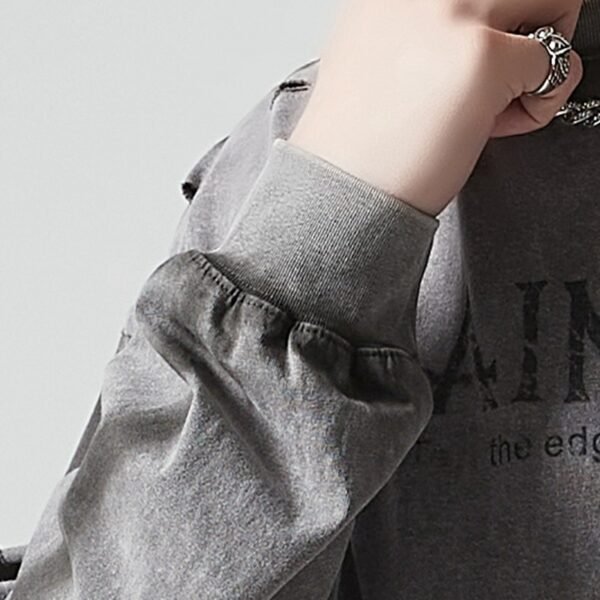
Sun-faded character may require a different process balance from an all-over wash. Buyers should identify whether the desired effect is broad tonal softening, localized fading, or both, then confirm that the selected process does not overwhelm the artwork or ribbed neckline.
Accounting for Distress Loss
Small openings near the shoulder and sleeve areas create deliberate wear points, but every opening removes structure from the fabric. Their size, edge condition, and distance from seams should therefore be documented with the finished GSM and not treated as decorative details alone.
A lighter post-process fabric may improve softness and worn character while reducing perceived substance. The buyer must decide whether the final garment should feel lightweight and relaxed or retain more body, then set the wash and distress target accordingly.
Production Workflow at VeeWen
VeeWen can structure development around two weight checkpoints: record the selected fabric before treatment, then measure the completed garment after washing, fading, distressing, and drying. This separates material choice from process impact within the product-development workflow.
At the approval review, VeeWen compares finished GSM with the buyer's target hand, drape, opacity, and artwork presentation. The style proceeds only after the post-process result is accepted, with any remaining composition, measurement, or performance details clearly marked To Confirm.
Balancing Weight and Graphic Clarity
A heavier starting fabric may preserve substance through processing, but it can produce a firmer hand or stronger contrast around distressed openings. A lighter base may achieve a softer vintage effect while making opacity and graphic saturation more sensitive.
The buyer should evaluate the whole garment after treatment, including the rib collar, sleeves, body drape, and chest print. Selecting a pre-process weight without reviewing finished GSM risks approving a specification that does not represent the delivered product experience.
The Final Weight Approval
Before production release, weigh the finished garment under a consistent measurement method and compare it with the approved sample. Review the grey wash level, fade distribution, distress placement, collar appearance, sleeve balance, and printed artwork together rather than isolating GSM.
Authorize the style when the buyer accepts the finished weight and visual treatment as one integrated result. That checkpoint gives VeeWen a usable reorder reference and keeps the MOQ of 100 pieces per style tied to an agreed post-process standard.
Buyer Questions
Why should finished GSM be approved separately?
Washing, fading, drying, and distressing can alter weight and handle. Finished GSM reflects the garment buyers receive, while pre-process GSM describes only the starting material.
Does the image confirm a specific fabric weight?
No. The image communicates surface appearance and construction cues, but exact GSM, fiber composition, opacity, and shrinkage require measurement or source confirmation.
What wash details need buyer approval?
Approve tonal depth, fade distribution, hand feel, collar contrast, distress intensity, artwork clarity, and the relationship between finished weight and intended wearing experience.
What is the minimum order quantity?
The exact commercial minimum is MOQ: 100 pieces per style. Production planning should follow approval of the finished garment and documented post-process specifications.
Confirm Finished Weight Before Production
Share the target wash, artwork, measurements, and starting fabric reference with VeeWen, then approve finished GSM and appearance after processing before placing the style order.



Reviews
There are no reviews yet.