
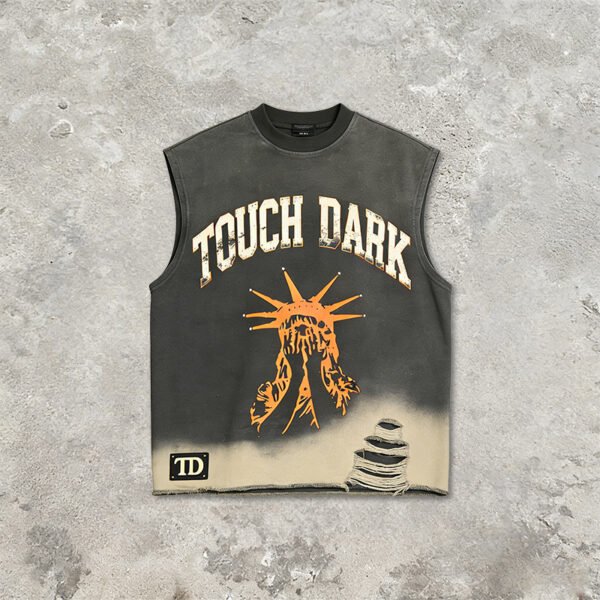
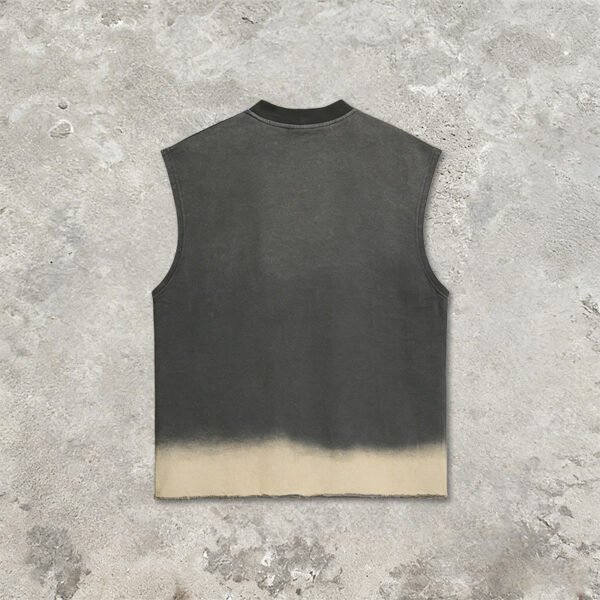
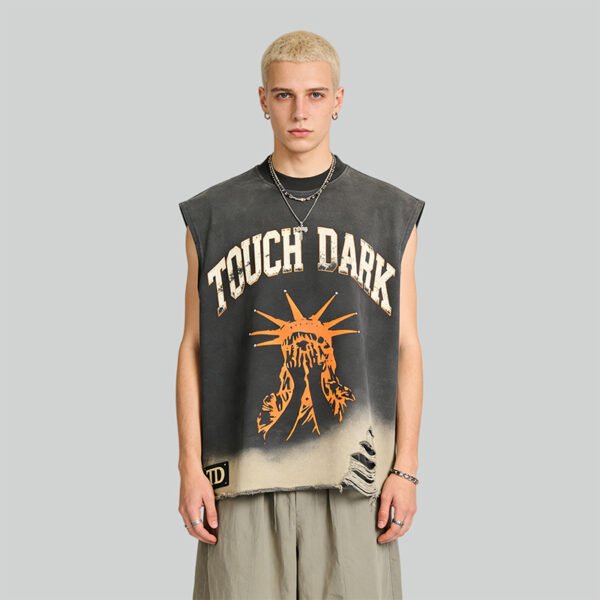
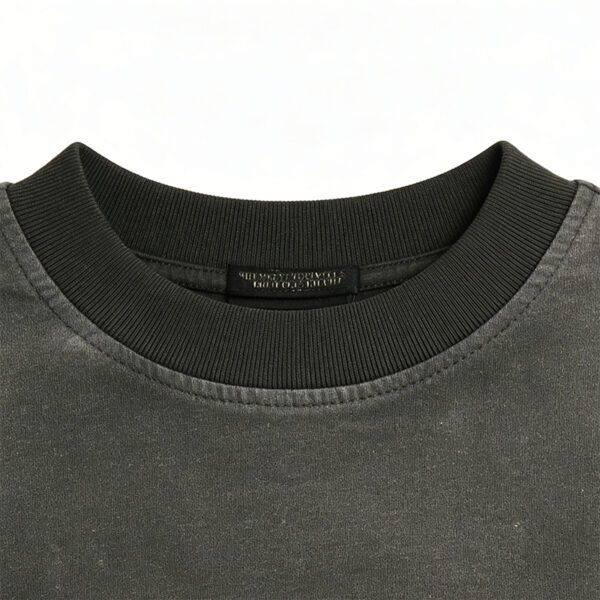




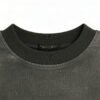
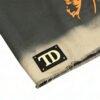

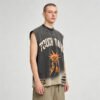
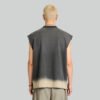
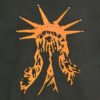
This tank top is developed around controlled utility placement. Its centered graphic and distressed lower body create a narrow visual margin for pockets, so bag depth and opening geometry must support access while protecting the intended washed, irregular silhouette during wear and production.
The Pocket Must Respect the Graphic Field
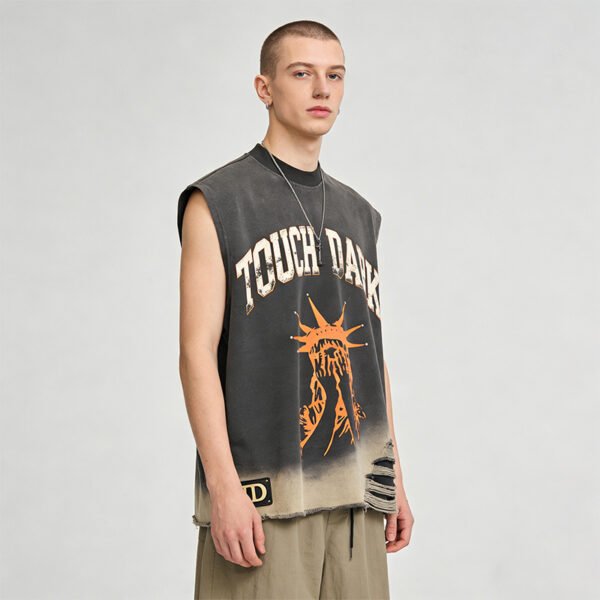
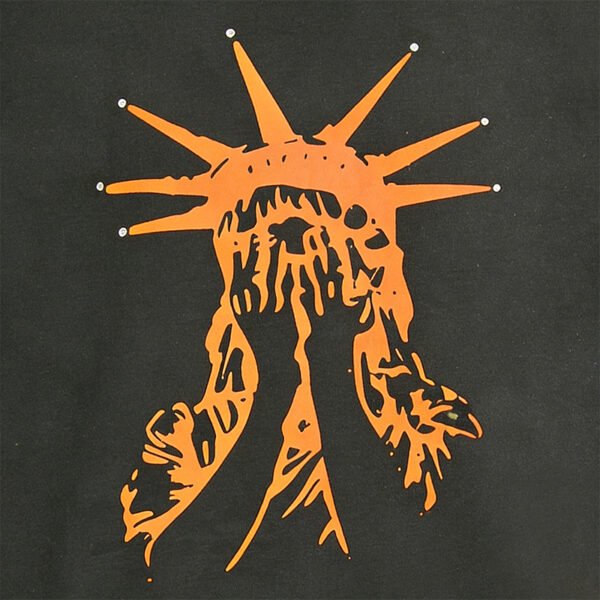
The front graphic occupies the central chest and functions as the garment's primary recognition point. A pocket opening placed too high or too wide would divide that field, while excessive depth could pull the body forward and alter the clean visual read.
A more controlled approach places the opening below the main artwork or shifts it toward a side seam, depending on the approved block. The decision should be tested on the actual print scale, because graphic proportions determine how much uninterrupted fabric remains.
Depth Controls Wearability and Shape
Pocket-bag depth affects more than storage. A deep bag introduces weight at the lower body, potentially stretching the tank and changing how the sprayed contrast falls across the wearer's front. A shallow bag reduces distortion but may limit practical hand entry.
For this silhouette, the development sample should compare at least two depths using the same fabric and wash route. Review should include hand clearance, bag swing, hem alignment, and whether the lower distressed opening remains visually intentional after repeated handling.
Opening Geometry Defines the Edge
A straight opening creates a disciplined counterpoint to the irregular distressing, whereas a curved or angled opening can echo the garment's worn, directional character. The choice also changes seam stress, hand access, and how the pocket remains closed during movement.
Because the image shows a strong lower-body transition, the opening should avoid cutting directly across the most active spray zone. A restrained shape near a stable seam line can keep the pocket functional while allowing the wash and abrasion effects to remain legible.
Distressing Requires a Protected Construction Zone
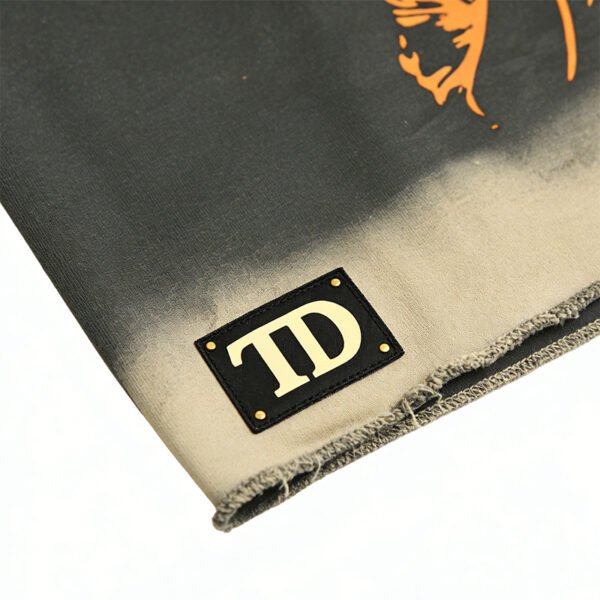
The visible lower distressing appears concentrated near the hem and side area, where abrasion can expose internal layers. Pocket bags introduced into that zone need secure attachment points and enough clearance from cut edges to prevent the opening from becoming fragile.
VeeWen's development review should map the distress boundary before finalizing pocket patterns. The sample team can then separate decorative abrasion from load-bearing seams, confirming that the pocket opening does not unintentionally accelerate tearing during fitting, finishing, or packing.
Workflow Checkpoint for VeeWen Development
VeeWen should convert the visual reference into a measurement sheet covering opening angle, finished opening length, bag depth, side-seam position, and distance from the distressed hem. These measurements create a repeatable link between the approved artwork, wash map, and cutting pattern.
The approval checkpoint is a physical fit review using the intended print, wash, and distress sequence together. Buyers should inspect access and silhouette after finishing, because pocket geometry that works on an unfinished sample may shift when the body softens.
Commercial Approval Before Production
The buyer's final decision is whether utility adds value without weakening the tank's graphic composition or lower-edge character. Approval should record the chosen opening geometry, bag depth, reinforcement method, and acceptable variation around distressed areas.
Once those points are signed off, the style can move toward the stated MOQ: 100 pieces per style. The production brief should retain the approved pocket measurements as controlled details, preventing substitutions that change balance, comfort, or the intended vintage appearance.
Buyer Questions
What fabric should be used for this tank top?
The supplied evidence does not verify fiber composition or GSM. VeeWen should recommend options after reviewing hand feel, wash response, print clarity, and the required pocket stability.
Can the distressed lower body be customized?
Yes, the distress map can be adjusted during development, subject to approval of abrasion locations, edge security, wash interaction, and the resulting appearance across the production size range.
How should the pocket be approved?
Approve the finished opening length, angle, side placement, bag depth, hand clearance, and reinforcement after the garment receives its intended wash and distress treatment.
What is the minimum order quantity?
The commercial minimum is MOQ: 100 pieces per style. Final development should establish the approved measurement sheet and finishing tolerances before production quantities are confirmed.
Approve the Utility Geometry
Send the target measurements, artwork scale, and preferred storage function to VeeWen for a focused sample review covering pocket access, distress placement, wash response, and finished silhouette control.



Reviews
There are no reviews yet.