


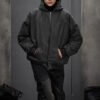


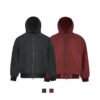


This custom bomber jacket is developed around fabric relaxation before cutting, because a washed cotton sweatshirt base must settle before oversized panels, ribbed edges, and zipper placements are finalized. The supplied image supports a dark short silhouette with broad sleeves, hand pockets, hood structure, and visible utility detailing.
Why Relaxation Comes Before the Marker
Cotton sweatshirt fabric can change length and width when tension from knitting, rolling, storage, and handling is released. Relaxing the full-width material before pattern placement gives the marker a more stable reference, especially for this jacket's wide front, back, sleeves, and hood.
The image shows large dark panels whose zipper and pocket openings must remain visually centered after washing. Cutting directly from tensioned fabric can shift those relationships, creating uneven fronts, mismatched pocket heights, or sleeve imbalance that becomes obvious against the monochrome surface.
Oversized Proportions Need Dimensional Discipline
An oversized bomber amplifies small dimensional changes because extra width and sleeve volume create more fabric area around every seam. Pre-relaxation helps VeeWen evaluate the settled panel dimensions before grading, allowing the intended dropped shoulder and shortened body to remain proportionally connected.
The supplied image shows sleeves extending broadly from low shoulder points and a compact ribbed hem holding the body shape. Those opposing volumes require controlled ease: excessive relaxation may reduce room, while insufficient relaxation may produce a larger finished garment than approved.
Zipper and Pocket Alignment
The central zipper is a strong vertical reference across the jacket, while angled hand pockets interrupt the lower front. Once the fabric has relaxed, VeeWen can cut both fronts from a dependable width and position pocket openings against the zipper without relying on unstable pre-cut measurements.
Visible pocket bags, ribbed cuffs, and a lower hem create multiple joining interfaces around the body. If the front panels settle unevenly after cutting, pocket symmetry and hem balance can drift. A relaxation check therefore protects both functional access and the clean streetwear presentation.
Wash Appearance and Shrinkage Trade-Offs
A vintage-washed charcoal surface is part of the product's identity, but washing introduces dimensional movement alongside color change. Relaxation before cutting does not eliminate later shrinkage; it separates initial fabric release from wash effects, making the development sample easier to interpret and adjust.
The image's tonal fading highlights creases, seam lines, and panel transitions rather than hiding them. Buyers should decide whether the approved appearance allows natural variation. Tighter dimensional tolerances may require additional testing, while a softer tolerance can preserve more organic wash character.
VeeWen Development Checkpoint
VeeWen can place fabric relaxation into the development sequence before pattern correction, marker planning, and cut-panel approval. The first checkpoint should record the material's settled width and length, then compare a pre-relaxation panel against a relaxed panel using the jacket's front and sleeve blocks.
After relaxation, the team can review zipper position, pocket spacing, hood attachment, rib openings, and body balance on a pilot sample. The buyer's approval should confirm the settled pattern measurements and acceptable wash movement before size grading and the MOQ: 100 pieces per style production order.
Approval Criteria for Production
Approve this style when the relaxed fabric supports the intended oversized measurements, both front panels mirror accurately, sleeve volume remains balanced, and ribbed components recover the compact hem and cuff shape shown in the image.
The production file should also identify the accepted charcoal shade range, wash appearance, zipper specification, pocket dimensions, hood construction, and measurement tolerances. If any point remains unresolved, hold the marker and request a revised sample before commercial cutting begins.
Buyer Questions
Why relax the fabric before cutting this bomber jacket?
Relaxation releases handling tension before marking, creating a more dependable dimensional base for wide panels, oversized sleeves, zipper alignment, pockets, hood construction, and final pattern corrections.
Does pre-relaxation prevent all wash shrinkage?
No. It separates initial tension release from later laundering movement, helping the team measure and manage both effects rather than treating combined distortion as one unexplained change.
What should the buyer approve first?
Approve the relaxed fabric measurements, pilot pattern, zipper and pocket alignment, rib proportions, and acceptable washed appearance before grading the sizes or authorizing commercial cutting.
Can VeeWen produce this style at a small commercial minimum?
Yes. The stated commercial minimum is MOQ: 100 pieces per style, subject to confirmed specifications, approved development details, and the final production brief.
Approve the Relaxed-Fabric Pilot
Send your measurement chart, wash direction, branding requirements, and target assortment to VeeWen for a relaxation-led bomber development review and a clear pre-production approval checkpoint.


Reviews
There are no reviews yet.