












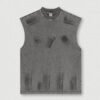


This tank top is developed around seam discipline in a heavy, washed sleeveless silhouette. Its broad shoulders, deep armholes, dense dark surface, and defined hem make small alignment errors visible. VeeWen can translate the visual reference into a controlled pattern, sewing sequence, wash review, and approval checkpoint.
Why Seam Accuracy Leads This Development
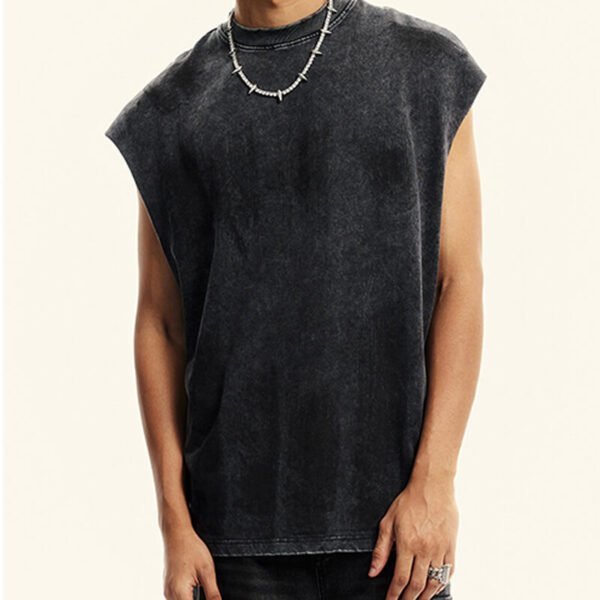
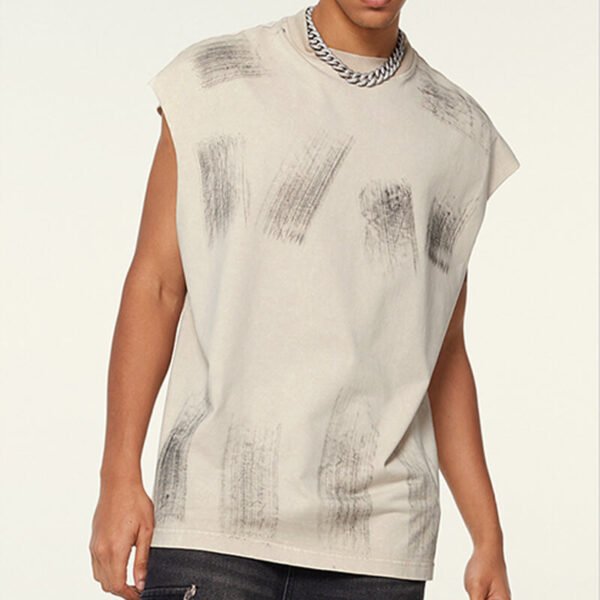
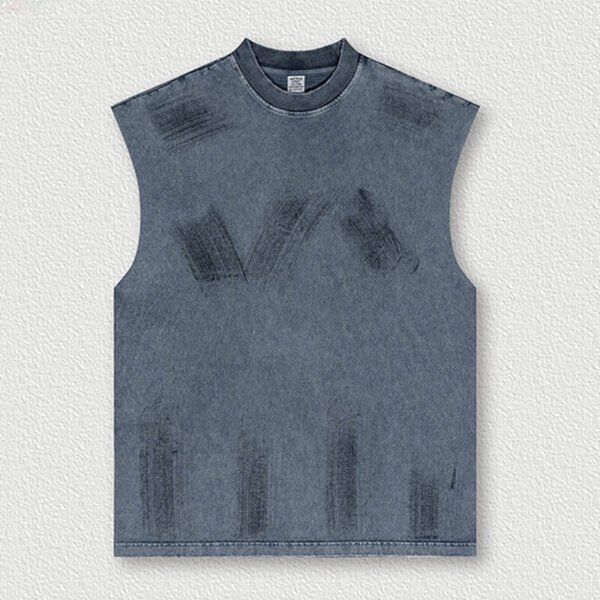
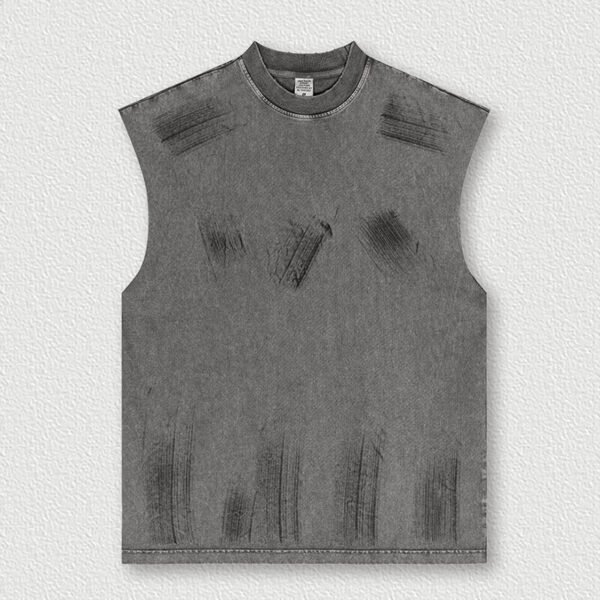
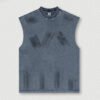
The supplied image presents a nearly monochrome tank, so construction lines carry much of the visual definition. On a dark washed surface, armhole edges, shoulder transitions, and any tonal blocking must remain deliberate rather than appearing accidentally uneven.
The manufacturing axis is therefore broader than matching a color. It concerns how accurately each boundary survives cutting, joining, pressing, and washing. A buyer should treat the first sample as a registration test for shape, seam placement, and controlled tonal contrast.
Reading the Sleeveless Pattern
The image shows broad shoulder extensions flowing into deeply opened armholes, with the body hanging away from the torso. That geometry creates multiple visible curves, where even a small left-right difference can change the garment's balance when viewed from the front.
Pattern development should lock the shoulder width, armhole depth, side seam angle, and hem level together. If color-block panels are introduced, their boundaries should follow those landmarks, preserving a clean visual rhythm instead of interrupting the oversized silhouette.
Managing Heavy Jersey Behavior
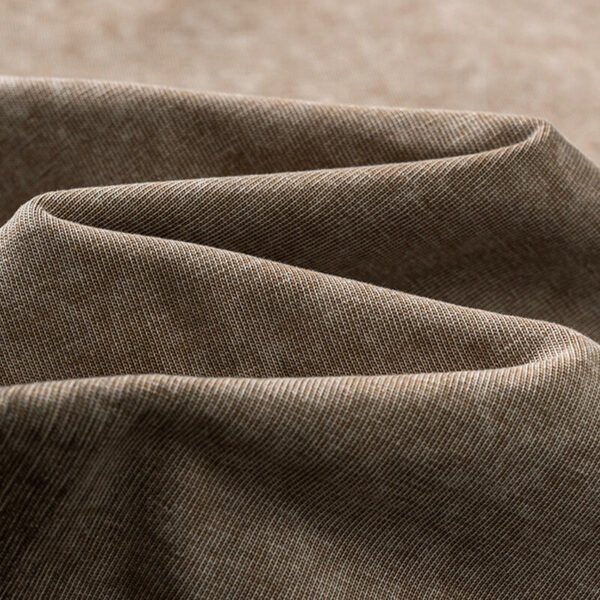
The source wording identifies 310GSM and 100% cotton, while the image shows a substantial body rather than a lightweight athletic tank. Heavier jersey can hold a stronger outline, but it also places more demand on seam allowance control and edge stability.
VeeWen's development review should check whether the selected knit rolls, stretches, or distorts around the armholes during handling. The buyer should approve the fabric hand together with the seam appearance, because a visually accurate pattern can still fail if the material relaxes unpredictably.
Wash and Tonal Registration
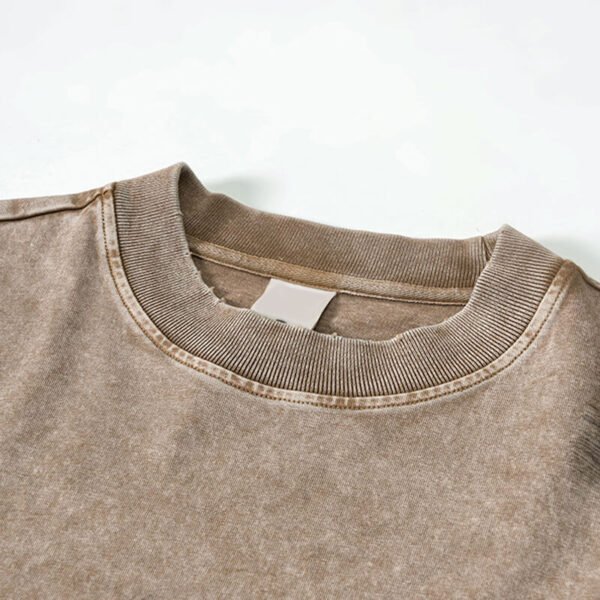
The washed finish appears intentionally mottled across the dark body, creating character without a separate printed graphic. That surface variation can make panel boundaries appear sharper or softer after treatment, depending on how the garment is placed and processed.
For color-block development, wash panels should be reviewed for consistent placement and acceptable shade interaction. VeeWen should compare pre-wash and post-wash samples at the same viewing distance, recording whether seams remain aligned and whether the finish supports the intended contrast.
VeeWen Workflow Checkpoint
VeeWen can begin by converting the reference into a measurement sheet covering shoulder width, armhole curve, body length, side seam, hem, and proposed block boundaries. The pattern room then builds a sample whose seam order reflects the final production construction.
At the fitting and wash review, the buyer should inspect front symmetry, armhole smoothness, hem registration, and tonal movement around joined panels. Approval should be recorded only when the washed sample confirms both the visual hierarchy and the intended oversized proportion.
Trade-Offs Before Bulk Approval
A heavier body may create a more substantial drape and stronger streetwear presence, but it can reduce ease around the armhole if the opening is not balanced. A more pronounced wash can add depth, while also increasing shade variation between panels or sizes.
The commercial decision is to prioritize the desired structure and surface character without allowing seam inconsistency to look accidental. Confirm the approved fabric, wash recipe, panel map, and graded measurements before placing the style at MOQ: 100 pieces per style.
Buyer Questions
Is the 310GSM specification confirmed?
The source title states 310GSM and 100% cotton. Treat both as reference information until VeeWen confirms the selected fabric and finished production specification.
Can this tank include contrasting panels?
Yes, the development can evaluate contrasting or tonal panels, but seam boundaries, wash interaction, and graded placement should receive buyer approval before bulk production.
What should the first sample prove?
The first sample should prove armhole symmetry, shoulder proportion, hem alignment, seam registration, fabric behavior, and whether the washed finish supports the intended tonal construction.
What is the minimum order?
VeeWen's exact commercial minimum is MOQ: 100 pieces per style. Final quantities, color divisions, and production details should be confirmed during order planning.
Approve the Washed Seam Direction
Send your preferred measurements, color-block map, label details, and wash target to VeeWen. Request a development review focused on seam registration, then approve the graded specification before production planning.


Reviews
There are no reviews yet.