




This baseball cap is built around repeatability, not simply a distressed appearance. The supplied image shows uneven charcoal fading, a worn adjustment strap, and a metal buckle, making shade control the core development task. VeeWen should define acceptable variation without removing the aged character that gives the cap purpose.
Wash Variation Must Become a Standard
The cap's charcoal surface is visibly uneven, with lighter areas across the crown and brim. That variation creates the aged direction, but without defined limits, two production lots can appear unrelated and undermine a coordinated assortment or reliable reorder expectation.
A useful wash standard should describe the approved shade range, contrast between crown and brim, and acceptable abrasion locations. The image supplies a visual starting point, while development must convert that impression into repeatable references that production teams can inspect consistently.
Panel Geometry Influences Shade Perception
Curved panels do not receive washing evenly because seams, folds, and exposed edges change abrasion and dye response. A crown may appear lighter than the brim even under one recipe, so panel geometry must be considered when judging whether variation is intentional.
The supplied image shows a darker, textured crown field surrounding a lighter strap area, with additional tonal shifts near the brim. Buyers should review the cap from front, side, and rear views before defining the acceptable visual balance for production.
Applique Contrast Needs Protection
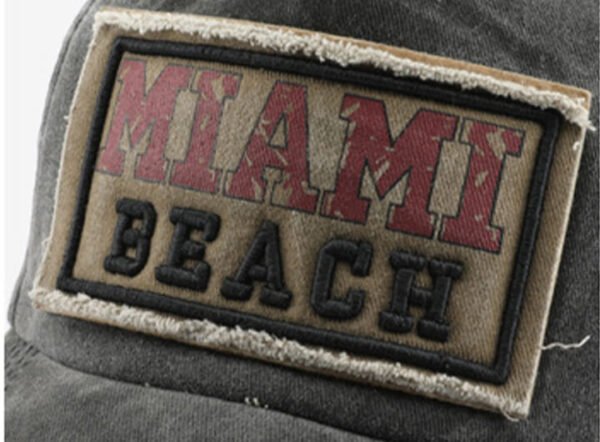
Applique or monogram detail introduces a second surface that must remain legible against the washed base. Aggressive treatment can soften edges, alter contrast, or create uneven exposure around the decoration, especially when the cap's ground fabric already carries multiple gray tones.
The source wording identifies appliqued construction, while the supplied main image emphasizes the washed strap and buckle area. Development should therefore confirm decoration placement, edge security, and contrast after washing rather than approving the applique on an untreated panel alone.
Hardware and Strap Complete the Aging Effect
The rear closure visibly combines a woven strap with a rectangular metal buckle, giving the cap an adjustable function and a tactile vintage cue. Hardware finish, strap width, and stitch reinforcement all affect whether the aged appearance feels deliberate or merely worn.
The buckle should operate smoothly after washing and handling, while the strap should remain adjustable without excessive fraying. These checks connect appearance to usability, since a convincing vintage finish cannot compensate for a closure that slips or becomes difficult to operate.
VeeWen Workflow for Wash Repeatability
VeeWen's workflow should establish a physical shade ladder using washed cap samples that represent the lightest, target, and darkest acceptable outcomes. Each sample should be reviewed with the applique and hardware present, because trims can change the perceived shade balance.
For reorder control, the approved reference should identify panel-level variation, brim treatment, strap appearance, and decoration contrast. This gives production review a practical visual framework without pretending that a distressed finish can be reduced to one perfectly uniform color.
Buyer Checkpoint Before Reorder Approval
The commercial decision is whether the wash character is distinctive enough to support the product while remaining controlled enough for repeat business. Buyers should decide which differences are part of the style and which differences would trigger rejection or corrective review.
Approve the cap when the shade ladder, applique contrast, closure function, and panel variation meet the intended tolerance. If the aged effect overwhelms the logo area or changes unpredictably between samples, revise the wash direction before confirming production and MOQ: 100 pieces per style.
Buyer Questions
Why is wash repeatability important for this cap?
Aged washing naturally creates variation, but uncontrolled differences can disrupt assortment consistency, weaken applique contrast, and make future reorders difficult to match commercially.
How should the wash standard be approved?
Approve a shade ladder showing acceptable lightest, target, and darkest outcomes, with front, side, rear, brim, strap, and applique views documented for comparison.
Can the buckle and strap be customized?
Buckle finish, strap construction, dimensions, and placement can be reviewed during development, subject to trim availability, sample approval, and the final production specification.
What is the required minimum order?
The commercial minimum is MOQ: 100 pieces per style. Color allocation, wash tolerance, decoration approval, sampling, and production details should be confirmed during development.
Set the Wash Range Before Ordering
Share your target shade, acceptable aging range, applique artwork, closure preference, and reorder expectations with VeeWen. We can structure approval around shade ladders, panel variation, trim function, decoration contrast, and MOQ: 100 pieces per style.



Reviews
There are no reviews yet.