







This knee-length short is best developed as a controlled laundering study, because the relaxed silhouette, elastic waistband, washed surface, and distressed edges can amplify side-seam rotation after repeated wet processing. VeeWen can lock the pattern, seam balance, and wash approval around that specific risk.
Why Spirality Defines This Short
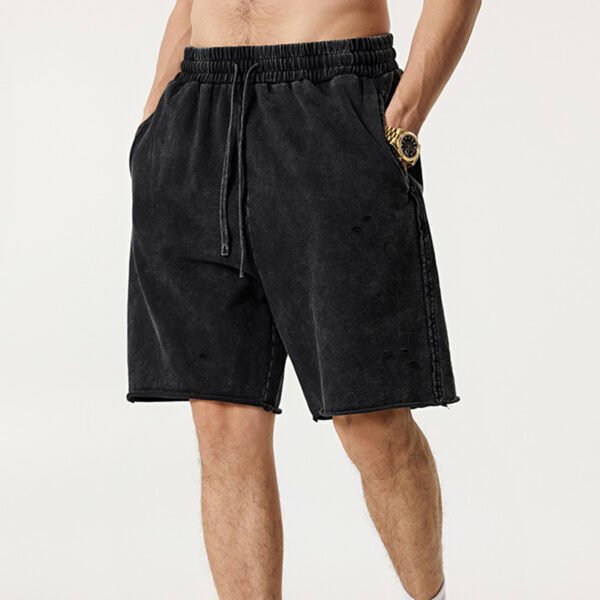
The visual appeal depends on a relaxed leg that still hangs symmetrically. Because the image shows exposed outer seams beside a washed, flexible body, even modest seam rotation could make the legs twist, shift distress marks, and weaken the intended straight knee-length outline.
Spirality is created when fabric torque, pattern grain, sewing tension, and laundering shrinkage interact unevenly. The elastic waistband can conceal small waist changes while making leg misalignment more noticeable, so the approval target should prioritize post-wash seam position rather than appearance on an unwashed sample.
Pattern Balance Before Washing
The base pattern should establish consistent side-seam length, balanced front and back leg panels, and a controlled grain direction through each short. The knee-length proportion shown in the image requires enough hem-level balance that the relaxed opening remains even after treatment and assembly.
VeeWen development should compare the paper pattern, sewn unwashed sample, and measured washed sample using the same reference points. Record waistband level, side-seam angle, hem width, and inseam alignment, then adjust shaping or seam allowance before adding final distress details.
Sewing Controls At The Side Seam
Side-seam spirality often begins during sewing when one ply feeds faster, differential tension stretches a panel, or notches fail to align. These shorts visibly rely on long uninterrupted outer seams, so small deviations can travel continuously from the elastic waist to the raw-looking hem.
The technical sample should specify matched notches, controlled ply feeding, consistent stitch tension, and seam pressing before washing. Pocket openings, if included in the final design, must not pull the side seam forward, because localized tension can create a second distortion beside the primary seam.
Wash And Distress Sequencing
The image shows tonal black variation and scattered distressing rather than a uniform solid finish. That combination means laundering must be evaluated before finalizing abrasion intensity, since aggressive mechanical action may enlarge openings, soften edges, and alter the seam angle differently across front and back panels.
Develop wash sequencing as a controlled comparison: first assess the base garment treatment, then review distress placement and edge behavior against the approved target. Keep the seam visible during evaluation, because a convincing vintage surface does not compensate for legs that rotate or hems that lose balance.
VeeWen Workflow Checkpoint
VeeWen should route this style through a seam-risk sample review before bulk material commitment. The development file should carry the approved pattern, seam reference photographs, wash recipe description, distress map, and measured post-laundry checkpoints specific to this short.
At the buyer approval stage, review the garment on a flat surface and on a fit model after laundering. Confirm that both side seams remain acceptably aligned, the knee-length hem stays balanced, and distress remains intentional before authorizing the MOQ of 100 pieces per style.
Trade-Offs And Final Approval
A stronger stabilization approach may reduce spirality but can soften the relaxed hand or limit the vintage character visible in the supplied image. A harsher wash can deepen tonal contrast, yet it increases the chance of seam movement, hem growth, and distress enlargement.
The correct decision is therefore a measured balance between surface irregularity and structural control. Approve the style when the washed sample preserves the intended relaxed outline, seam placement, waistband function, and distress scale across the agreed laundering evaluation.
Buyer Questions
What should be measured first on the washed sample?
Measure side-seam angle, hem width, waistband level, inseam alignment, and overall leg balance against the approved unwashed reference sample.
Can distressing be finalized before laundering approval?
It should remain provisional until laundering confirms opening growth, edge stability, tonal change, and any seam rotation caused by mechanical treatment.
Does the source confirm the fiber composition?
The source wording references cotton, but the supplied evidence does not verify the percentage, fabric construction, or finished fabric weight.
What is the commercial minimum for this style?
The required commercial minimum is MOQ: 100 pieces per style, subject to finalized specifications and buyer approval checkpoints.
Approve The Spirality Test Sample
Send your measurement chart, wash target, and distress map to VeeWen for a controlled development sample focused on side-seam alignment after laundering and final buyer approval.


Reviews
There are no reviews yet.