
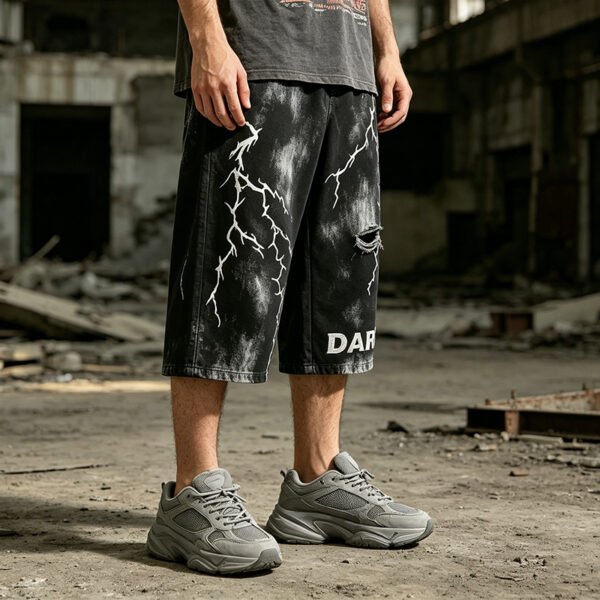
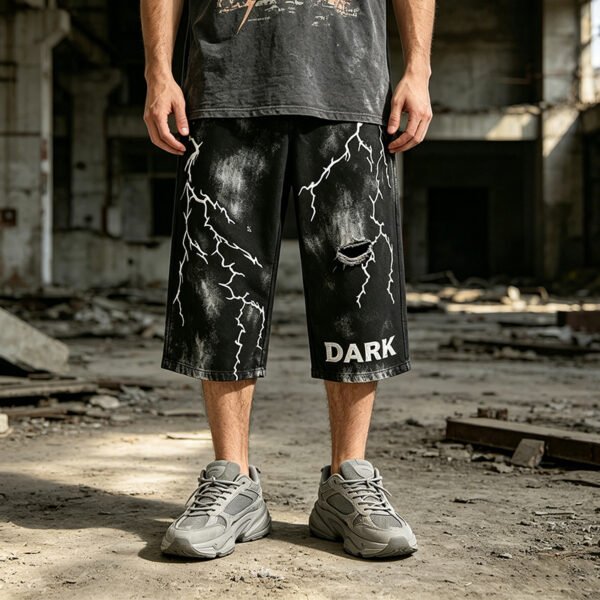
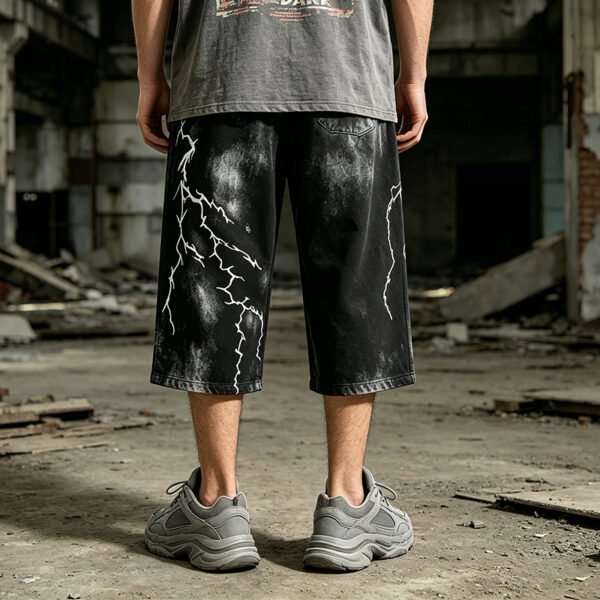
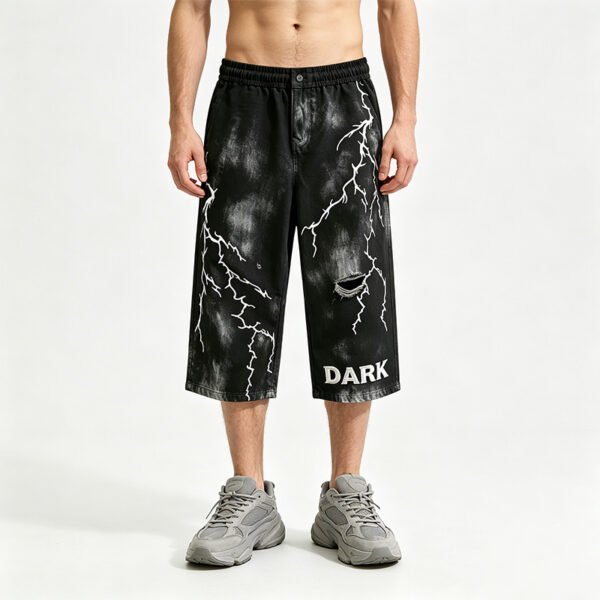
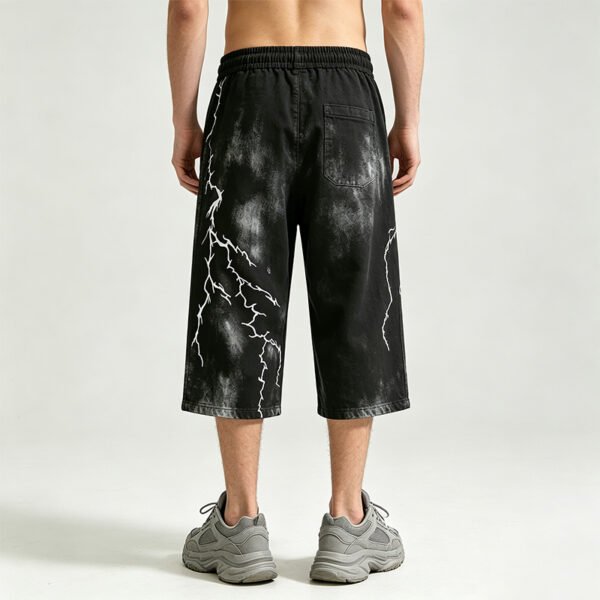
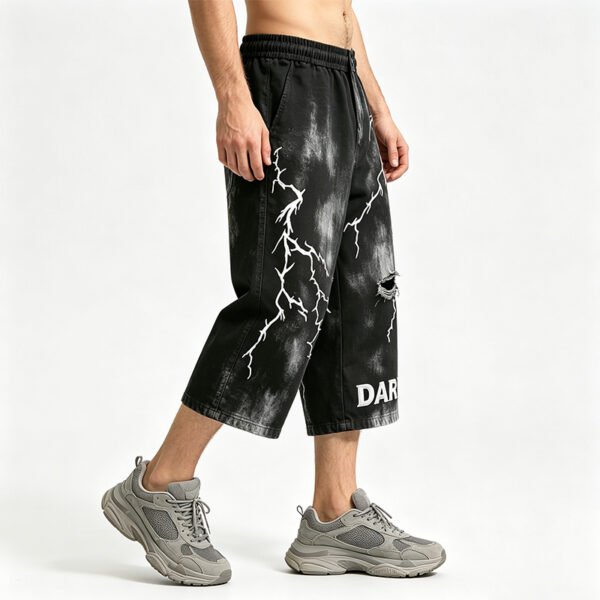
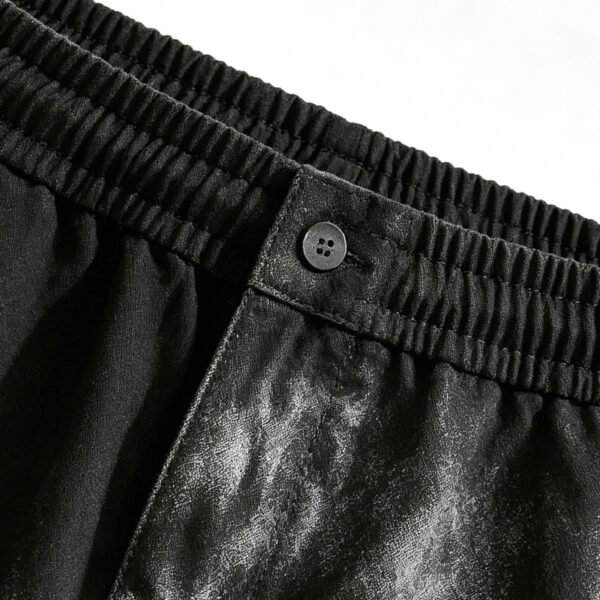
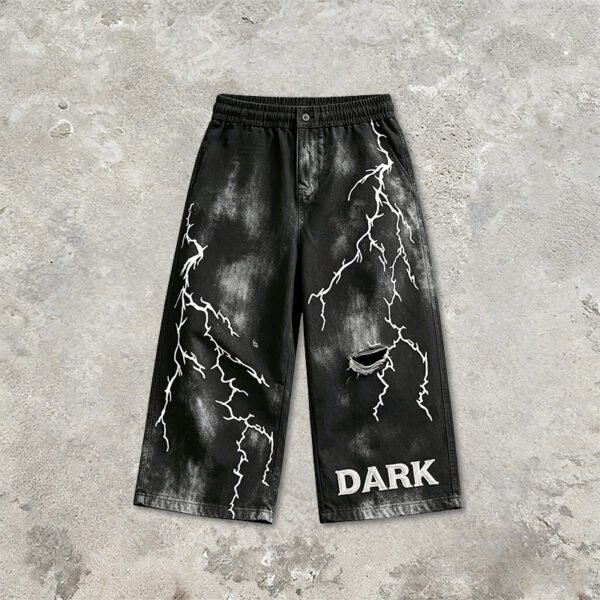





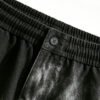
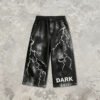
These cropped shorts are developed around surface texture as the primary commercial statement. The supplied image shows a black base disrupted by cloudy bleach contrast, branching white artwork, a torn side detail, and a cropped leg. The development priority is repeatable irregularity without flattening the garment's distressed character.
Texture Is the Product Architecture
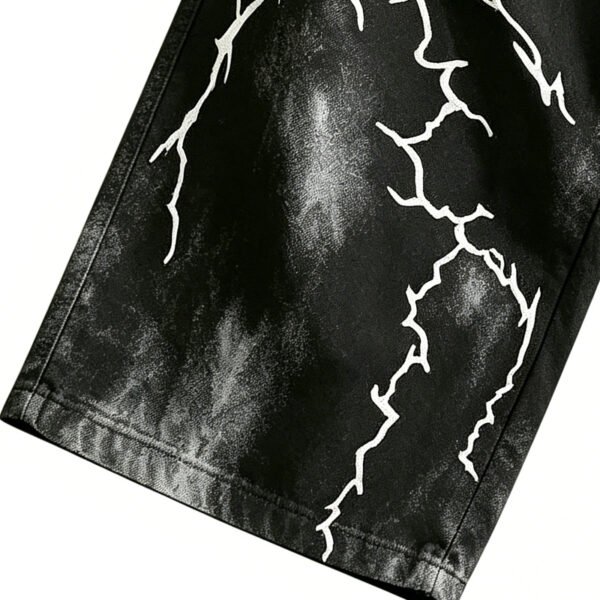
The visual identity comes from multiple surface events working together: cloudy lightening, darker retained areas, white branching artwork, and localized distressing. Because each event changes perceived depth, the wash cannot be approved as a single color swatch; it needs a mapped garment reference.
Bleach spray creates contrast by removing or lightening surface color unevenly, while seam puckering alters how that contrast catches light. A flat fabric test may look correct yet lose character after sewing. Review should therefore compare prewash panels and finished garments under consistent viewing conditions.
Manage Irregularity Without Losing Control
Irregular texture is commercially useful when its boundaries feel intentional. The supplied image concentrates pale abrasion through the upper and central leg areas, leaving darker zones around edges. VeeWen development should translate that balance into placement zones, density limits, and acceptable variation between garments.
The principal trade-off is repeatability versus authenticity. Tighter spray controls improve pack consistency but can make every short appear mechanically identical. Looser controls preserve a vintage effect but increase shade spread. The approval sample should define which differences remain acceptable for the intended collection.
Seams Change the Perceived Wash
Cropped shorts expose hem, side seam, inseam, and pocket relationships prominently. When those seams pucker, the fabric turns slightly toward or away from the light, making neighboring bleach marks appear darker or brighter. Seam construction and wash sequence must consequently be reviewed as one visual system.
A useful checkpoint is a sewn, washed, and fully pressed sample viewed from front, side, and seated positions. Buyers should inspect whether the graphic crosses seams cleanly, whether distressing weakens structural areas, and whether the leg opening retains the intended cropped proportion after finishing.
Graphics Need Registration Decisions
The branching white artwork visibly travels across both front legs, creating a connected composition rather than isolated decoration. That arrangement makes placement tolerance important: small shifts can change the path, balance, and relationship with the torn opening. Artwork files should include panel references before cutting begins.
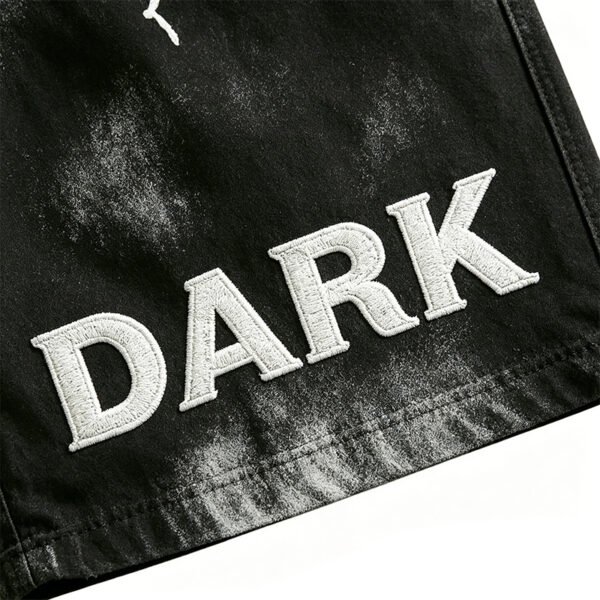
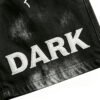
Screen printing and applique create different handfeel, edge behavior, and wash response. The image supports the appearance of a high-contrast raised or printed graphic, but not the verified technique. Buyers should approve the method through a physical strike-off and assess cracking, adhesion, and edge definition.
Distressing Must Respect Wear Zones
The visible tear on the right leg is localized, while the broader wash remains intact around it. This contrast gives the garment a designed focal point. Distressing should be positioned away from high-stress seam intersections unless reinforcement and acceptable aging behavior are specifically requested.
Overdeveloped abrasion can shorten usable life, especially where a cut opening meets repeated movement or laundering. Underdeveloped distressing can make the product feel unfinished. The buyer decision is to set a clear opening size, fray length, reinforcement rule, and wash allowance before approving production grading.
VeeWen Workflow: Approve the Surface System
VeeWen's product-development workflow should begin with a texture map showing spray density, retained dark zones, artwork paths, tear placement, and seam-sensitive areas. A first prototype can then test sewing, wash, graphic execution, and puckering together, making the approval evidence specific to this style.
Before production release, the buyer should compare the approved sample against a controlled light reference and review size-set behavior at the leg opening and graphic boundaries. Once those checkpoints are accepted, VeeWen can proceed toward MOQ: 100 pieces per style with documented tolerances.
Buyer Questions
Can the bleach pattern be standardized across the order?
Yes, development can define placement zones, density ranges, and shade tolerances, although irregular finishing naturally creates variation that must be accepted within the approved reference.
Is the white branching graphic screen printed or appliqued?
The supplied wording mentions both screen print and applique, while the image confirms appearance only. Final construction should be selected after physical strike-off and wash evaluation.
What should the first sample prove?
It should prove spray balance, seam puckering, graphic registration, tear placement, hem proportion, and post-wash appearance together rather than evaluating isolated fabric or artwork tests.
What is the minimum order requirement?
The commercial minimum is MOQ: 100 pieces per style. Final specifications, grading, color tolerance, and approved construction must be documented before production confirmation.
Approve the Texture Map
Send your artwork, target wash references, size range, and preferred construction notes to VeeWen. We will align the surface map, sample checkpoints, and MOQ: 100 pieces per style.


Reviews
There are no reviews yet.