

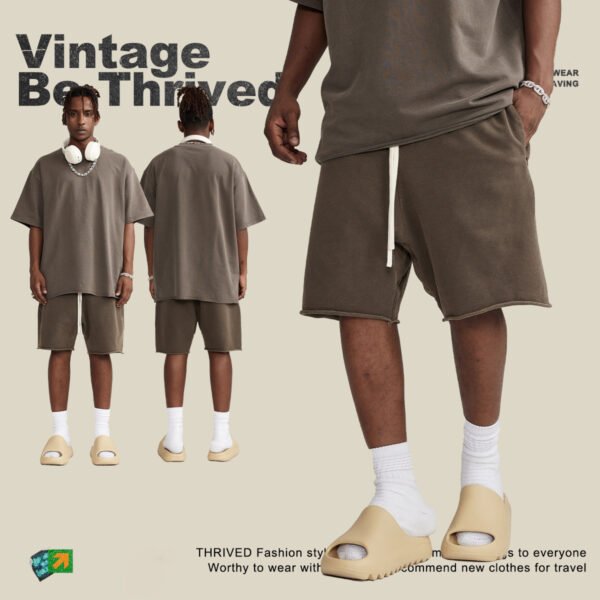


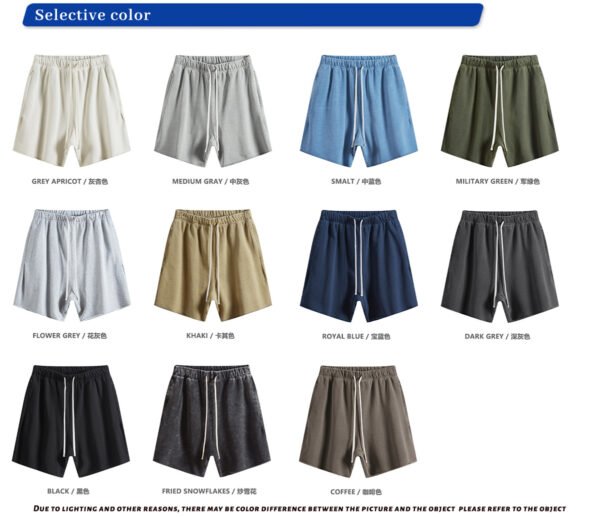


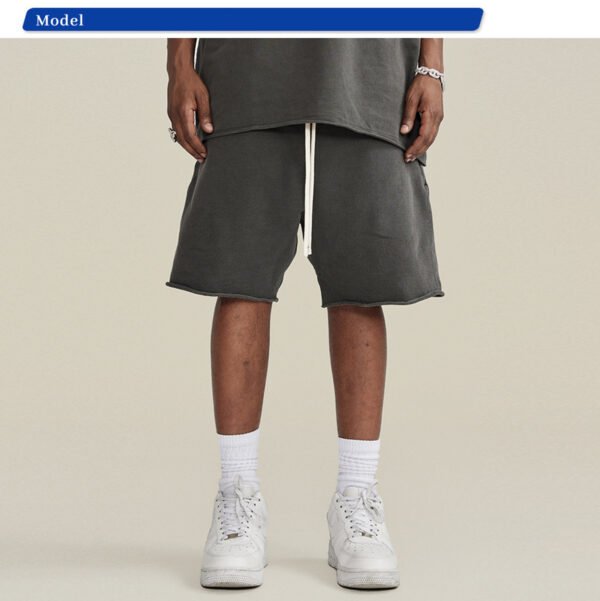


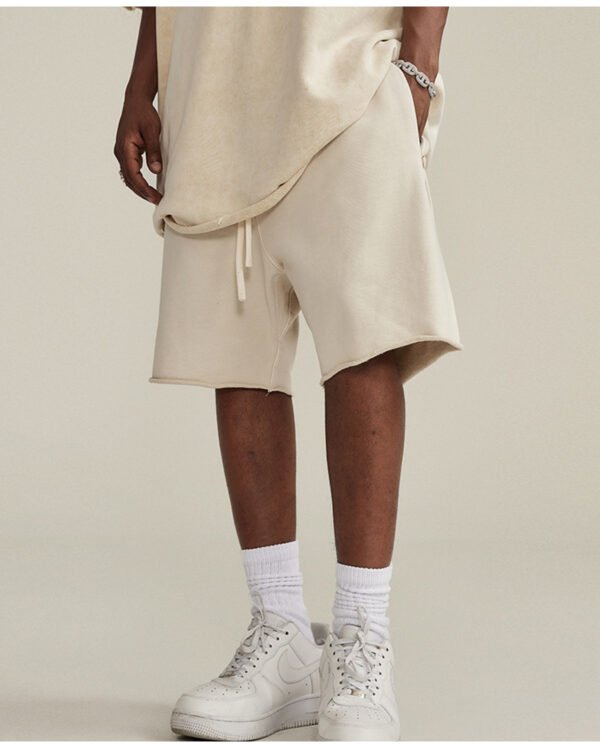











These custom washed terry shorts require more than a simple size pattern: their weight, roomy silhouette, and raw hems make fabric width a development variable. VeeWen can use the approval stage to connect marker efficiency with the visual consistency expected across a coordinated streetwear delivery.
Why Width Matters at 385 GSM
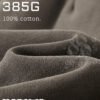
A 385 GSM terry short consumes more material than a lightweight basic because the body panels carry meaningful mass and width. If the usable roll width is narrow, the marker may require altered orientation, additional joins, or higher consumption per finished garment.
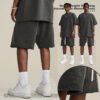
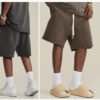
The supplied image shows broad legs and a long, visually important hem line, so fabric economy cannot be judged from waistband dimensions alone. Development should map body, pocket, waistband, and drawcord components together before confirming the target consumption for production.
Marker Planning for the Silhouette
A relaxed short typically benefits from paired body panels, but large leg shapes can leave inefficient gaps when the marker is not matched to actual fabric width. VeeWen's development review should test graded sizes, shrinkage allowance, and nap or face direction before approving the marker.
The practical checkpoint is a cutting layout that records usable width, roll edge loss, and component orientation. This gives the buyer a traceable reason for consumption changes, instead of treating a larger fabric bill as an unexplained production variance.
Raw Edges Change the Tolerance
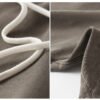
The visible raw hems are part of the product identity, yet they also expose cutting and wash variation. Uneven fraying, excessive curling, or inconsistent leg lengths can make a carefully planned marker appear poorly controlled after finishing and laundering.
Approval should therefore define the acceptable raw-edge character with a physical sample, including hem balance after wash. The buyer should decide whether natural variation is welcomed, limited by trimming, or corrected through a controlled edge treatment.
Wash and Consumption Interact
Washing can change both dimensions and usable appearance, which affects how much fabric must be allowed during pattern engineering. A marker that looks efficient before washing may become commercially unsuitable if shrinkage distorts the hem, rise, or pocket relationship.
VeeWen's workflow should connect pre-wash pattern measurements with post-wash sample measurements before locking consumption. The buyer's approval checkpoint is a measured comparison showing whether the planned allowance protects the intended relaxed proportion without creating avoidable material waste.
Coordinating Components Without Waste
The image shows the shorts styled with matching or complementary tops, making color and surface consistency commercially relevant. Waistbands, drawcord channels, pockets, and main panels may respond differently to width, grain, and washing, even when they use the same terry reference.
A product-development review should separate essential visual components from optional styling elements before finalizing the marker. Confirming which pieces must match in shade and direction helps VeeWen protect the coordinated look while keeping secondary components from distorting total consumption.
VeeWen Development Approval
VeeWen can translate this argument into a staged review: confirm the fabric reference, record usable width, build a graded marker, then inspect a washed sample for hem and proportion consistency. Each stage addresses a physical cause of consumption rather than relying on a generic allowance.
The buyer should approve the production route only when the marker report and washed sample agree with the commercial silhouette. MOQ: 100 pieces per style applies after the style, materials, measurements, and finishing tolerances are confirmed.
Buyer Questions
What fabric information is currently verified?
The supplied source identifies cotton terry and 385 GSM. Fiber percentage, usable width, shrinkage, recovery, and performance testing require confirmation during development.
Why request a width-specific marker?
The relaxed legs and heavier terry can create inefficient gaps. A width-specific marker reveals actual yield, edge loss, orientation requirements, and expected consumption before production.
How should raw hems be approved?
Approve a washed physical sample showing leg balance, fraying, curl, and variation. Define acceptable natural differences before confirming the final finishing route for bulk production.
What is the commercial MOQ?
The exact commercial minimum is MOQ: 100 pieces per style. Final material, color, measurement, and finishing approvals should precede production release.
Approve the Width and Washed Sample
Send your target size range, fabric width, color direction, and raw-edge tolerance. VeeWen can prepare the consumption review around MOQ: 100 pieces per style and your approval checkpoints.


Reviews
There are no reviews yet.