








Built around binding width and stretch control, this washed denim jacket and jeans set turns visible seam structure into a fit decision. The coordinated charcoal ground, panel lines, and multicolor lettering require movement testing so artwork, edges, and garment proportions remain coherent together.
Binding Width Frames the Garment
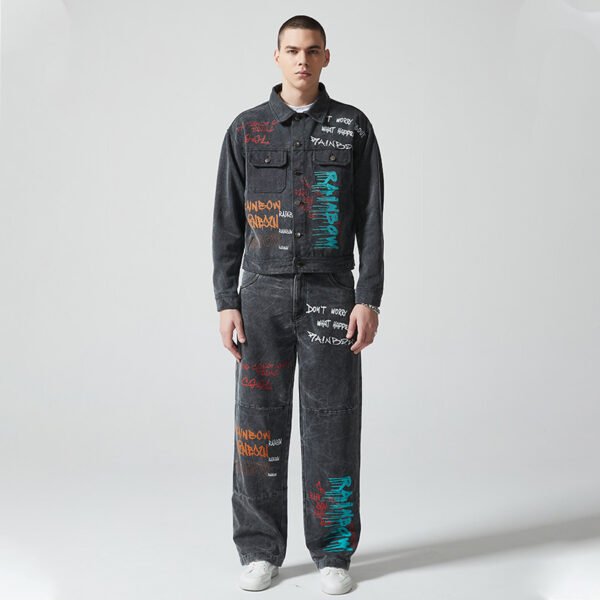
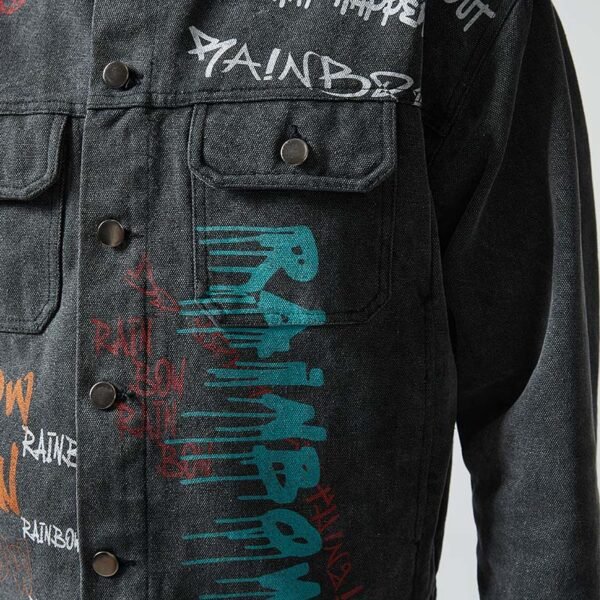
The supplied image shows visible jacket pocket flaps, front seams, cuffs, and trouser panel lines against a dark washed ground. Those edges create a strong framework, so binding or edge-finishing width will influence whether the set reads crisp, rugged, or visually crowded.
Narrow binding can preserve the graphic artwork and make the garment feel lighter, but may reduce edge definition. Wider binding gives seams more visual authority and coverage, yet can interrupt lettering or add stiffness around movement zones.
Stretch Must Match Relaxed Ease
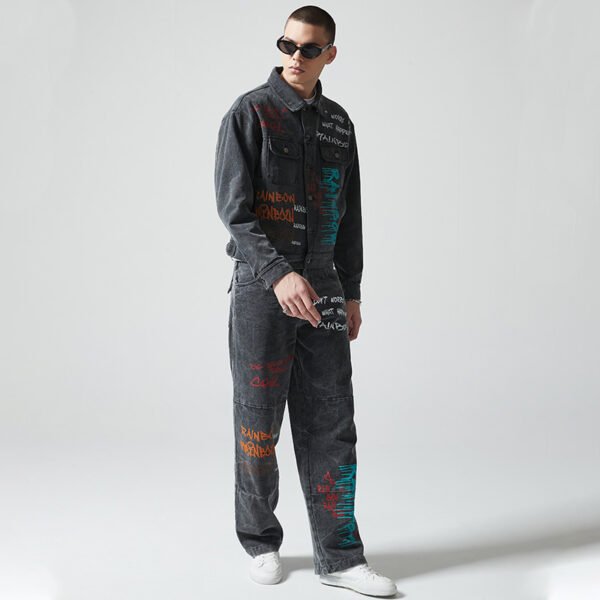
The model image presents a jacket with structured shoulders and trousers that fall in a generous full-leg shape. That silhouette depends on controlled ease rather than unrestricted elasticity, especially where the wearer bends, sits, or reaches through layered streetwear styling.
Too little stretch can make the set feel rigid at elbows, seat, and knees. Too much stretch may soften the intended denim character and allow binding or graphics to shift. Buyers should approve comfort through movement before choosing the final stretch direction.
Graphics Need Seam-Aware Mapping
Lettering appears across the chest, front body, sleeves, and trouser legs in several contrasting colors. Since the artwork crosses broad panels and approaches seams, placement must account for binding width, seam allowances, wash distortion, and the visual interruption created by pockets.
The technical file should separate artwork zones by garment panel and identify safe distances from closures and edges. A pre-wash and post-wash comparison can reveal whether lettering remains legible and whether the jacket and jeans still look intentionally coordinated.
Wash Development Changes Proportion
The image shows a charcoal-black denim appearance with lighter abrasion and crease variation across the jacket and trousers. This visual evidence supports a wash-development review, but it does not verify a recipe, colorfastness result, composition, or finished dimensional change.
Wash intensity can increase vintage character while changing seam contrast and binding visibility. A restrained wash protects graphic clarity and proportion but may appear less worn-in. The buyer should select the visual balance after reviewing a complete set, not an isolated fabric swatch.
VeeWen Workflow Coordinates Both Pieces
VeeWen's workflow should establish one shared measurement and artwork map for the jacket and jeans before sampling. Binding width, seam allowance, stretch target, and wash intent belong in the same development brief because each affects the other garment's visual balance.
The sample review should include movement testing, seated posture, pocket access, sleeve mobility, and side-by-side artwork comparison. Once the coordinated set passes those checkpoints, VeeWen can document the approved construction and prepare the MOQ: 100 pieces per style order.
Approve the Set as a System
A buyer should approve this product as a two-piece system rather than two independent denim items. The key question is whether binding proportions, stretch response, wash depth, and graphic scale remain balanced when the jacket and trousers are worn together.
The final record should specify each panel's artwork, edge treatment, fit ease, wash reference, hardware direction, labeling, and tolerance expectations. That level of coordination reduces avoidable mismatch between pieces and gives production a clear basis for repeatable execution.
Buyer Questions
Can the jacket and jeans be developed separately?
They can be sampled separately, but coordinated approval is essential because binding width, wash intensity, stretch response, and artwork scale must work as one set.
Where should stretch be evaluated first?
Prioritize elbows, shoulders, seat, knees, and waistband movement, then confirm whether the recovered shape preserves the relaxed silhouette after wear.
Can the graphic lettering be changed?
Yes, lettering, color, scale, and panel placement can be revised through technical artwork files and reviewed against seams before sampling.
What is the minimum order quantity?
The commercial minimum is MOQ: 100 pieces per style, with final garment configuration, artwork, wash direction, trims, and labeling confirmed during development.
Approve Construction and Movement Together
Share your target fit, binding preference, artwork files, wash direction, and labeling requirements so VeeWen can review this coordinated denim set with MOQ: 100 pieces per style.


Reviews
There are no reviews yet.