
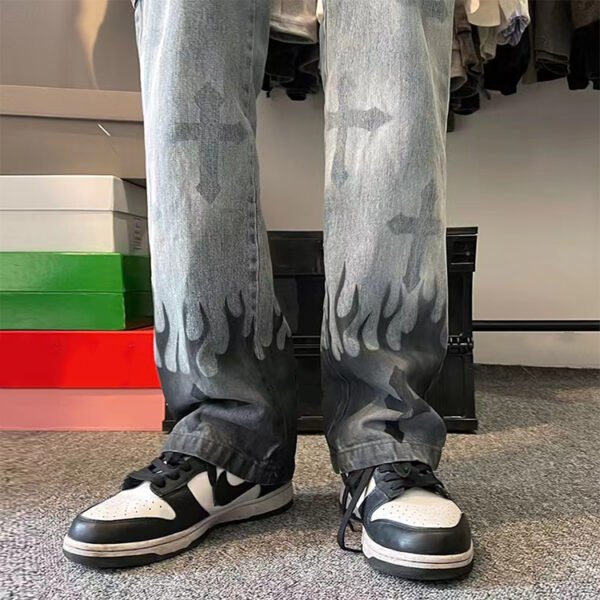

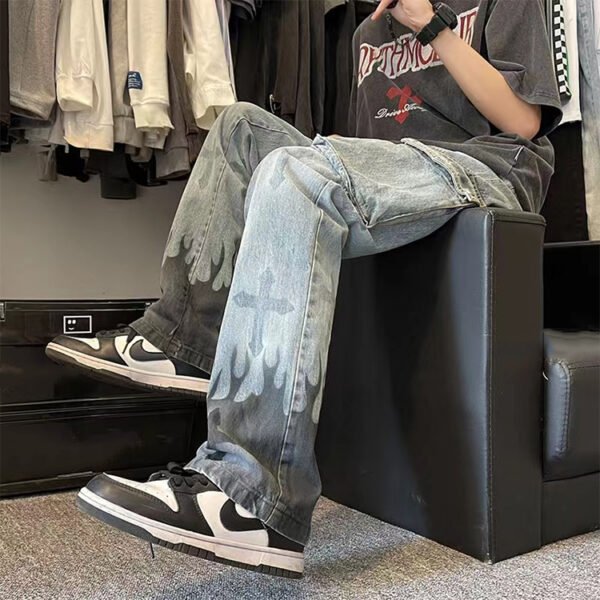


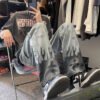
These jeans are developed around graded size-set proportion: the loose straight leg and mirrored lower-leg flames must retain their relationship as sizes change. The supplied image shows broad hems over sneakers, a washed blue body, and concentrated contrast near the ankles.
Why Grading Controls the Product Identity
The defining impression comes from the leg's uninterrupted width and the flame panels' position near the hems. If grading narrows the lower leg disproportionately, the jeans lose their loose straight character and the artwork becomes visually crowded.
A proportion-led size set should preserve key relationships rather than simply adding equal measurements everywhere. Thigh ease, knee width, hem opening, rise, and panel height need coordinated increments so the silhouette remains consistent from the base size outward.
Hem Width and Footwear Clearance
The image shows the hem falling over low-top sneakers with enough opening to create a soft break above the shoe. That clearance is central to the styling direction, because a narrow hem would turn the straight leg into a tapered appearance.
During fitting, the buyer should review the jeans with the intended footwear volume and sole height. This reveals whether the hem opening remains practical and whether the lower leg keeps its vertical line instead of twisting or stacking excessively.
Flame Panel Placement Across Sizes
The dark flame shapes rise from both lower hems and create a mirrored visual rhythm. Their height and width therefore need to scale with the leg, otherwise larger sizes may show compressed artwork while smaller sizes appear overwhelmed by contrast.
Artwork should be positioned using finished garment landmarks such as inseam, outseam, knee, and hem edge. VeeWen's development review can then assess whether the flame peaks maintain similar visual reach after cutting, sewing, and grading.
Wash Contrast and Proportion
The denim appears lighter through much of the leg and darker around the lower section, where the flame graphics intensify the contrast. This concentrates attention at the ankle and makes any hem inconsistency immediately noticeable in a product photograph.
Wash mapping should be approved with the pattern pieces in mind, especially if the lower-leg darkness is intended to frame the artwork. Buyers should confirm how much tonal variation is acceptable before locking the visual standard for production.
Workflow Translation for VeeWen Development
VeeWen's workflow should translate the visual reference into a base block, measurement chart, graded rule set, and artwork placement map. The central review is not only whether the base size looks correct, but whether each size preserves the same leg-to-graphic ratio.
A representative size fitting should include front, side, and footwear views, followed by a pattern comparison between adjacent sizes. This gives the buyer a concrete approval checkpoint for hem width, rise balance, knee ease, and lower-panel proportion.
Trade-Offs Buyers Should Resolve
More lower-leg volume protects the loose straight silhouette and allows stronger footwear stacking, but it can increase fabric movement and alter the perceived weight of the wash. Less volume creates a cleaner line, yet risks losing the relaxed identity visible here.
The buyer should choose the grading priority before finalizing the size set: maximum drape, controlled stacking, or a cleaner retail line. Confirm the base block, hem opening, artwork scale, and elasticity reference together before approving MOQ: 100 pieces per style.
Buyer Questions
Are these jeans truly straight leg?
The supplied image supports a loose straight direction, but the final classification depends on approved thigh, knee, hem, and rise measurements across the size set.
Can the flame artwork be changed?
Yes, the lower-leg artwork can be redrawn or repositioned, with scale, placement tolerances, wash interaction, and production repeatability confirmed during development.
Does slight elasticity mean stretch denim?
The source wording references slight elasticity, but the fiber blend, recovery, and tested stretch behavior require confirmation before material approval.
What is the commercial minimum?
The stated commercial minimum is MOQ: 100 pieces per style, with final size grading, washes, artwork, and construction details confirmed during order planning.
Approve the Graded Leg Ratio
Share your size chart, footwear direction, and artwork references with VeeWen for a focused denim review covering hem width, graded leg volume, wash mapping, and flame placement.


Reviews
There are no reviews yet.