


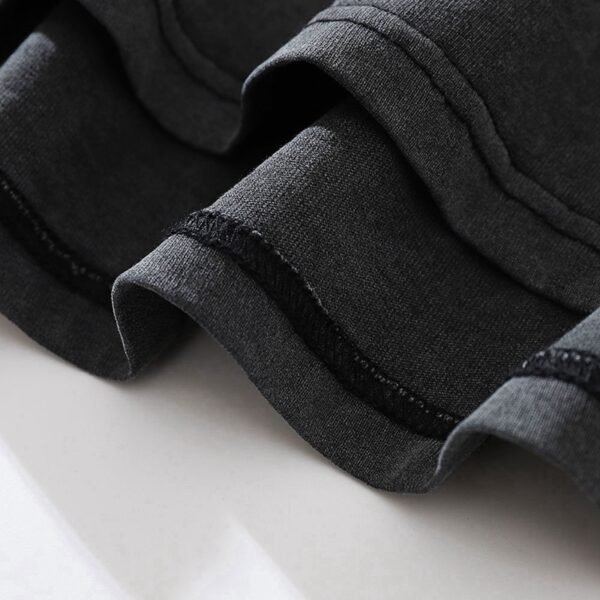
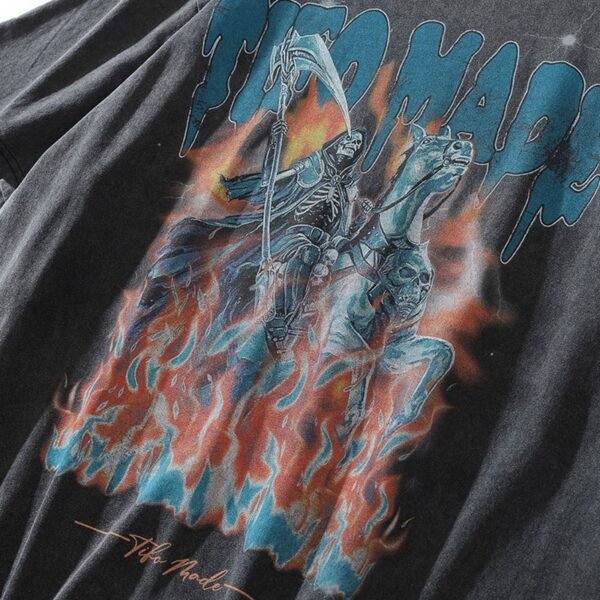
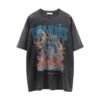


This custom washed graphic T-shirt is developed around the moment a buyer first sees it folded and then unfolded. Its dark tonal body, oversized illustrated front, ribbed crew neck, and relaxed proportions require packaging decisions that preserve both shelf impact and garment character.
Presentation begins with the fold
The main commercial risk is concealed or distorted artwork at first presentation. The front illustration fills much of the body, so a conventional center fold could place creases across faces, lettering, or high-contrast color areas that buyers need to inspect immediately.
The development brief should show the intended folded rectangle, neckline exposure, sleeve tuck, and graphic reveal. This converts packaging from an afterthought into a repeatable merchandising instruction, while allowing the buyer to judge whether the fold communicates the product clearly.
Graphic recovery after unpacking
A large front print creates pressure points wherever fabric bends repeatedly. On this dark washed surface, fold marks may change how the artwork and tonal body are first perceived, even when the garment later recovers during hanging or steaming.
VeeWen's workflow should compare packed, freshly opened, and rested samples using the same fold sequence. The buyer can then decide whether artwork placement, fold location, protective tissue, or presentation instructions need adjustment before production approval.
Wash character and visual consistency
The image shows a charcoal body with a deliberately uneven washed appearance rather than a perfectly uniform solid. That tonal variation is part of the style language, but it also means folding can make one area appear darker or more worn than another.
Sampling should document the acceptable visual range for the washed effect alongside the graphic position. Buyers should approve representative panels and folded views, recognizing that color perception may shift when creases, shadows, and artwork overlap.
Collar as the presentation anchor
The ribbed crew neckline is the clearest stable feature at the top of the folded garment. If it collapses, twists, or becomes hidden beneath the fold, the shirt can look less structured and the first impression may focus only on the graphic.
The specification should identify how much collar remains visible, how the shoulders are tucked, and whether the body fold begins above or below the main artwork. This gives packing staff a practical visual reference during final preparation.
Artwork scale and merchandising
Because the illustration extends broadly across the front, folded presentation must reveal enough of its color contrast to explain the product without fully unfolding it. The chosen exposure affects rack appeal, online photography, and the buyer's initial quality assessment.
VeeWen can use the approved fold diagram as part of the product-development record, linking artwork coordinates with packing orientation. The buyer should confirm that the visible section remains recognizable while the complete print stays protected from unnecessary crease concentration.
Approval and trade-offs
A presentation fold that exposes more artwork may improve immediate recognition, yet it can create sharper bends across the print. A more protective fold may reduce visible stress while requiring customers or retailers to open the garment before understanding the full design.
The buyer should approve one priority sequence: graphic visibility, collar presentation, wash consistency, or crease minimization. Recording that hierarchy makes the final packing instruction actionable and prevents different teams from interpreting presentation quality differently.
Buyer Questions
Why does folding matter for this T-shirt?
The front artwork occupies most of the body, so fold placement can affect first impression, crease concentration, visible graphic area, and the garment's presentation when opened.
Is the washed effect technically specified?
No. The image shows tonal variation, but the exact wash recipe, consistency range, and finishing process require confirmation during development and sampling.
What should the packaging sample include?
It should show the folded garment, visible neckline and artwork exposure, sleeve placement, protective materials if required, and the unpacked appearance after resting.
What is the commercial minimum?
The commercial minimum is MOQ: 100 pieces per style, with final packaging instructions, artwork approvals, materials, and production details confirmed before order release.
Approve the presentation fold
Share the target artwork, wash direction, size range, and retail presentation preference so VeeWen can develop the fold sequence, review packed samples, and confirm production specifications.


Reviews
There are no reviews yet.