
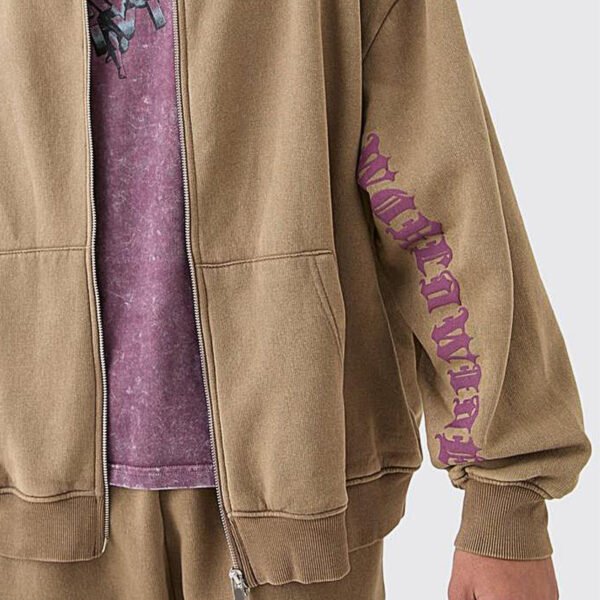
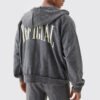

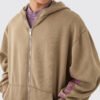
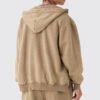
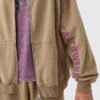
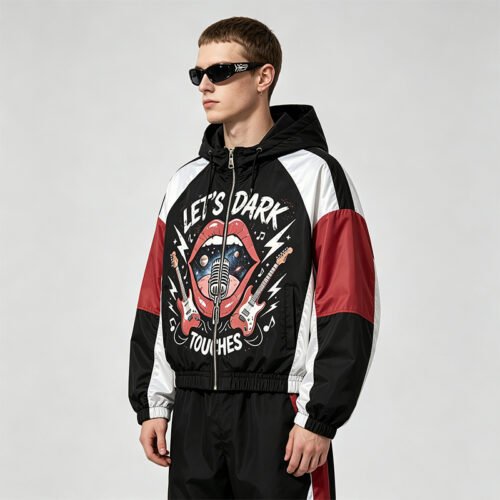
This custom washed hooded sports jacket is developed around one practical question: can closure hardware withstand repeated pulling after the garment receives a soft, weathered finish? The visual reference combines relaxed proportions, ribbed edges, and a prominent raised back graphic for coordinated street-sport programs.
Closure Loads Behind a Relaxed Jacket
A hooded jacket is repeatedly pulled at the front during dressing, layering, and movement. On a relaxed body, that force transfers through the placket, seam allowance, and nearby fabric. The closure therefore needs a defined pull-resistance target rather than an attractive appearance alone.
The washed visual effect introduces an additional concern: softening, abrasion, or laundering can reduce support around a snap or button attachment. VeeWen development should isolate closure placement, reinforcement, and hardware choice before approving the complete coordinated set for production.
Reading the Supplied Visual Evidence
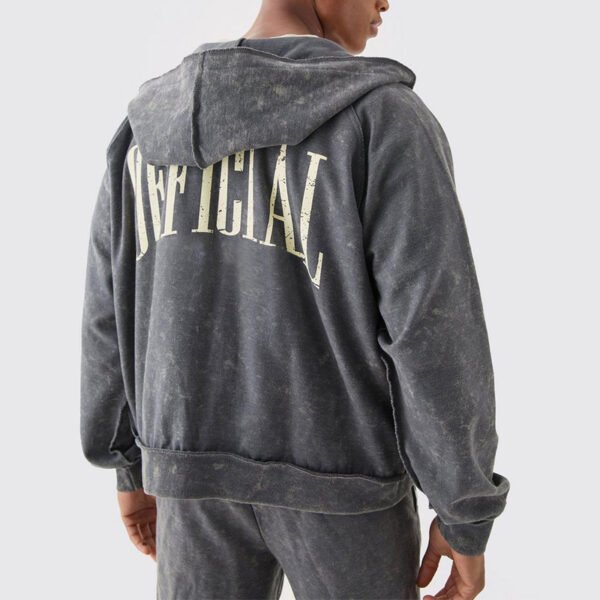
The main image shows charcoal gray fabric with pale, uneven surface variation across the hood, sleeves, and back. This suggests that the finish is intended to remain visibly characterful, so closure reinforcement should stay concealed and avoid creating hard ridges.
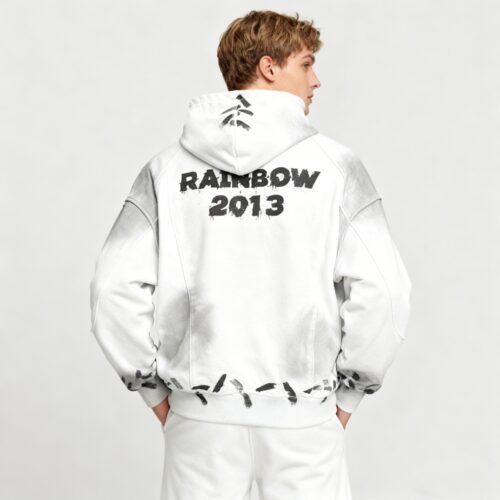
A large light graphic curves across the upper back, while ribbed cuffs and hem frame the relaxed shape. Those details indicate a lifestyle-sportswear direction in which dependable fastening must coexist with softness, visual balance, and comfortable movement.
Managing the Wash and Artwork Relationship
A raised or foam-like back graphic can add tactile height, but it also concentrates stiffness and weight on a broad back panel. The artwork should be reviewed for edge lift, cracking, and distortion after the selected wash or garment-dye process is confirmed.
Closure testing should occur on fabric and trims that have already experienced the intended finishing route. Testing an untreated panel can hide shrinkage, surface change, or seam relaxation that later alters how the snap or button feels during use.
Set Coordination and Wearer Movement
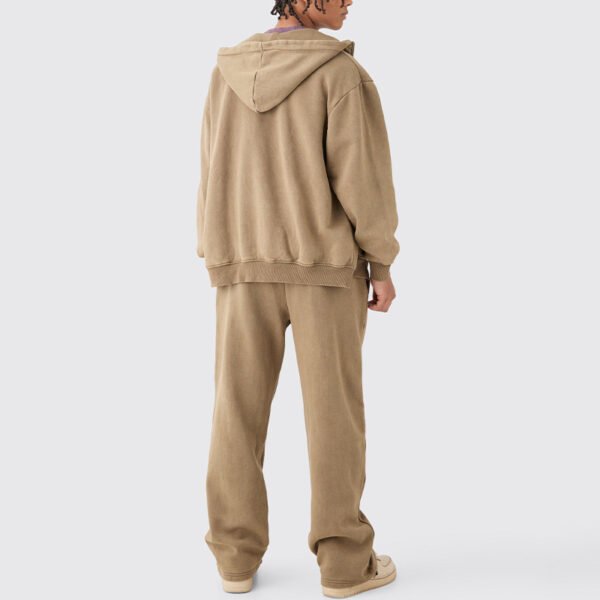
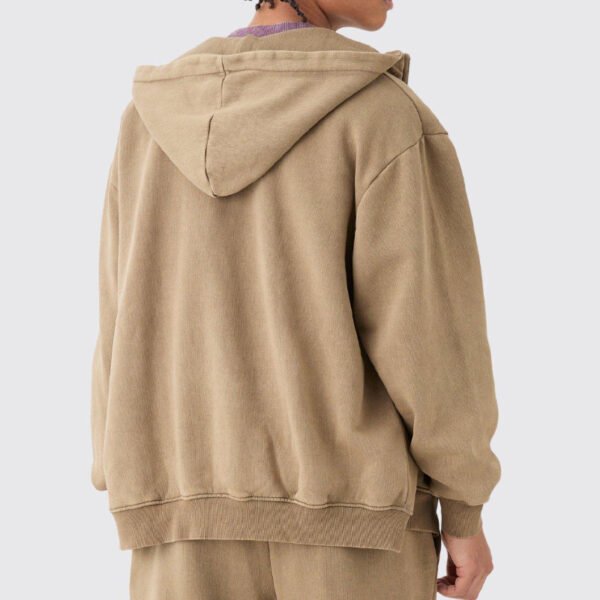
The source direction points toward a same-color sports set, making proportion consistency important between jacket and matching lower garment. The jacket should preserve enough ease for layering while keeping hem and sleeve relationships visually aligned across sizes.
During fitting, reviewers should pull the jacket closed while reaching, sitting, and raising both arms. These actions reveal whether the closure carries load smoothly or whether tension migrates into the graphic panel, shoulder seam, hood join, or ribbed waistband.
VeeWen Development Workflow for This Axis
VeeWen can translate the closure question into a focused development sequence: confirm closure type, map reinforcement, build a washed body panel, and apply the proposed back graphic before sample review. This keeps the pull-resistance decision tied to actual surface and artwork conditions.
At the approval checkpoint, the buyer should inspect opening force, attachment movement, visible distortion, and function after the agreed care simulation. Only then should the closure specification be released with the approved color, graphic scale, trim placement, and set proportions.
Approval Criteria for Private-Label Release
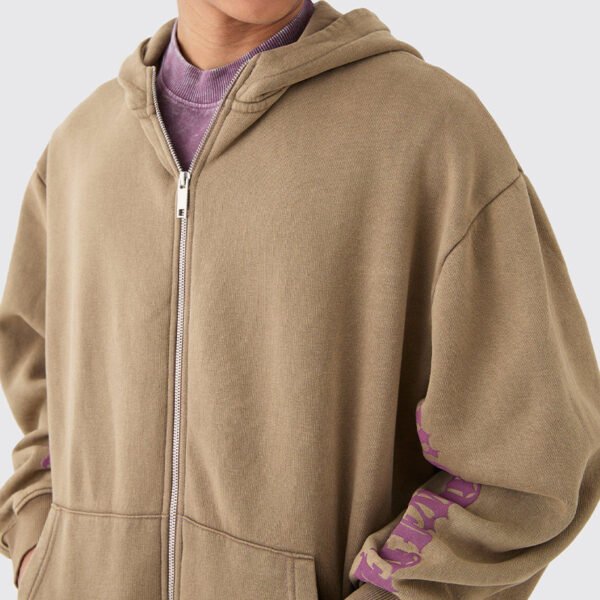
A production-ready specification should record the closure component, attachment construction, reinforcement material, placement tolerance, and inspection method. It should also identify whether the jacket uses snaps, buttons, or another fastening, because the supplied image does not reveal that detail.
The buyer decision is straightforward: approve when the closure operates consistently without pulling the washed shell out of shape. If resistance varies or reinforcement shows through, revise the construction before committing the style to the MOQ of 100 pieces.
Buyer Questions
What closure should this jacket use?
The image does not identify the closure. Confirm snap or button preference, opening force, reinforcement, finish compatibility, and inspection criteria during technical sample development.
Is the raised back graphic included as standard?
The image supports a raised-style back graphic reference, but artwork process, height, hand feel, durability, and placement tolerance require buyer confirmation before sampling.
Can this jacket be developed as a matching set?
Yes. The proportions and color direction can support a coordinated set, while the lower garment, shade tolerance, trim matching, and size grading remain separate approvals.
What is the minimum order quantity?
The commercial minimum is MOQ: 100 pieces per style. Final quantity allocation, color assortment, artwork versions, and production specifications should be confirmed before order release.
Approve the Closure Test Direction
Send your preferred hardware, artwork, color references, and care expectations to begin a focused sample review for pull resistance, wash appearance, fit balance, and coordinated set readiness.
Reviews
There are no reviews yet.