

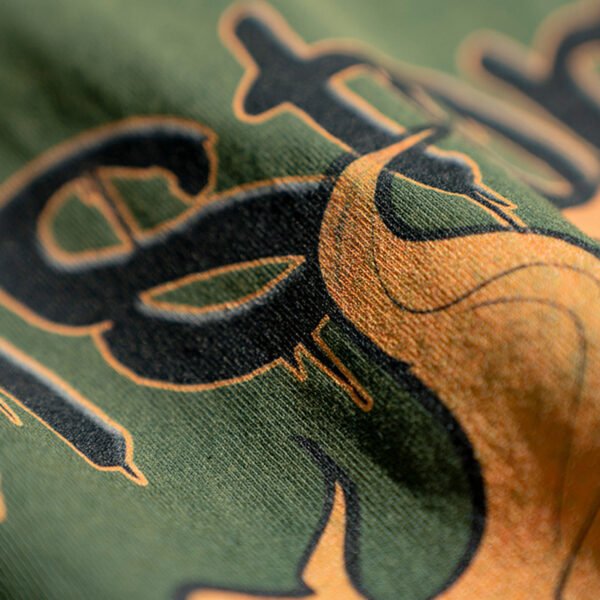

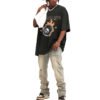
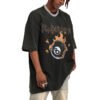
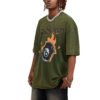


This custom washed graphic T-shirt is built around a relaxed, oversized block whose visual impact depends on stable proportions. Fabric relaxation before cutting gives the pattern team a controlled starting point, helping the wide body, dropped shoulder, and central artwork remain aligned through development and production review.
Why Relaxation Comes Before the Pattern
Knitted T-shirt fabric can contract or skew after handling, steaming, washing, or resting. If cutting begins immediately, the pattern may capture temporary dimensions, causing the finished body, sleeve opening, and shoulder line to shift after later processing.
That risk matters here because the image relies on generous width and a low, relaxed shoulder relationship. A small dimensional change can make the shirt feel shorter, narrower, or less intentionally oversized, weakening the designed streetwear stance.
Protecting the Graphic Registration
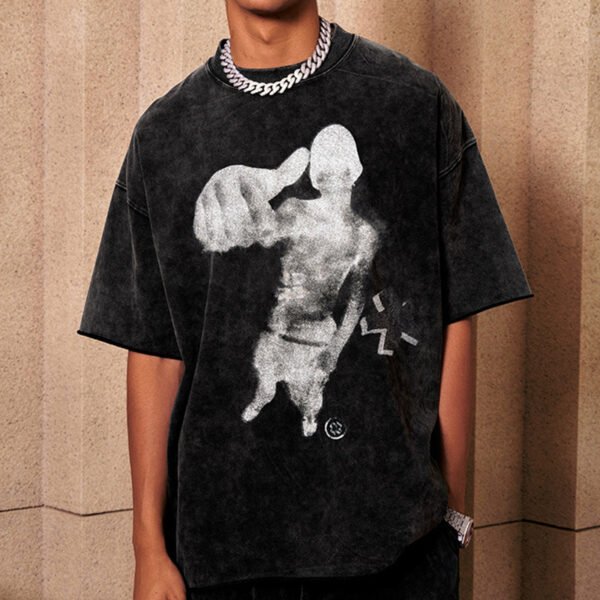
The front artwork is large, pale, and positioned centrally against a dark washed ground. Its scale makes even modest panel distortion noticeable, especially around the figure outline, lower symbol, and surrounding negative space visible in the supplied image.
Relaxing the fabric before marker planning allows the team to establish a more stable cutting surface before digital artwork placement is finalized. The trade-off is added preparation time and material handling, balanced against fewer alignment surprises during approval.
Reading the Washed Surface Correctly
The body presents a mottled, worn-looking black finish rather than a perfectly even solid shade. That surface character is part of the product direction, but it can also introduce visual variation that makes construction defects or misplaced artwork easier to notice.
VeeWen should therefore separate surface-effect approval from dimensional approval. Buyers can assess whether the wash appearance is acceptable first, then judge the relaxed-and-cut sample for body balance, seam behavior, and graphic position under the same development conditions.
Balancing Oversize With Wearability
An oversized silhouette needs volume without losing practical movement. The image shows broad sleeves and a substantial body, yet the crew neckline remains relatively contained, creating a controlled frame around the upper torso and preventing the shape from appearing shapeless.
Relaxation control supports that balance by reducing unexpected shrinkage differences between body and sleeves. The buyer checkpoint is not simply a larger measurement; it is consistent proportion across shoulder drop, chest width, sleeve length, hem position, and neckline appearance.
VeeWen Development Workflow
For this style, VeeWen's workflow should begin with fabric selection and a documented relaxation condition before pattern cutting. The first development sample should record body and sleeve measurements before washing, after washing, and after resting, using the same reference points.
Artwork placement should then be reviewed on the stabilized cut panels, with the buyer checking the central figure, lower mark, and surrounding margins. Any pattern correction should precede size grading, because grading an unstable base would distribute the same dimensional uncertainty across the range.
Approval Checkpoint Before Bulk Cutting
The final approval should compare an untreated reference, a finished sample, and a laundered sample laid flat against the approved measurement chart. This reveals whether the relaxed fabric process preserved the oversized geometry and whether washing altered the graphic's visual center.
Buyers should also confirm the acceptable range for wash variation, artwork edge appearance, neckline recovery, and hem alignment. Bulk cutting is appropriate only when those decisions are written into the style approval record and the material reference is fully confirmed.
Buyer Questions
What fabric information is currently verified?
Only the visible washed T-shirt appearance and source wording are available. Fiber composition, GSM, stretch, shrinkage, and performance characteristics require material confirmation before final specification approval.
Why is relaxation especially important for this style?
The broad body, dropped shoulders, and large centered graphic make dimensional movement visible. Stabilizing fabric beforehand helps the pattern and artwork begin from more reliable working dimensions.
Can the graphic placement be changed during development?
Yes, placement can be reviewed on stabilized panels. Confirm the artwork scale, centerline, lower clearance, and relationship to seams before grading or bulk cutting begins.
What must be approved before production?
Approve the laundered fit, dimensional measurements, wash appearance, graphic registration, neckline, hem alignment, and confirmed material details before authorizing the MOQ: 100 pieces per style.
Approve the Stabilized Sample
Send the intended artwork, size range, and material direction to VeeWen for a relaxation-led sample review. Confirm laundered measurements and graphic registration before approving MOQ: 100 pieces per style.


Reviews
There are no reviews yet.