


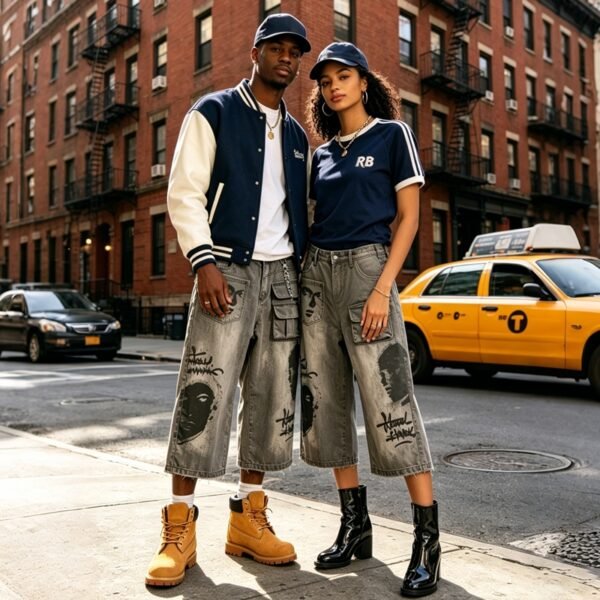



This custom cargo capri jean combines a cropped utility silhouette with washed charcoal denim, tonal spray variation, dark DTG-style artwork, flap pockets, and raw hems. Its development priority is the front closure junction, where waistband alignment, pocket bulk, and distress placement must remain coordinated.
Closure Junction Controls the Front Balance
The image shows a centered button and fly seam framed by belt loops, angled pockets, and cargo flaps. Because these components occupy one compact area, even a small waistband shift can make the closure appear off-center or compress the front utility layout.
VeeWen should lock the waistband height, button position, fly extension, and pocket opening as one pattern relationship. The approval sample should be checked closed and open, confirming that the zipper or fly remains smooth when the cargo pockets are loaded.
Cargo Bulk Changes the Front Pattern
The stacked flap pockets create practical volume immediately beside the upper leg and below the waistband. Their layered construction can pull the surrounding denim outward, especially when pocket bags, reinforcement, and hardware add weight to the same front panel.
Development should therefore separate visual pocket scale from usable capacity. A buyer should approve flap overlap, pocket-bag direction, and reinforcement placement after testing the intended contents, because excessive depth may disturb the fly line and distort the cropped silhouette.
Cropped Proportion Needs Controlled Hem Release
The legs end above the ankle with visibly frayed raw edges, making hem height a major proportion decision. Uneven thread release can shorten one leg visually, while excessive fraying may turn a deliberate cropped finish into an unstable production inconsistency.
The pattern and wash specification should define finished inseam, hem circumference, thread-release limits, and inspection tolerance. VeeWen can use the fit sample to compare worn appearance after controlled abrasion, ensuring both hems retain similar visual weight without appearing artificially symmetrical.
Artwork Must Follow Distressed Denim
Dark portrait-style graphics appear across both legs, with one motif placed near the upper pocket area and another extending lower on the opposite leg. The artwork therefore interacts with seams, pocket edges, fading, and the natural folds created during wear.
Graphic approval should include a full front placement map tied to grainline, pocket boundaries, and finished inseam. The buyer should decide whether printing occurs before or after selected wash effects, since sequence changes contrast, edge sharpness, and the relationship between artwork and abrasion.
Wash Variation Requires a Repeatable Target
The charcoal ground is not uniform; lighter abrasion and cloudy tonal changes surround darker printed areas. That contrast gives the jean its visual character, but uncontrolled spray or wash intensity can obscure artwork, expose inconsistent base tones, or make pairs look unrelated.
VeeWen's workflow should convert the reference image into a wash board with approved dark, midtone, abrasion, and print zones. The buyer then reviews a representative size-set sample, checking whether the tonal range survives grading and remains compatible with the selected denim base.
Approval Checkpoint for the Complete Front System
This product should be evaluated as an integrated front system rather than as separate cargo, print, and wash features. The decisive evidence is whether the button, fly, waistband, pocket stack, artwork, and cropped hem read clearly at normal standing distance.
Before production confirmation, the buyer should sign off the corrected pattern, loaded-pocket fit, artwork map, wash target, and raw-hem tolerance. MOQ: 100 pieces per style applies to the commercial request, while composition, exact hardware, and performance details remain To Confirm.
Buyer Questions
Is the jean designed for a men's streetwear range?
Yes. The supplied visual supports a men's streetwear direction through its cropped utility silhouette, charcoal wash, graphic leg placement, and substantial cargo pocket treatment.
Can the artwork be repositioned for my collection?
Yes. Artwork placement can be developed around pocket boundaries, seam lines, grain direction, and inseam length, subject to a buyer-approved placement map and sample.
Does the raw hem require a fixed tolerance?
Yes. The buyer should define finished inseam, fray depth, thread-release limits, and pair-to-pair variation before wash approval and production pattern confirmation.
What is the minimum commercial quantity?
The exact commercial minimum is MOQ: 100 pieces per style. Fabric composition, color standards, hardware, and final production specifications remain subject to development approval.
Approve the Front Closure Development
Send your target size range, artwork files, wash references, and pocket requirements to VeeWen. The next decision is a coordinated sample review covering closure alignment, loaded-pocket fit, graphics, and raw-hem balance.


Reviews
There are no reviews yet.