








This T-shirt is a balance between visual density and movement. A washed heavyweight body can feel substantial, yet a heavy or overly rigid graphic may interrupt the relaxed raglan drape. Development should therefore test print deposit, curing, seam behavior, wash character, and controlled fraying as one system.
Print Weight Changes Drape
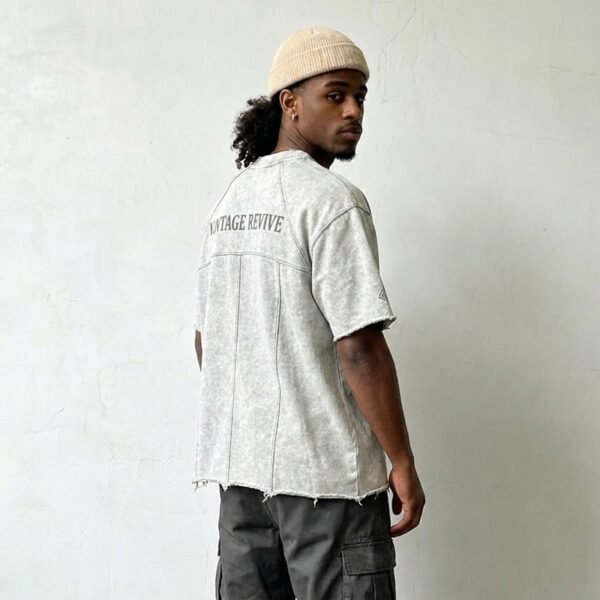
The centered chest graphic concentrates material and film or ink over the front panel, potentially creating a firmer hand than the surrounding washed body. The design should be evaluated at actual scale, because coverage area and deposit height can alter how naturally the shirt falls.
A small print swatch cannot fully predict the finished result when raglan seams and garment washing are involved. VeeWen's workflow should compare low, medium, and high deposit options on matching fabric before the buyer approves the preferred drape.
Raglan Seams Need Movement
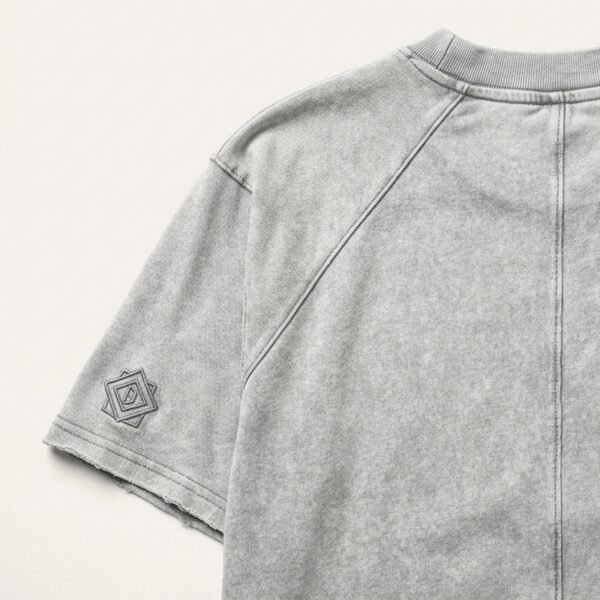
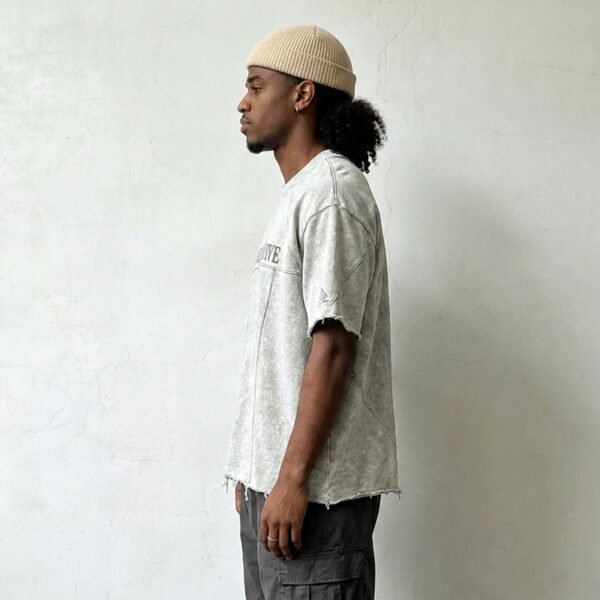
The diagonal raglan seams are prominent visual lines that also divide the shirt into moving panels. Print artwork should stop short of seam peaks and seam allowances where possible, preventing registration distortion and avoiding a rigid bridge across areas that flex during wear.
The image presents an easy, unconfined silhouette, so seam construction should support that impression rather than pull the body inward. Buyers should check shoulder rotation, sleeve fall, chest width, and graphic alignment while the sample is worn and laid flat.
Washing Creates Controlled Variation
The light gray surface shows a washed, slightly uneven appearance that gives the shirt depth without relying on a complicated graphic. Wash development must balance tonal variation with print clarity, since aggressive treatment can soften lettering edges or change the perceived contrast.
VeeWen should prepare a wash and print comparison using the same base fabric and artwork. The approval target is a repeatable range of body shade, seam definition, print readability, and handfeel rather than an identical irregularity on every garment.
Fraying Is A Managed Finish
The lower hem appears raw and frayed, adding looseness to an otherwise structured raglan layout. Fray development should account for stitch density, cut accuracy, wash agitation, and the distance between the raw edge and the side seams.
Too little fraying may weaken the intended vintage attitude, while excessive unraveling can shorten the body or create inconsistent retail presentation. The buyer should approve a measurable tolerance for fray length and review the edge after the planned wash process.
VeeWen Development Workflow
VeeWen can stage the development around a print-drape matrix: one fabric reference, several graphic deposits, and a consistent raglan block. This reveals whether the garment feels heavy because of the base cloth, the print, the wash, or their combined interaction.
After the preferred combination is selected, the full sample should confirm neckline recovery, raglan seam smoothness, hem behavior, graphic placement, and overall balance. The buyer's approval should be based on the assembled shirt, not isolated artwork or fabric swatches alone.
Commercial Approval Checkpoint
This product is appropriate when a collection needs a substantial washed tee that still moves easily and reads clearly from a distance. Its trade-off is that stronger print coverage may improve impact while reducing softness and drape.
Before bulk approval, compare the sample in motion, on a hanger, and flat on a table. Confirm the graphic remains legible, the raglan seams stay relaxed, the wash remains intentional, and the raw hem meets the agreed presentation tolerance.
Buyer Questions
Can the chest graphic be enlarged?
Yes, artwork scale can be adjusted, but larger coverage may increase stiffness and reduce drape. Approve the enlarged version through a full-panel print and wear trial.
Does heavyweight mean a verified GSM?
No. Heavyweight is stated as a source reference, but the supplied evidence does not verify GSM or composition. Treat both as To Confirm during material development.
Can the washed shade vary by colorway?
Yes, each colorway may require its own wash recipe and approval standard. Compare shade, graphic contrast, seam visibility, and fray behavior before confirming the assortment.
What is the minimum order quantity?
The commercial minimum is MOQ: 100 pieces per style. Final artwork, colorway count, size range, and wash options should be agreed within the production brief.
Approve The Print-Drape Development Matrix
Share the artwork, target measurements, fabric reference, wash direction, and hem tolerance. VeeWen can focus the sample review on graphic weight, raglan movement, surface variation, and controlled fraying.


Reviews
There are no reviews yet.