
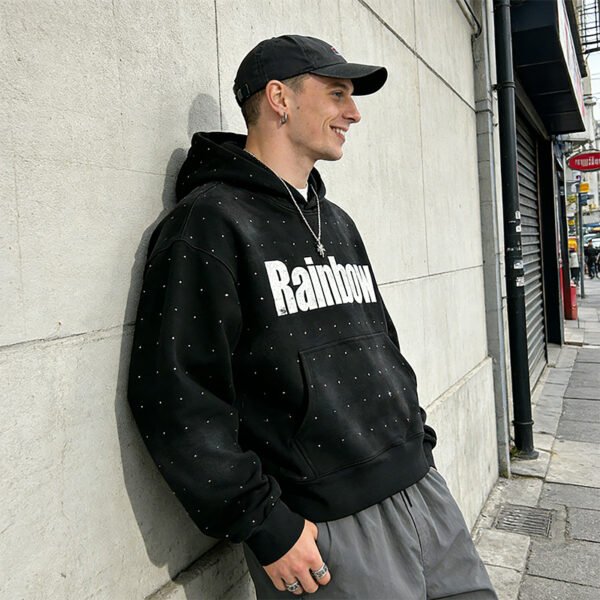


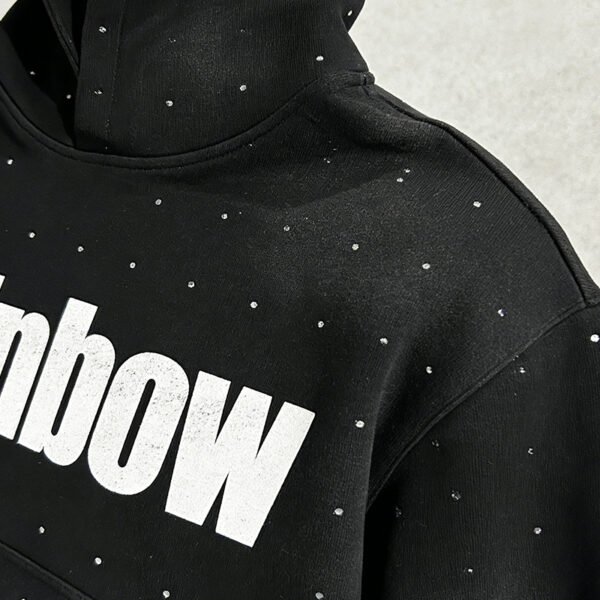
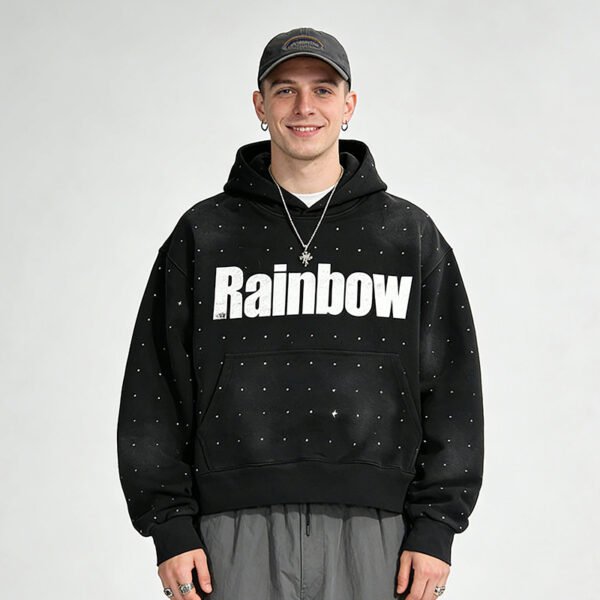






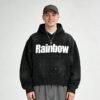
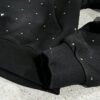

This custom pullover hoodie is developed around controlled fill distribution: warmth must remain balanced without distorting the relaxed silhouette, stressing studs, or thickening the kangaroo pocket. The supplied image supports a washed black base, scattered reflective embellishment, and a prominent chest graphic for streetwear positioning.
Fill Mapping Protects the Intended Shape
A filled hoodie can gain warmth, but uneven insulation changes drape: overloaded chest or sleeves may stand away from the body, while sparse zones collapse. The development target is a measured fill map that keeps the relaxed profile visually consistent.
The image presents a broad torso, low shoulder line, and substantial kangaroo pocket. Those proportions make distribution especially important around the front body, hood, and sleeve joins, where excess bulk could interrupt the clean streetwear outline and movement.
Stud Placement Changes Construction Pressure
Scattered studs introduce localized weight and repeated snag or abrasion points. If fill channels, quilting, or internal stabilizers sit directly beneath them, needle penetration and compression can affect both loft and attachment security during wear and laundering.
The visible embellishment reaches across the hood, upper chest, sleeves, and pocket area rather than staying in one graphic block. Sampling should therefore test each decorated zone separately, including flexing at cuffs, pocket entry, and shoulder seams.
The Washed Surface Requires Process Discipline
A washed finish can create tonal variation and a softened visual hand, yet wet processing may expose weak attachments or flatten localized fill. The finishing route should be selected only after testing how the base fabric, studs, and insulation respond together.
The supplied image shows a deliberately non-uniform black surface, while the studs remain visually distinct. That contrast is commercially useful, but approval should define acceptable wash variation and reject any result that obscures the graphic or loosens embellishment.
Graphic and Pocket Zones Need Clearance
The chest graphic occupies a central area above the kangaroo pocket, creating overlapping artwork, hand access, and internal bulk considerations. Fill should be kept even behind the graphic while pocket construction remains flat enough for comfortable use.
VeeWen's product-development workflow should translate the artwork, stud map, pocket pattern, and fill zoning into one annotated tech pack. A physical sample can then verify placement, thickness transitions, and hand comfort before grading the style.
VeeWen Workflow Turns the Axis into Checks
For this style, VeeWen should begin by confirming whether the buyer wants true insulation, a lightly padded effect, or an unfilled interpretation with visual volume. That decision determines shell selection, internal layers, seam allowance, and machine handling.
The approval checkpoint is a controlled prototype reviewed inside and out: confirm fill distribution, stud anchoring, graphic position, hood balance, pocket usability, and wash appearance. Any change to decoration density should trigger a revised fill and construction review.
Commercial Approval Should Follow Wear Priorities
Buyers should decide whether the primary promise is warmth, visual embellishment, or lightweight layering. Each priority creates a different tolerance for bulk, laundering complexity, attachment density, and cost-sensitive construction choices at the 100-piece style minimum.
Before production approval, compare the prototype against the intended retail use and size range. Confirm that the silhouette remains stable when worn, the pocket functions naturally, and the decorated surface retains its planned character after care testing.
Buyer Questions
Is this hoodie confirmed to contain insulation?
No. The image suggests substantial volume, but insulation type, fill weight, and construction are not explicit. VeeWen should confirm them during technical development and sampling.
Can the stud layout be customized?
Yes, the visible scattered placement can guide a custom map. Final density, size, attachment method, and clearance around seams or pockets require buyer approval before sampling.
What should the first sample prove?
The first sample should prove silhouette, fill balance, stud security, graphic placement, pocket usability, hood proportions, and the selected wash effect under intended handling conditions.
What is the commercial minimum?
The exact commercial minimum is MOQ: 100 pieces per style. Final material, decoration, packaging, and approval requirements should be confirmed before order planning.
Approve the Fill and Embellishment Map
Send your artwork, warmth target, size range, and preferred wash direction to VeeWen. We will align the fill map, stud placement, and prototype checkpoints before production approval.


Reviews
There are no reviews yet.