


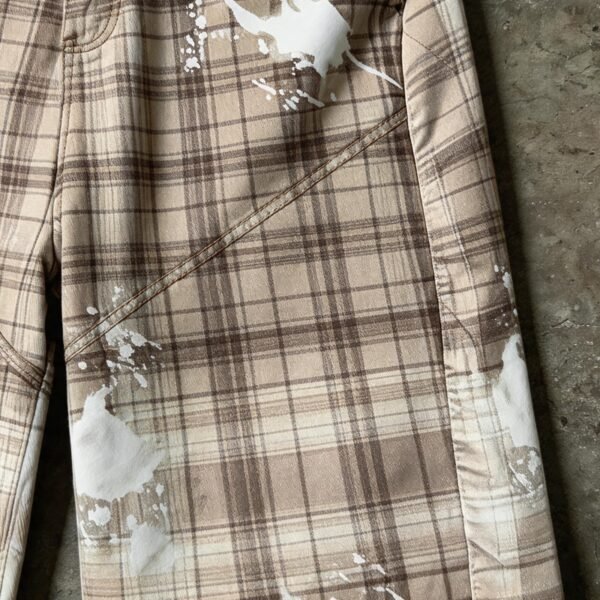


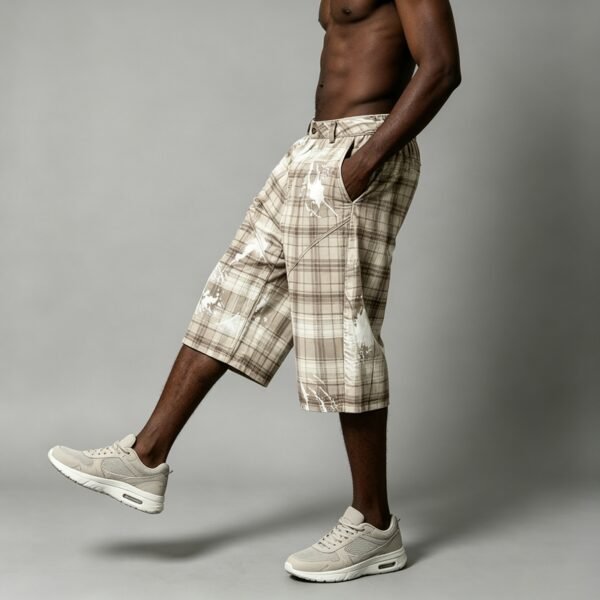
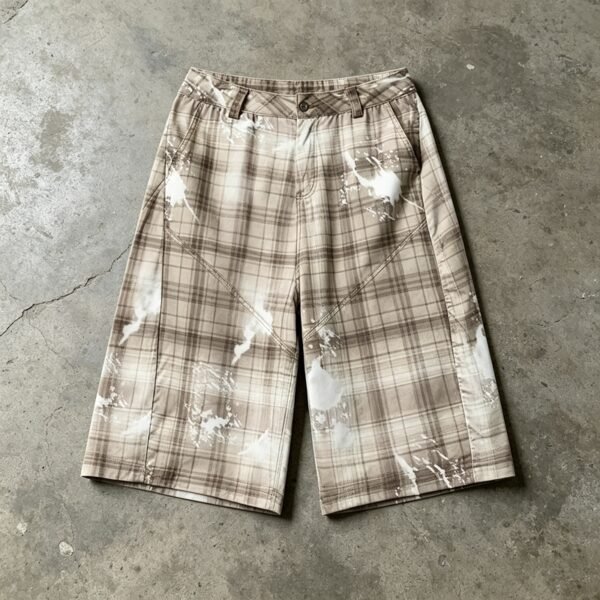
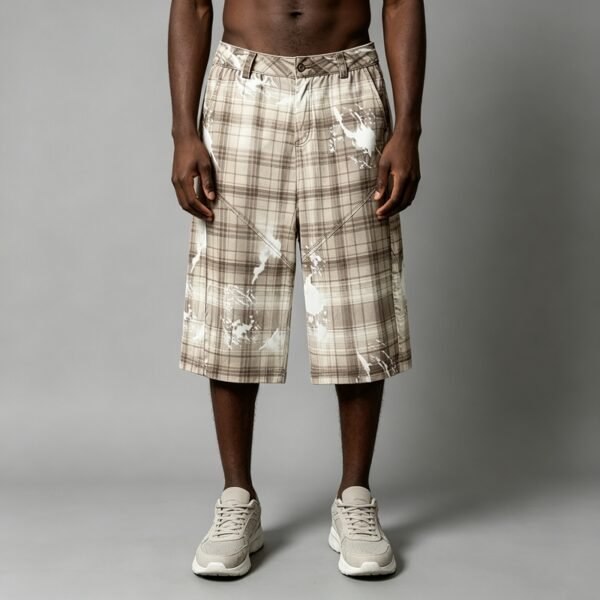


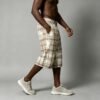

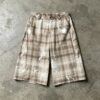
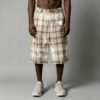
These custom wide-leg plaid capri pants are built around edge stability across a visually busy construction. Plaid alignment, utility pockets, button-fly hardware, and irregular surface effects all compete for attention. Interlining must support clean boundaries without making the relaxed cropped silhouette stiff or visually heavy.
Why Interlining Matters Here
Interlining changes how a garment edge resists folding, stretching, and distortion. On these pants, that decision affects the waistband, button-fly area, pocket mouths, flap boundaries, and patch transitions. Too little support may create collapse; too much can undermine the intended wide-leg drape.
The supplied image shows several pocket zones cutting across plaid and surface effects, so edge behavior is part of the visible design. Interlining should be selected by zone rather than assumed uniform. The buyer's first decision is identifying which edges need definition and which should remain soft.
Pocket Edges as Visual Architecture
Large utility pockets add functional volume and visual weight to a cropped trouser. Their openings and corners must remain legible against plaid, darker inserts, and irregular marks. Stable edge construction helps the pockets read as deliberate components instead of fabric layers pulling out of alignment.
During development, review pocket mouth length, corner shape, flap position, and attachment tension on the actual woven reference. Check the garment flat and worn, because a pocket can appear square on the table yet distort when the wide leg moves or the wearer places items inside.
Balancing Support with Drape
The wide-leg shape depends on controlled fall from the waist through the cropped hem. A rigid interlining may sharpen pocket boundaries but introduce unwanted stiffness around the hips or upper thigh. A lighter support may preserve movement while requiring stronger edge finishing or more precise sewing control.
VeeWen's workflow should compare at least two support approaches on the same pattern, keeping fabric, pocket dimensions, and surface treatment constant. The fit review can then isolate whether changes in handfeel come from interlining, construction, or pattern balance rather than subjective preference.
Button Fly and Waistband Stability
A button fly concentrates repeated pulling along the center front, while the waistband must distribute that tension around the body. Interlining influences whether the fly stays flat, buttons remain aligned, and the waistband avoids rolling. These details are especially visible when the wearer sits, walks, or adjusts.
The first approval should inspect front rise, button spacing, fly overlap, waistband recovery, and topstitch consistency together. If the fly needs greater support, the solution should be localized where possible. That protects comfort and avoids transferring unnecessary stiffness into the full waistband.
Surface Effects and Edge Readability
Irregular ink-like marks and light painted areas create deliberate disruption across the plaid. Because those effects interrupt the underlying grid, stable construction edges become important reference lines. Pocket borders, fly edges, and hems should remain visually controlled even when the surface treatment is intentionally uneven.
The decoration process remains To Confirm, so testing should include any planned washing or abrasion evaluation relevant to the collection. Buyers should review whether surface effects cross seams, stop at pocket boundaries, or are applied after assembly. Each choice changes edge definition and production repeatability.
VeeWen Development Decision
VeeWen can structure development around a zoned support map: waistband and fly first, pocket edges second, then lighter handling through the wide-leg body. This product-specific sequence connects interlining trials to the garment's visible geometry and preserves the cropped silhouette during fit approval.
The buyer should approve the support level only after comparing flat construction, worn drape, pocket loading, and button-fly alignment. Once those checkpoints are documented, the pattern and material package can progress toward MOQ: 100 pieces per style with defined edge standards.
Buyer Questions
Is the interlining type already specified?
No. The manufacturing axis identifies interlining selection, but the supplied evidence does not verify a specific type, weight, adhesive, or application method.
Which areas need the closest review?
Prioritize waistband, button fly, pocket mouths, pocket corners, flap edges, and patch transitions because those boundaries carry concentrated visual and structural demand.
Will stronger interlining improve the silhouette?
Not automatically. Additional support may sharpen edges while reducing drape, so approval should compare localized reinforcement with overall comfort and wide-leg movement.
What is the commercial minimum?
The exact commercial minimum is MOQ: 100 pieces per style, subject to approved specifications, materials, artwork, and production documentation.
Approve the Edge Stability Trial
Send the target plaid, pocket measurements, surface-effect direction, size range, and preferred handfeel. VeeWen can then compare zoned interlining options before locking the pattern, construction package, and MOQ: 100 pieces per style.


Reviews
There are no reviews yet.