


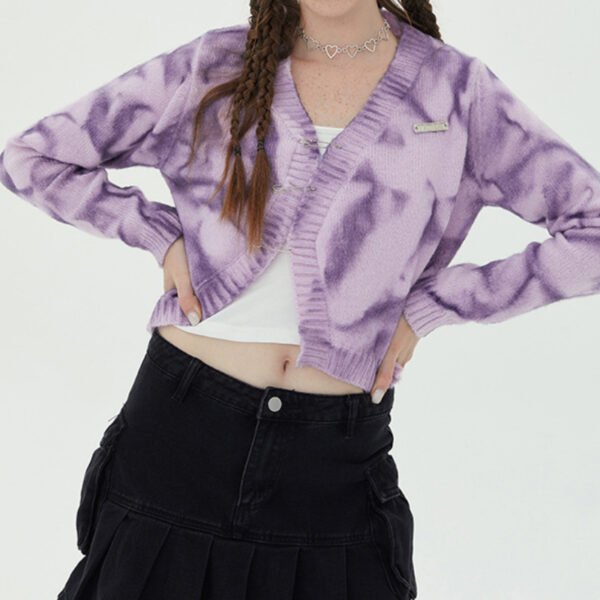


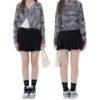


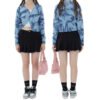
This cardigan is developed around color control rather than random surface variation. The supplied front-and-back image shows grey tonal dyeing, a diagonal zipper, cropped proportions, and ribbed edges; each area can shift differently during knitting and dyeing, making fixed-light approval essential.
The Visual Problem: Irregular Dye Still Needs a Standard
Tie-dye is intentionally uneven, but a buyer still needs a repeatable color target. The image shows a grey base with darker cloud-like areas across the front, sleeves, and back. Without fixed-light comparison, the same recipe can appear materially different between panels.
The technical objective is to define acceptable variation rather than eliminate character. VeeWen should record the approved base tone, darkest zones, contrast range, and placement tolerance using physical references. That gives production a decision framework for preserving the look without promising identical organic patterning.
Lighting Conditions Change Grey Perception
Grey dye work is especially sensitive to illumination, surrounding colors, and camera exposure. The supplied image uses a bright neutral background, helping the garment's tonal differences remain visible. A warmer retail light or darker studio setup could make the same surface appear deeper or flatter.
The buyer should approve color under one documented lighting condition and use that condition for subsequent comparisons. A second viewing environment may be useful for context, but it should not replace the agreed standard. This keeps color decisions anchored to repeatable evidence.
Knitted Structure Can Distort Dye Distribution
Knitwear does not behave like a perfectly flat woven panel. Loops, stretch, recovery, and finishing can alter how dye settles and how tonal areas are perceived after the cardigan is assembled. The image's sleeves and torso show different visual densities, making panel behavior important.
VeeWen's workflow should therefore compare knitted material before and after finishing, then inspect the assembled garment at rest and on form. This sequence helps separate acceptable tie-dye character from distortion caused by stretching, steaming, seam joining, or uneven dimensional recovery.
The Diagonal Zipper Controls the Composition
The diagonal zipper is a visible directional feature running across the cropped front, so its placement affects both color reading and silhouette balance. In the image, the closure interrupts the dyed field and establishes a strong line from the upper body toward the opposite lower edge.
Development should review zipper tape, teeth, puller, seam allowance, and topstitching against the color standard. A dark or light closure can change perceived contrast around the dye boundary. The buyer should judge the full front assembly, not approve the zipper as an isolated trim.
Rib Trims Need Their Own Color Review
The collar, cuffs, and hem use visibly ribbed structures that frame the softer-looking dyed body. Their texture can absorb or reflect color differently, while stretch during wear may expose a lighter interior tone. These differences can make a coordinated cardigan look mismatched.
VeeWen should include rib trims in the same approval set as the body fabric, while allowing for their distinct construction. Review should cover tone, width, recovery, and joining neatness under fixed lighting. The commercial question is whether contrast feels intentional rather than accidental.
Approval Gate: Define Acceptable Variation
The buyer's final decision should identify which variation is part of the design and which variation is a reject condition. Front-to-back consistency may require a tonal range rather than identical marks, while sleeve balance and trim coordination still need clear boundaries.
Once the color standard, fit measurements, zipper specification, rib treatment, and acceptable dye range are approved, VeeWen can place them into the development worksheet. The commercial minimum remains MOQ: 100 pieces per style, with final execution tied to those documented decisions.
Buyer Questions
Is the cardigan fiber composition verified?
No. The image confirms visual knitwear characteristics only; fiber content, yarn specification, gauge, weight, recovery, and finishing behavior remain To Confirm during development.
How should the tie-dye be approved?
Approve a physical color standard under fixed lighting, defining base tone, contrast range, placement tolerance, and acceptable organic variation across body panels and trims.
What fit details require confirmation?
Confirm shoulder width, cropped body length, sleeve length, ease, collar depth, cuff dimensions, hem recovery, and diagonal zipper placement against the approved size specification.
What is the minimum order?
The exact commercial minimum is MOQ: 100 pieces per style. Labels, packaging, size breakdown, and final production requirements should follow the approved worksheet.
Approve the Cardigan Color Standard
Share the target grey reference, fit measurements, zipper preference, and acceptable tie-dye variation. VeeWen can organize the lighting-based approval around knit behavior, trim coordination, and MOQ: 100 pieces per style.


Reviews
There are no reviews yet.