






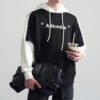

This hooded sweater is best treated as a directional-surface and panel-alignment program. The supplied image shows a black torso, white hood, white sleeves beneath short black overlays, and a front pocket. One-way cutting can protect consistent reflection and shade across those connected components.
Why Directional Cutting Matters Here
Nap or pile reflects light differently when panels face opposite directions. On a garment combining black and white sections, inconsistent orientation can create uneven sheen, apparent shade variation, or a visibly mismatched sleeve and hood even when dye lots are correct.
The image makes those relationships especially important because the white hood and sleeves frame a black torso. A directional cutting rule therefore protects the visual continuity of the blocks, while keeping the loose silhouette from appearing unintentionally fragmented.
Reading the Supplied Panel Layout
The supplied image shows a black central body, white hood, and white sleeves extending below shorter black sleeve overlays. That layered arrangement creates several panel boundaries where surface direction should be reviewed before cutting tickets are released.
A kangaroo pocket spans the lower front, while white drawcords hang against the darker torso. These details create additional viewing lines, so the development sample should show whether pile direction supports clean contrast without introducing unwanted highlights around seams or pocket edges.
One-Way Lay Planning
One-way cutting requires every major panel to follow the same surface direction, increasing fabric usage when pieces cannot be flipped. The trade-off is material efficiency versus dependable appearance, especially when brushed or pile-bearing fabric changes reflection with orientation.
For this style, the lay plan should identify body, hood, sleeve, overlay, cuff, and pocket pieces separately. VeeWen should preserve the directional rule through marker review, then compare cut panels under consistent lighting before approving bulk preparation.
Color Blocking and Shade Control
Black and white panels exaggerate even small visual differences. A reversed nap can make one section look lighter or shinier, while inaccurate matching at the hood, sleeve, and body seams can weaken the intended graphic structure.
The buyer should define acceptable blocking tolerance alongside shade references, because color accuracy alone cannot control a directional surface. Review the garment front, back, and sleeve profile together to confirm that contrast boundaries remain deliberate from each key angle.
VeeWen Product-Development Workflow
VeeWen can convert the visual layout into a panel map that records color assignment, grain direction, seam joins, and inspection views. This makes the cutting axis part of the product specification rather than an informal instruction left to production interpretation.
During sampling, the buyer can approve a directional marker review alongside the hood shape, sleeve layering, pocket placement, and drawcord length. Once accepted, the documented panel map supports grading and cut-and-sew execution without losing the style's graphic balance.
Approval Checkpoint for Bulk Readiness
Bulk readiness should be judged under repeatable lighting with panels laid in the approved direction. Inspect reflection, apparent shade, seam alignment, pocket orientation, and the relationship between short black overlays and longer white sleeves.
The final approval should lock fabric surface behavior, one-way marker rules, color-block tolerances, trim details, and inspection views. MOQ: 100 pieces per style applies to the commercial development decision, while composition and performance remain subject to confirmation.
Buyer Questions
What is the main production risk for this sweater?
The main risk is inconsistent nap direction, which can create visible reflection or shade differences between the torso, hood, sleeves, overlays, and pocket.
Does the source confirm polyester composition?
The source title references polyester, but the supplied evidence does not verify a percentage, fabric construction, or test result, so composition remains To Confirm.
Can one-way cutting affect material consumption?
Yes. Panels may need to face the same direction rather than interlock freely, potentially reducing marker efficiency; the exact effect requires fabric width and pattern review.
What should buyers approve first?
Approve the fabric surface behavior, directional marker, color-block map, and front-view appearance before confirming grading, trim details, and bulk production documentation.
Approve the Directional Panel Map
Share the target fabric reference, artwork, measurements, and lighting review standard. VeeWen can prepare a one-way cutting brief and sample path for approval across every contrast panel.


Reviews
There are no reviews yet.