


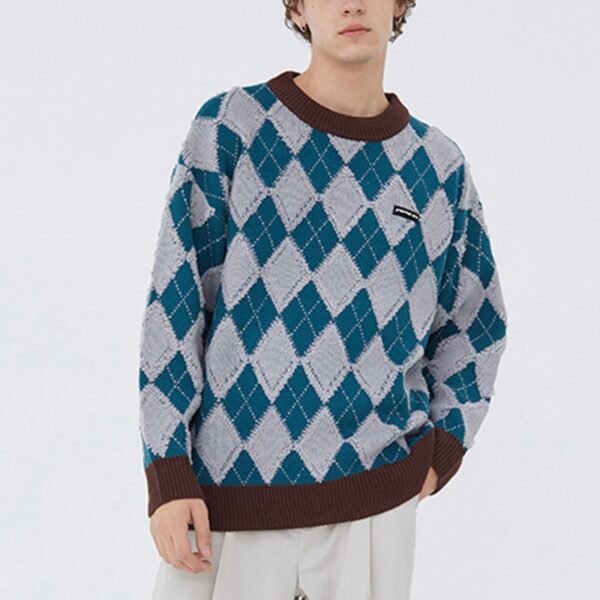



This sweater should be developed as a controlled knit architecture rather than a simple graphic repeat. The visible diamond field, contrasting rib zones, and folded layered garment create concentrated thickness at intersections, making bulk management central to comfort, alignment, and perceived value.
Map Thickness Before Sampling
The front image places repeated diamond junctions across the chest, upper sleeve, and shoulder line. Each junction can accumulate yarn, color changes, or joining allowances, so the first pattern review should identify high-layer zones before silhouette proportions are finalized.
Bulk is most noticeable where the body pattern meets sleeve shaping and where ribbed edges overlap the main knit. VeeWen's development workflow should convert those locations into a seam-clearance map, establishing acceptable thickness and movement targets for the sample approval stage.
Protect Motif Continuity
A checkered sweater is judged quickly by whether its geometry flows across adjoining panels. The supplied image shows diamonds continuing toward the shoulder and sleeve, so mismatch at armhole joins could make the garment appear distorted even when individual panels are technically accurate.
VeeWen should lock a repeat grid, panel notches, and alignment points before grading. The buyer should then inspect the chest-to-sleeve transition in the first sample, because grading or relaxed shaping can shift intersections and expose uneven visual spacing.
Manage Layered Knit Compression
The folded garment visible in the reference demonstrates how multiple knit layers create a thicker bundle at cuffs, hems, and overlapping folds. That evidence supports testing compression and recovery, especially where rib sections meet the patterned body or stack during wear.
A flatter join may reduce bulk but can change the hand, stretch, or appearance of the transition. The practical trade-off is therefore not minimum thickness alone; it is consistent thickness that preserves warmth, flexibility, and a deliberate premium finish.
Balance Unisex Proportions
The displayed garment reads as relaxed and broadly wearable, with room through the torso and sleeves rather than a sharply tailored profile. That proportion supports unisex merchandising, but extra ease can amplify fabric stacking around armholes and underarm intersections.
During VeeWen's product-development review, the buyer should approve shoulder width, sleeve pitch, and underarm clearance together. Adjusting one measurement independently may relieve a pressure point while creating diagonal drag lines or worsening motif displacement at the adjoining panels.
Translate the Argument into Production
For this style, VeeWen's workflow should begin with a construction brief that marks pattern junctions, rib attachments, and required alignment tolerances. The purpose is to make seam-bulk decisions visible to pattern, knitting, and finishing teams before production documentation is released.
The approval package should include the graded pattern, repeat map, yarn reference, joining method, and close-up sample images. Buyers should sign off only when the physical sample demonstrates controlled thickness at intersections without sacrificing the relaxed silhouette shown in the supplied reference.
Set the Approval Gate
The correct approval checkpoint is a combined visual and wear assessment, not a pattern-only review. Examine the sweater flat for diamond continuity, then try it layered to observe arm mobility, cuff stacking, neckline comfort, and thickness through the shoulder.
Record any correction by location, because a broad instruction such as reduce bulk can produce inconsistent changes across panels. The buyer should confirm the accepted construction method, tolerance range, and material details before authorizing the MOQ: 100 pieces per style commitment.
Buyer Questions
What is the main development risk for this sweater?
The primary risk is concentrated thickness where patterned panels, sleeve shaping, and ribbed edges meet, potentially affecting comfort, alignment, and visual refinement.
Can the checkered layout be changed for a private label collection?
Yes, the repeat, palette, rib contrast, proportions, and labeling direction can be developed, subject to sample review and confirmed technical feasibility.
What should buyers inspect in the first sample?
Inspect diamond continuity, shoulder transitions, underarm movement, rib recovery, layered comfort, surface consistency, and thickness at every marked intersection.
What commercial minimum applies to this style?
The stated commercial minimum is MOQ: 100 pieces per style, with final color, material, and construction specifications confirmed before production approval.
Approve the Knit Intersection Review
Send VeeWen your target palette, measurements, and label requirements for a focused sample review covering repeat alignment, seam bulk, comfort, and production-ready specifications.


Reviews
There are no reviews yet.