
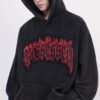


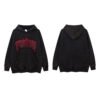
This black pullover hoodie should be developed as a yield-and-placement system, not only as a graphic sweatshirt. Its broad hood, roomy sleeves, kangaroo pocket, and large chest artwork create competing demands for usable width, direction, and cutting accuracy.
Fabric Width Drives Hoodie Economics
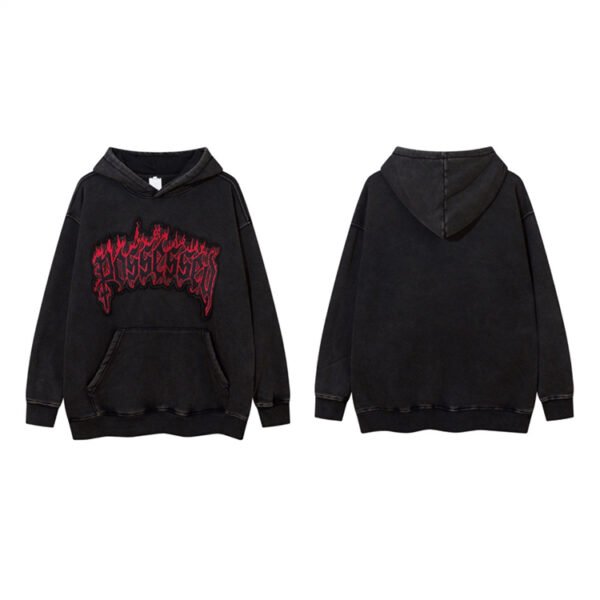
A hoodie consumes fabric through large front and back panels, sleeves, hood pieces, cuffs, and pocket components. The supplied image shows generous proportions in each area, so usable width can materially influence marker efficiency, offcut levels, and the final consumption estimate.
Width planning must begin with the actual fabric state, including tubular or open width, usable margins, shrinkage allowance, and any directional surface. VeeWen should not finalize consumption from a nominal width alone, because the marker must reflect the chosen construction and fabric behavior.
The Hood Creates Directional Demand
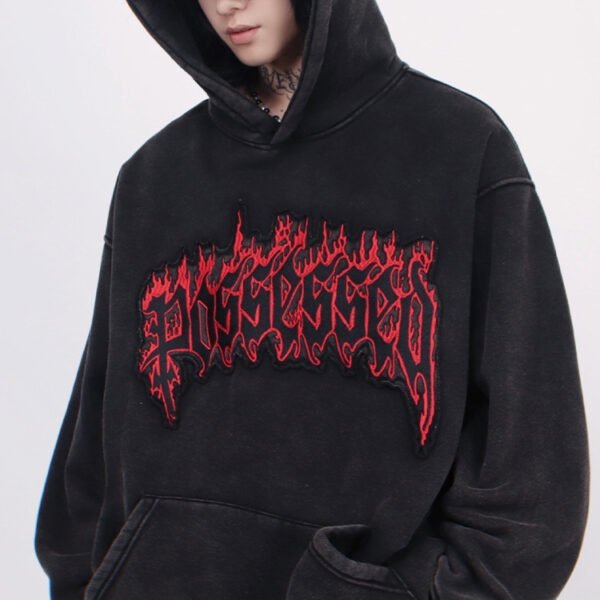
The hood appears deep and layered around the face, requiring careful matching between outer and inner pieces. If the fabric has nap, brushing, print direction, or a noticeable face, each hood panel may need one-way orientation. That requirement can reduce theoretical yield while protecting consistency.
Hood depth also affects how the garment sits when worn. A marker that prioritizes yield but forces unsuitable orientation or distorts the opening can compromise the visual balance. The development sample should therefore confirm hood shape alongside the width assumptions used for costing.
Sleeves and Pocket Compete for Space
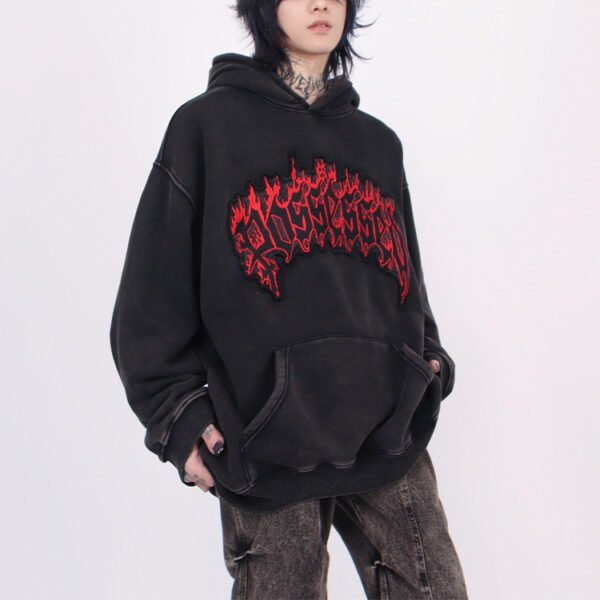
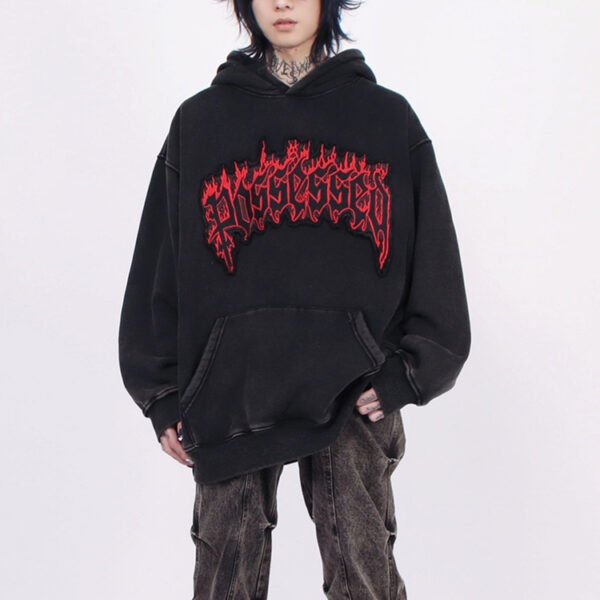
The image shows roomy sleeves and a broad kangaroo pocket positioned across the lower front. Those components compete with body panels for the same cutting real estate. Their shapes, seam allowances, and symmetry requirements should be included in the first marker rather than treated as later additions.
Pocket placement is especially important because the large chest artwork ends above it, while the pocket establishes the lower visual anchor. VeeWen should reserve both artwork clearance and pocket matching allowances, ensuring fabric savings do not create awkward graphic proximity or uneven front balance.
Artwork Placement Affects Consumption
The contrasting chest artwork occupies a wide, visually dominant field. Whether produced through embroidery, applique, or another approved method, its placement requires a stable reference from center front, neckline, shoulder, and pocket. Cutting and decoration teams need one shared placement map.
A large motif can also influence panel orientation, handling, and inspection space. VeeWen should confirm artwork dimensions and allowable movement before finalizing markers. This protects the relationship between graphic scale and hoodie proportions while keeping consumption calculations connected to the actual approved design.
VeeWen Workflow for Width Planning
VeeWen can build this style through a width-first workflow: confirm fabric construction and usable width, develop the graded pattern, then produce a marker using approved orientation rules. The resulting consumption should be reviewed against the hood, sleeve, pocket, cuff, and artwork requirements together.
After the sample is cut, the team should compare planned and actual usage, recording any changes caused by shrinkage, nap, panel matching, or decoration clearance. That evidence can update the production file before bulk cutting, where small planning errors multiply across every garment.
Buyer Approval Checkpoint
The buyer should approve the consumption plan when the marker uses the confirmed usable width, respects any directional requirement, and preserves symmetrical hood, sleeve, pocket, and artwork placement. Approval should reference the graded size range because larger sizes can change the yield equation.
Before ordering, confirm fabric composition, GSM, inside finish, color standard, artwork technique, embroidery backing, size chart, and tolerance schedule. The commercial decision is to accept a transparent consumption basis that protects both landed-cost planning and the intended graphic composition.
Buyer Questions
Does the image verify embroidery?
The image visibly suggests raised front artwork, but it does not verify the technique. Embroidery, applique, print, backing, stitch density, and attachment method require confirmation.
Why is fabric width important for this hoodie?
Wide body panels, deep hood pieces, roomy sleeves, and a broad pocket compete for marker space. Usable width and orientation therefore affect yield and consumption.
Can the artwork be resized for different garments?
Yes, artwork scale can be adjusted, but each size range needs placement review against neckline, pocket, shoulder balance, and the approved front panel dimensions.
What is the minimum order?
The commercial minimum is MOQ: 100 pieces per style. Final specifications, approved artwork, colorways, sizing, and production documentation should accompany the order.
Approve the Width and Placement Plan
Share your artwork file, target measurements, fabric direction, and size range with VeeWen. We will coordinate marker consumption with hood, sleeve, pocket, and decoration placement before production approval.


Reviews
There are no reviews yet.