






This custom crewneck sweatshirt converts a crisp white base and blue ice-themed front graphic into a development study balancing softness with dimensional stability. VeeWen should validate hand feel, rib recovery, and print registration together, because comfort gains can expose distortion around the neckline, hem, and artwork after laundering.
Graphic Architecture Sets the Stability Test
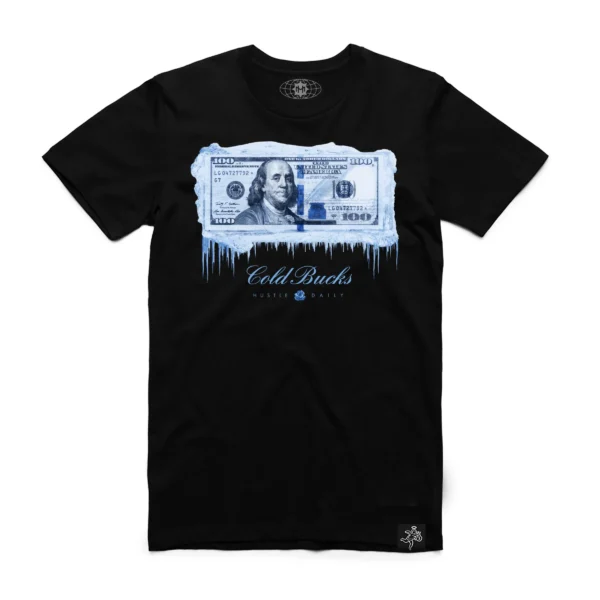
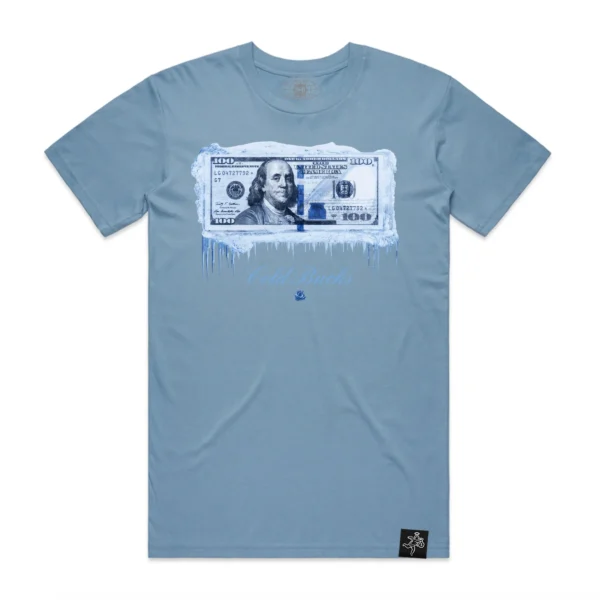
The reference centers a large rectangular money graphic across the upper front, with blue frost surrounding its edges and long vertical drips below. That composition creates broad visual weight, so even minor body torque or shrinkage can make the print appear misaligned.
The lower script and small blue mark create a second alignment zone beneath the main rectangle, while the dark hem label introduces a separate anchor. VeeWen should map every artwork coordinate from shoulder points and side seams before selecting the final sweatshirt block.
Evidence Translation for a Sweatshirt Program
The supplied image visibly shows a white short-sleeve top, not confirmed sweatshirt fleece, yet its artwork, color contrast, and lower label provide usable design evidence. The product record therefore treats substrate, weight, and rib construction as development variables requiring buyer approval.
A sweatshirt adaptation should preserve the reference hierarchy: white ground, pale blue ice edge, darker blue currency detail, script beneath, and a small lower label. Changing the body to fleece may alter drape and print absorption, so the first sample needs direct visual comparison.
Softness Is a Surface and Handle Choice
A softer finish can improve first-touch comfort and make the white body feel more premium, but excessive relaxation may reduce visual crispness around the crewneck and cause the graphic field to settle unevenly. The correct target is a smooth hand without a limp silhouette.
VeeWen can evaluate softening through controlled fabric and finishing options while keeping artwork placement constant. Buyers should judge the garment both flat and worn, checking whether the ice border remains visually dense or becomes blurred by surface texture.
Shape Retention Protects the Graphic
Shape retention depends on the interaction between knit recovery, rib construction, seam stability, finishing, and laundering. On this design, the neckline and lower hem matter especially because the artwork begins high on the chest and the label fixes attention near the bottom edge.
Retention testing should inspect shoulder width, neck opening, sleeve opening, body length, and side-to-side skew after the agreed wash process. No performance result is verified here; the approval decision should rely on VeeWen samples and buyer-defined evaluation criteria.
Workflow Checkpoint: Two Finish Routes
VeeWen should develop two controlled routes from the same pattern and artwork file: one emphasizing a softer hand, the other emphasizing recovery and cleaner post-wash geometry. Keeping graphic scale, placement, and color constant isolates the finish decision for the buyer.
During review, the buyer should compare tactile comfort, neckline return, cuff behavior, hem waviness, and graphic registration. Once one route is approved, VeeWen can lock the material reference, finishing direction, decoration settings, and measurement tolerances for the production specification.
Approval Gate Before Commercialization
Approve this style when the chosen fabric and finish deliver the intended softness without making the body collapse or the graphic lose its rectangular structure. The visual target is a comfortable sweatshirt that still reads deliberate when displayed flat.
Before confirming production, sign off the final block, rib dimensions, artwork coordinates, label position, color references, wash evaluation method, and packaging presentation. The commercial planning baseline is MOQ: 100 pieces per style, with unresolved composition and testing details recorded as To Confirm.
Buyer Questions
Can this reference become a sweatshirt instead of a short-sleeve top?
Yes. The graphic hierarchy can transfer to a crewneck sweatshirt, but fleece selection, artwork scale, rib proportions, and resulting drape require sample approval.
How should softness and recovery be evaluated?
Compare matched samples after the buyer-defined wash process, examining hand feel, neckline return, cuff behavior, hem stability, and graphic alignment on body.
Is the fabric composition already verified?
No. The supplied evidence does not state fiber percentages or finished weight, so VeeWen should record both as To Confirm during development.
What is the minimum commercial quantity?
The exact commercial minimum is MOQ: 100 pieces per style. Final costing, color allocation, and production planning should follow approved specifications.
Approve the Hand-Feel Direction
Send VeeWen your preferred softness benchmark and artwork file so we can prepare matched development routes for review. Confirm the sweatshirt block, retention priorities, decoration details, and MOQ: 100 pieces per style.



Reviews
There are no reviews yet.