
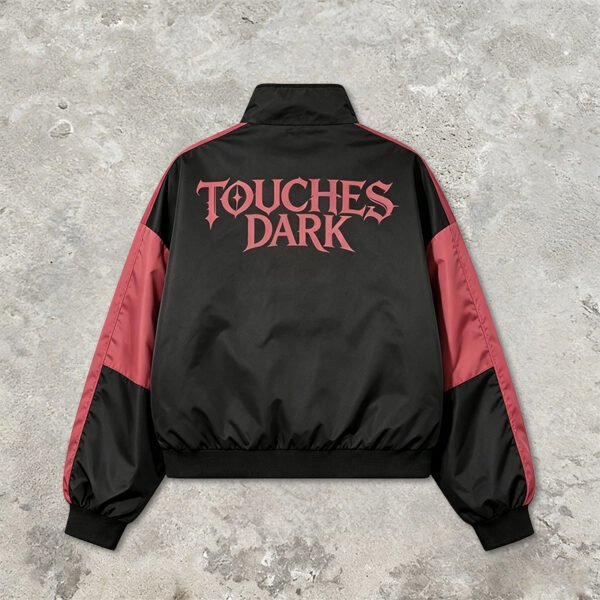
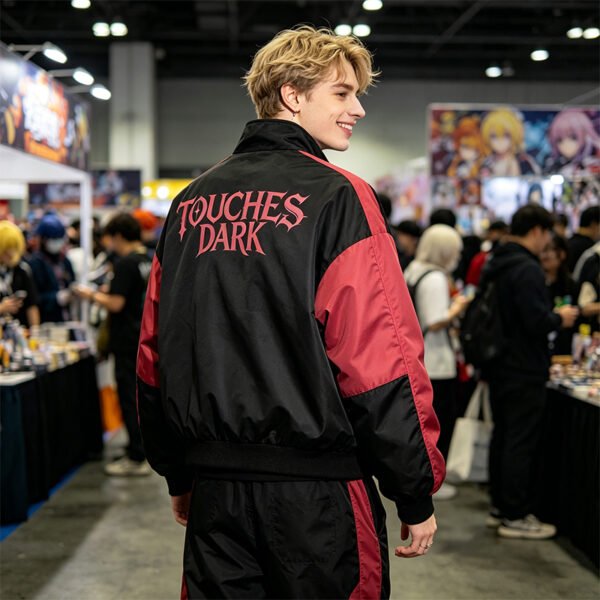
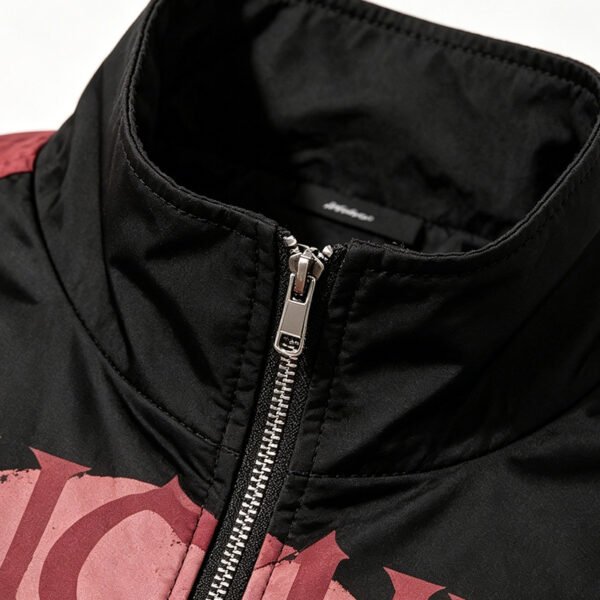

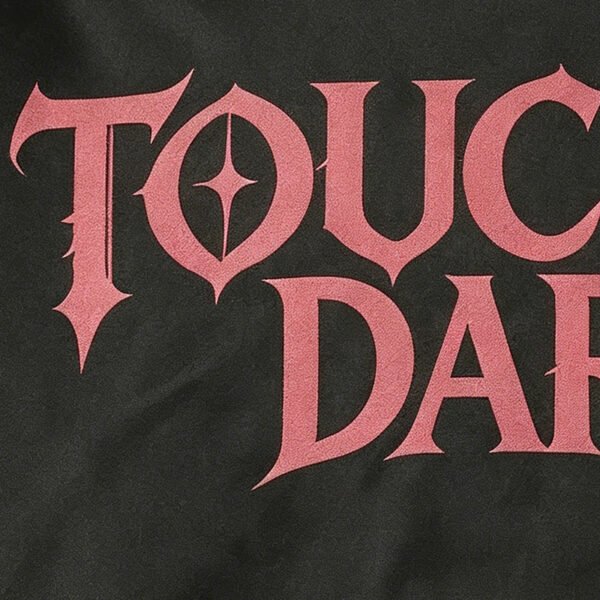
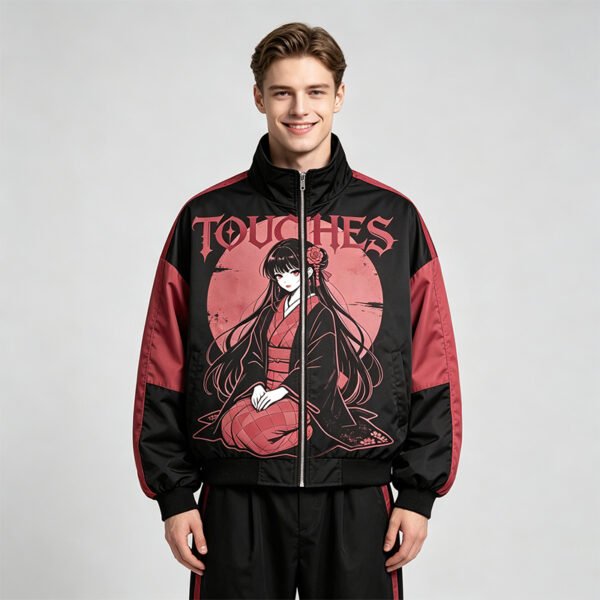
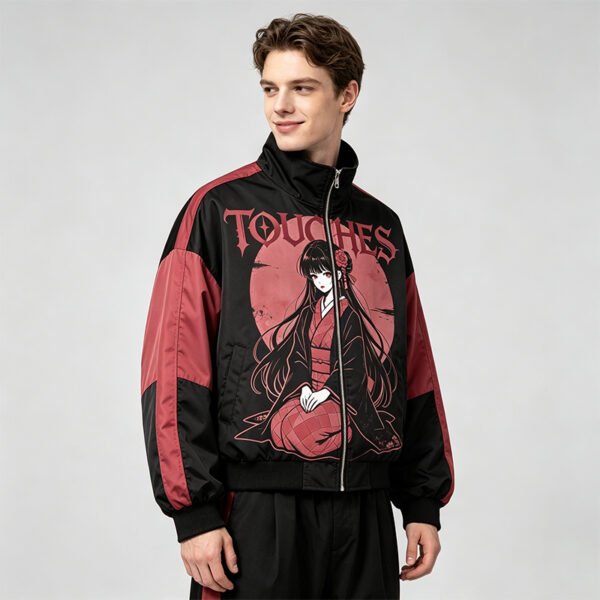

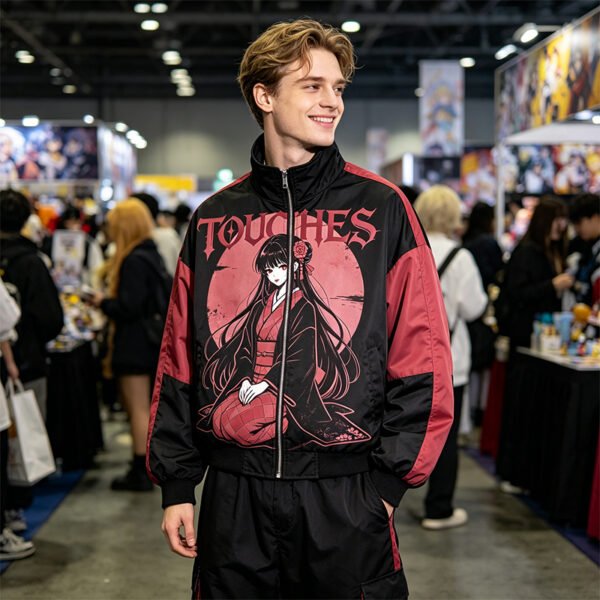
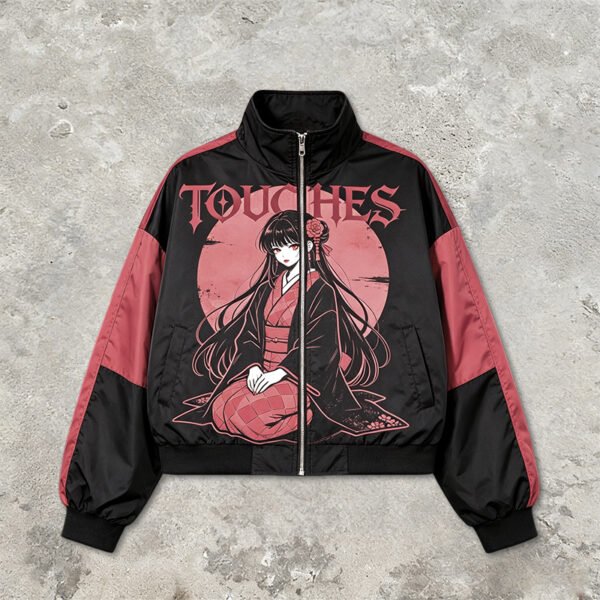
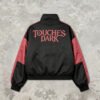




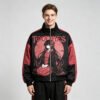
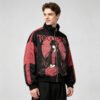
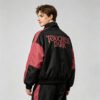

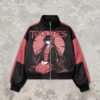
This jacket is best developed as a pressure-management project: the visual impact comes from a large back print and contrasting panels, while ribbed edges and any brushed interior require protection during pressing, curing, folding, and packing.
Pressure Zoning For The Back Graphic
The back graphic occupies a broad, uninterrupted black panel, making registration and edge alignment especially visible. Development should define a stable print board, controlled squeegee pressure, and panel-specific handling so the image remains even without distorting adjacent jacket construction.
Because the graphic sits near shoulder seams and above a gathered lower body, placement cannot be judged only on a flat table. A physical fit sample should confirm how movement, seam tension, and hem gathering alter the perceived height, width, and centering of the print.
Protecting Ribbed And Brushed Surfaces
The image clearly shows ribbed cuffs and hem, while the supplied axis calls for pile protection. If the final garment includes fleece, brushed lining, or another raised surface, pressing pressure must be limited where compression could flatten loft or leave a permanent shine.
The practical control is separation: keep hot print equipment, wet ink contact, and hard folding surfaces away from exposed raised areas. VeeWen development should document protective interlinings or paper barriers only after the actual shell and lining materials are confirmed.
Patchwork Seams And Print Clearance
Rose-red sleeve and shoulder panels meet the black body through strong diagonal and curved seam transitions. These joins create visual landmarks that can improve graphic placement, but they also make seam ridges potential pressure points during screen printing, curing, and final pressing.
Before approval, the pattern team should map every seam beneath or near the artwork and establish minimum clearance. A print strike-off on the intended assembled panel will reveal whether seam bulk, fabric stretch, or panel shrinkage changes the graphic outcome.
Ink Durability Without Surface Damage
A large back print needs enough ink deposit and cure control to remain legible, yet excessive heat or dwell time can damage synthetic-looking shell materials or compress a brushed interior. The correct balance depends on the confirmed substrate, ink chemistry, and equipment settings.
Testing should compare print opacity, hand feel, adhesion, and wash response while inspecting nearby ribs and any raised lining for flattening. These observations create a measurable approval record without assuming performance that the supplied source does not verify.
VeeWen Development Workflow
VeeWen can convert this pressure argument into a development gate by separating pattern approval, material confirmation, print strike-off, and assembled-garment pressing review. Each stage should record the surface condition before and after handling, keeping the graphic decision tied to construction evidence.
For the first technical package, submit artwork scale, panel map, seam locations, shell and lining references, rib specifications, and proposed print zones. VeeWen then has the information needed to align cutting, sewing, printing, pressing, inspection, and packing decisions.
Buyer Approval Checkpoint
The buyer should approve this style only when the assembled sample demonstrates centered artwork, clean color-block joins, stable rib recovery, and no visible crushing or heat marks. Approval should cover both front appearance and the interior surface after finishing and folding.
If the final material includes no pile or brushed layer, simplify the protection requirement and retain pressure controls for ribs, seam ridges, and shell distortion. The commercial checkpoint remains MOQ: 100 pieces per style after the specification is signed.
Buyer Questions
Is the jacket suitable for a raised or brushed lining?
Potentially, but the lining composition and loft must be confirmed first. Sampling should verify that printing, curing, pressing, and packing do not flatten or mark the interior surface.
What should the first sample prioritize?
Prioritize assembled-panel print placement, seam clearance, color-block alignment, rib behavior, and surface protection. These checks address the visible design mechanism before commercial grading and bulk approval.
Can the graphic be revised during development?
Yes. Artwork scale, ink coverage, placement, and color can be reviewed against the confirmed pattern and substrate. Any revision should be rechecked at assembled-garment level before approval.
What is the minimum order quantity?
The exact commercial minimum is MOQ: 100 pieces per style. Final quantities, colors, sizes, and production details remain subject to the approved technical specification.
Approve The Pressure-Controlled Sample
Send the artwork, pattern references, shell and lining details, and target color standards. VeeWen can then prepare a development review focused on print clarity, seam interaction, and surface protection.



Reviews
There are no reviews yet.