

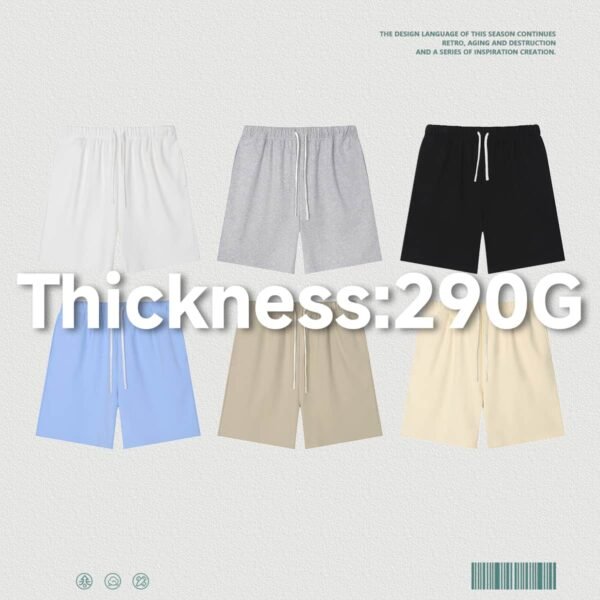







This short program is defined by a practical matching challenge: introducing a stripe or check while preserving clean joins around pockets, side seams, and the elastic waist. The supplied reference confirms 290G weight, relaxed proportions, and several color directions, but patterned execution requires deliberate approval.
Pattern Matching Starts at the Repeat Plan
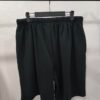
The supplied main image shows black shorts with a clean solid surface, white drawcord, elastic waistband, side pockets, and a loose leg. No stripe or check is visible, so join matching becomes a production checkpoint, not a confirmed feature for this program.
If a stripe or check is introduced, matching depends on repeat alignment, cut direction, notch placement, and seam joining sequence. At side seams and pocket openings, small offsets can become visible. A paper pattern review should therefore establish matching tolerances before cutting begins.
290G Material Requires Controlled Pattern Translation
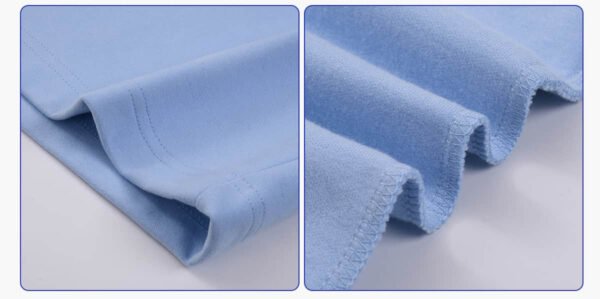
The source image explicitly identifies an 80% cotton, 20% polyester composition and 290G weight. That combination points to a midweight fleece hand suited to casual shorts, while blend behavior, shrinkage, and surface stability still require confirmation before approval.
A patterned surface can expose fabric distortion more readily than the supplied solid presentation. VeeWen development should check whether the selected repeat remains visually square after washing, pressing, and panel relaxation, then adjust marker direction and allowances before the approved sample is used.
Pocket Geometry Is a Visible Approval Point
The reference clearly shows side-entry pockets integrated into the loose short silhouette. When a stripe or check crosses those openings, the pocket bag, facing, and front panel must preserve the intended visual line rather than interrupting it unpredictably.
The elastic waist and long white drawcord provide strong horizontal and vertical references in the image. A buyer should review those anchors alongside side-seam matching, because uneven repeat placement can make an otherwise relaxed garment appear careless or asymmetrical.
How VeeWen Should Develop the Matching Logic
VeeWen can begin from the supplied solid reference by freezing the silhouette, pocket placement, waistband height, and visible length. The next development action is a patterned cutting plan that records repeat width, direction, and the exact joins requiring visual continuity.
The prototype review should inspect front panels, side seams, pocket entries, and hem alignment under natural viewing distance. Any approved tolerance should be recorded on the technical file, allowing later colorways to follow the same matching logic without treating the solid image as proof.
Matching Adds Value but Also Consumes Material
Stripe or check matching can create a more deliberate surface, but it may reduce marker efficiency because panels need directional placement and additional alignment consideration. The trade-off is material usage against a clearer visual standard at important garment joins.
The 290G reference also suggests a fabric with enough body to reveal seam relationships. Buyers should balance repeat ambition with handling, wash stability, and the relaxed shape shown, since an overly complex pattern can compete with the short's straightforward everyday function.
Final Sample Check Before Production Release
Before production release, approve the selected repeat, color contrast, and alignment tolerance using a fully assembled sample. Inspect the waistband, side seams, pocket openings, and hem while the garment is worn or laid naturally, not only on a cutting table.
The release decision should confirm graded proportions, drawcord positioning, pocket access, and post-wash appearance alongside the matching result. If the supplied solid styling remains preferred, record that decision clearly and keep patterned joins as an optional development route.
Buyer Questions
Is the supplied reference already striped or checked?
No. The main image presents solid shorts and color swatches, so stripe or check matching must be developed, sampled, and approved separately.
What material information is confirmed?
The source graphic states 290G and identifies 80% cotton with 20% polyester; final composition, shrinkage, and finish remain subject to confirmation.
Where should matching receive the closest review?
Prioritize side seams, pocket openings, front panels, and hems, because those locations make repeat displacement easiest to see during approval.
What is the commercial minimum for this style?
VeeWen's exact commercial minimum is MOQ: 100 pieces per style, with final specifications and patterned construction confirmed through development.
Approve the Patterned Short Direction
Send the preferred repeat, color references, and target measurements for a VeeWen development review focused on matching tolerances, pocket alignment, and sample approval.


Reviews
There are no reviews yet.