



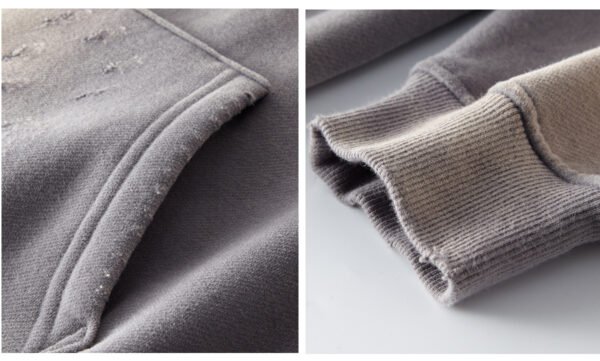











This pullover hoodie turns heavy fleece and irregular wash character into a controlled development problem: preserve dimensional balance while keeping abrasion, shading, and relaxed volume visibly intentional after laundering.
Dimensional Stability Behind the Distressed Surface
The central risk is not simply shrinkage; it is uneven relaxation between fleece panels, rib sections, and washed seams. A hoodie can retain its visual size yet lose balance when the body shortens differently from sleeves or the hood shifts sideways.
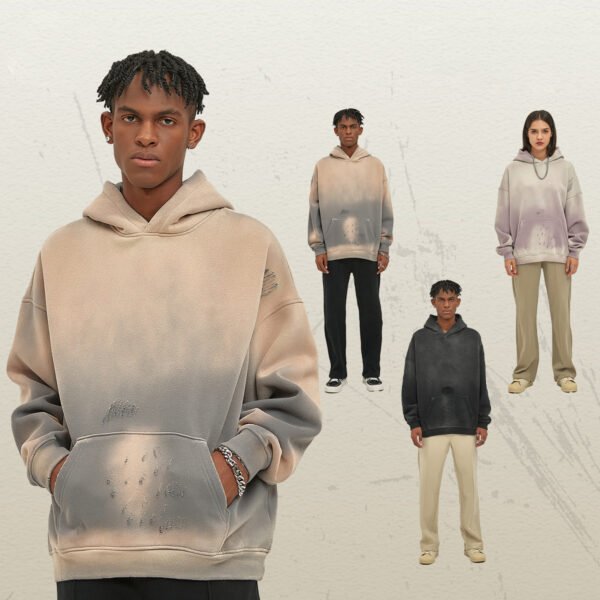
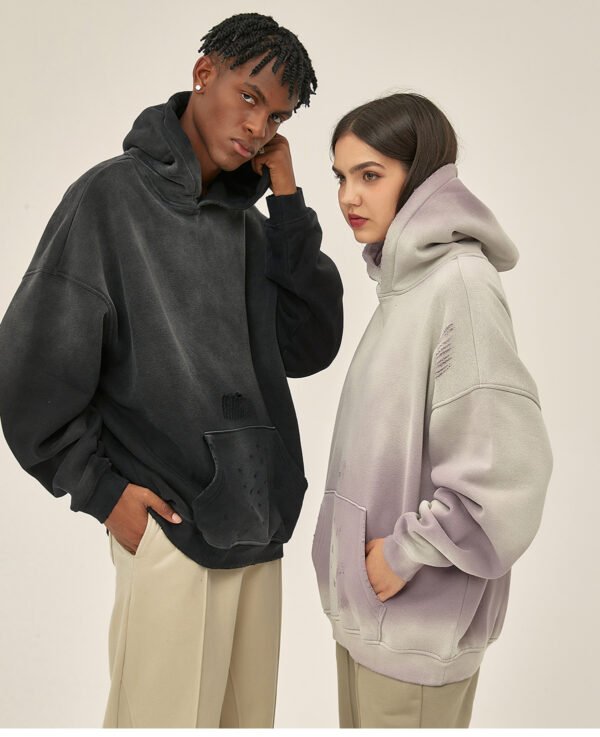
The image gives a useful approval target: the beige sample presents a broad, centered front, level pouch pocket, and symmetrical hood opening. Those relationships should be measured before and after wash, because distressed effects are only commercially persuasive when the underlying silhouette remains stable.
Controlling Torque Through Pattern and Sewing
A fleece pullover develops torque when knit panels, seam allowances, ribbing, and wash moisture release tension at different rates. Pattern grain direction, balanced seam allowances, consistent feed, and matched rib recovery therefore matter as much as the nominal fabric weight.
For this design, the sleeve-to-body relationship deserves special attention. The visual shows dropped shoulders and substantial sleeves; any rotational drift will be conspicuous at the cuffs and side seams. VeeWen should record center-front, cuff angle, and side-seam rotation during fit review.
Wash Character Without Randomized Failure
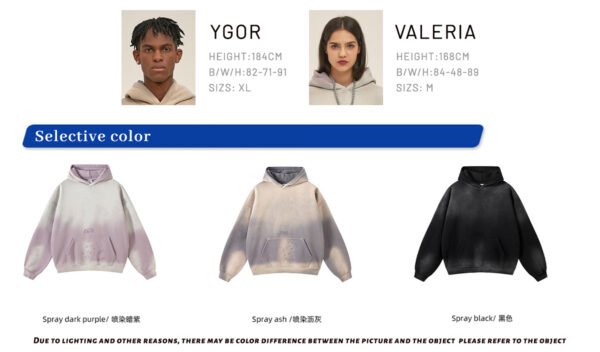
Spray dye and distressing create value through variation, but uncontrolled variation can exaggerate dimensional defects. The displayed beige, grey, lavender, and black versions suggest a repeatable tonal concept rather than one accidental finish, making placement mapping essential for production consistency.
Development should separate color deposition, abrasion intensity, and relaxation exposure into reviewable variables. Buyers can then decide whether the target is soft tonal fading, stronger lower-body contrast, or sharper distressed marks while protecting the approved measurements and panel balance.
Evidence-Led VeeWen Development Workflow
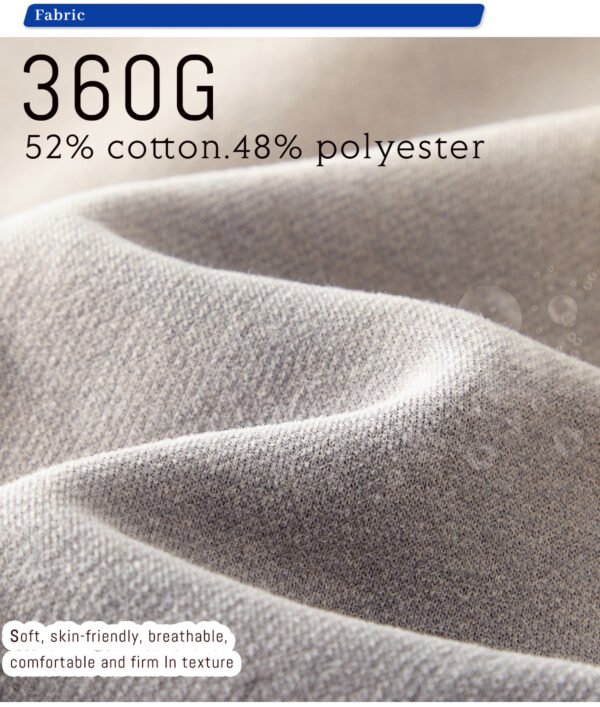
VeeWen's workflow for this hoodie should begin with a construction sample in the stated heavy-weight reference, followed by a pre-wash measurement sheet and a controlled finish trial. The key handoff is a paired comparison showing how each treatment changes body dimensions, hood position, and torque.
At the approval meeting, the buyer should sign off on a wash recipe range, distress map, tolerance points, and color-specific appearance references. VeeWen can then use those checkpoints for size grading and production inspection without treating visual irregularity as permission for uncontrolled distortion.
Trade-Offs Buyers Should Resolve Early
More aggressive abrasion can make a garment look older and more tactile, yet it also reduces local surface strength and may expose dimensional differences more clearly. Heavier fleece adds substance, but it can increase drying stress, handling weight, and relaxation during finishing.
A cleaner distress map improves repeatability, while a looser map feels more artisanal. The commercial decision is therefore a balance between recognizable wash character and measurable consistency. Confirm the acceptable range for fading, abrasion density, and post-wash measurements before approving the final standard.
Approval Tests for the Production Standard
The final sample review should compare at least one untreated construction reference with the finished garment. Measure chest, body length, sleeve length, cuff opening, hood opening, and pocket position, then inspect whether side seams and sleeves remain visually balanced after laundering.
Approve the style when the finish communicates deliberate tonal depth without masking fit problems. Record front and back photographs, measurement tolerances, distress locations, and color notes as the production reference. Any unresolved torque or shrinkage difference should return to pattern or process correction.
Buyer Questions
Is the hoodie suitable for a unisex collection?
Yes, the visual presents a relaxed silhouette that can support unisex development, subject to size grading, proportion review, and buyer-approved measurement standards.
What should be tested first during sampling?
Test dimensional change and seam torque first, then review hood alignment, sleeve balance, pouch placement, distress distribution, and color appearance after laundering.
Can the distressed finish vary by colorway?
Yes, colorways may require separate dye and abrasion calibration, while maintaining a shared placement map and clearly documented visual tolerance for production.
What is the commercial minimum?
The exact commercial minimum is MOQ: 100 pieces per style, with final color, size, finish, and development requirements confirmed during quotation.
Approve the Controlled Wash Direction
Send your target measurements, color references, and distress priorities to VeeWen for a development review focused on dimensional stability, seam torque, and repeatable finished appearance.


Reviews
There are no reviews yet.