
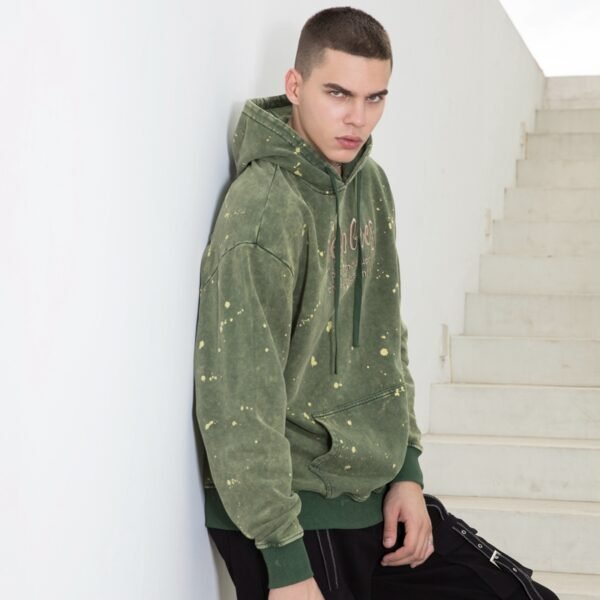







This pullover hoodie is developed around the relationship between dense chest embroidery and an intentionally irregular acid-washed surface. The commercial opportunity is a recognizable streetwear body whose decoration remains legible after washing, handling, and repeat production at MOQ: 100 pieces per style.
Why Fabric Stability Controls Embroidery Quality
Embroidery adds concentrated thread tension to a soft knitted body, while acid washing can alter loop dimensions and surface color. If the fabric shifts unevenly, lettering or motifs may ripple, distort, or sit differently from one garment panel to another.
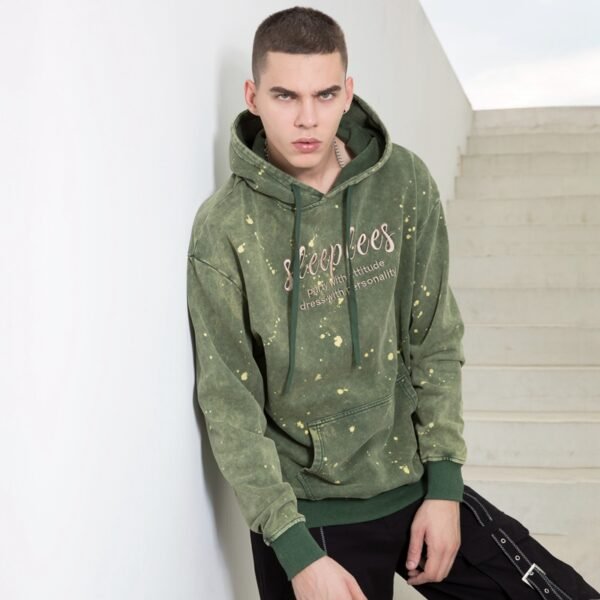
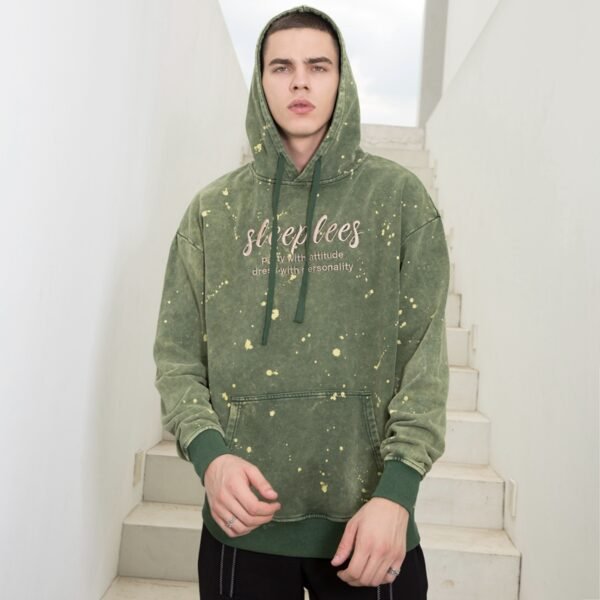
The supplied image shows front embroidery positioned over a broad chest area, where puckering would remain highly visible. Development should therefore evaluate fabric recovery, backing selection, stitch density, and post-wash registration together rather than approving artwork separately from the garment body.
Reading the Acid-Wash Surface
The olive hoodie presents irregular pale marks distributed across the hood, sleeves, chest, and lower body. That variation is part of the product identity, but it also means each panel may carry a different visual field beneath the embroidery and painted details.
VeeWen's development workflow should map wash placement before finalizing the chest motif. A placement sample can establish acceptable variation zones, protecting the focal embroidery from overly dark or heavily marked areas while preserving the intentionally non-uniform appearance.
Managing Dense Chest Decoration
A dense embroidered chest design increases local weight and stiffness compared with the surrounding knit. On a hoodie with a soft drape, that contrast can create a raised focal point, but excessive coverage may reduce flexibility or pull the front body out of shape.
Artwork approval should include a measured density range, underlay strategy, and edge treatment appropriate to the selected knit. The buyer should judge the actual decorated sample from front and side views, checking whether the motif supports the intended relaxed silhouette.
Balancing Hand-Painted Effects and Repeatability
Hand-painted marks introduce desirable irregularity, yet production still needs boundaries for color intensity, droplet scale, and placement. The visible pale flecks vary across the garment, so the commercial standard should define intentional variation without allowing accidental misses or concentrated staining.
During VeeWen's sampling process, a visual tolerance sheet can separate approved artistic variation from defects. The buyer should review multiple washed samples together, confirming that the surface treatment feels consistent as a collection while retaining the handmade character described by the source.
Trims and Decorated Panel Relationships
The hood, cuffs, and waistband appear darker and more structured than the washed body, creating a frame around the decorated torso. This contrast helps the embroidery read clearly, but trim recovery and shade matching must remain stable after laundering.
VeeWen should review rib specification, seam bulk, and color interaction alongside the embroidery sample. The approval checkpoint is whether the trims support the body treatment without appearing disconnected, especially where the kangaroo pocket seam intersects the lower decorated field.
Buyer Approval Checkpoint
The core approval decision is not simply whether the hoodie looks distressed. It is whether embroidery remains aligned and readable after the same wash sequence that creates the acid-wash character, with acceptable variation across repeated garments.
VeeWen can move the style forward through a documented sequence of fabric confirmation, decoration strike-off, wash trial, graded sample review, and pre-production approval. The buyer should sign off only when appearance tolerances and construction measurements are recorded together.
Buyer Questions
Can the acid-wash pattern be customized?
Yes, placement, contrast, and intensity can be developed, but the buyer should approve physical wash trials because knitted panels absorb treatments unevenly.
How should embroidery density be approved?
Review the strike-off on the selected fabric, then inspect a washed garment for puckering, registration, stiffness, and legibility before confirming production artwork.
Is the hoodie suitable for private-label development?
Yes, the body, decoration, trims, labels, and wash appearance can be developed as one coordinated specification for a private-label streetwear program.
What is the minimum order quantity?
The commercial minimum is MOQ: 100 pieces per style, with final quantities and specifications confirmed during quotation and production planning.
Develop the Embroidered Wash as One System.
Send your artwork, target measurements, and wash direction to VeeWen for a coordinated development review. We will identify the fabric and decoration checkpoints required before approving MOQ: 100 pieces per style.



Reviews
There are no reviews yet.