
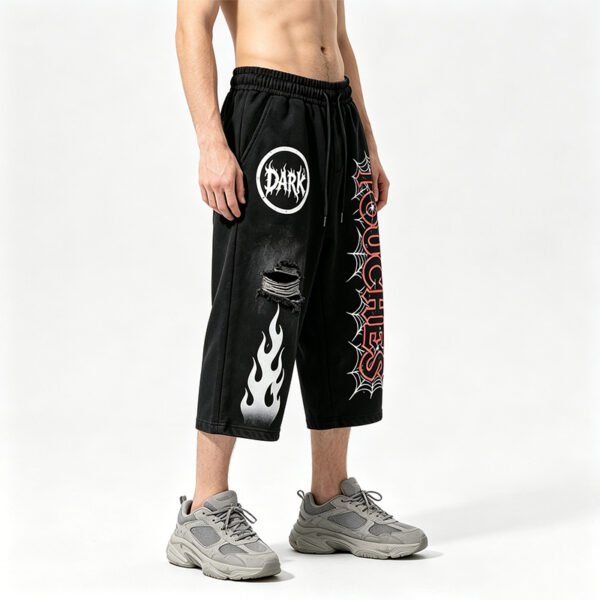
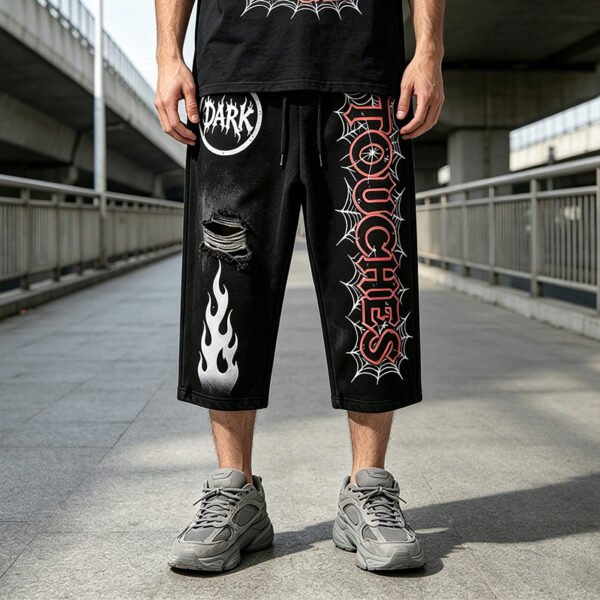
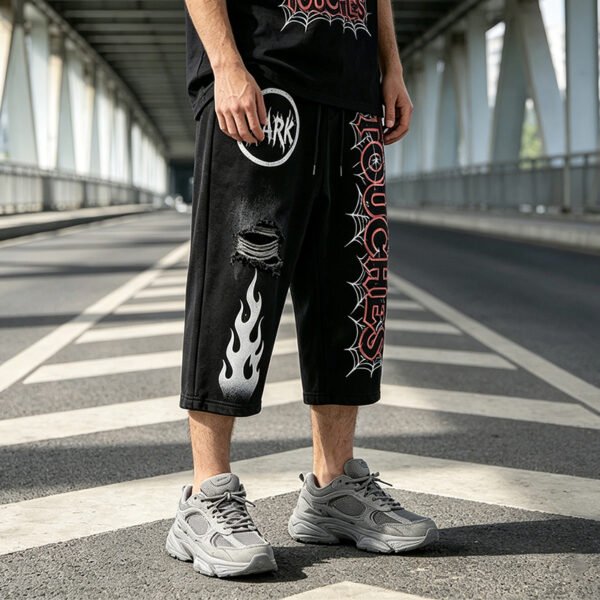
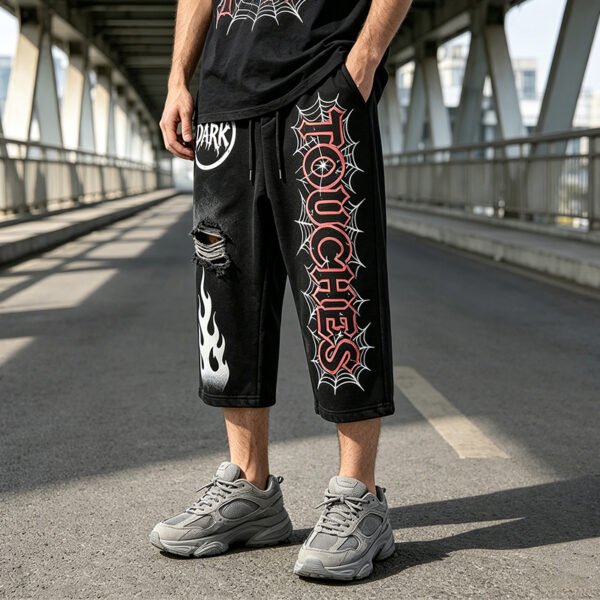


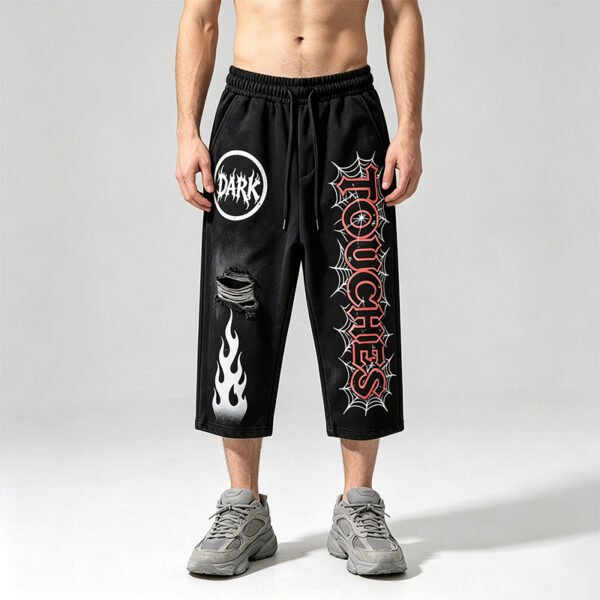
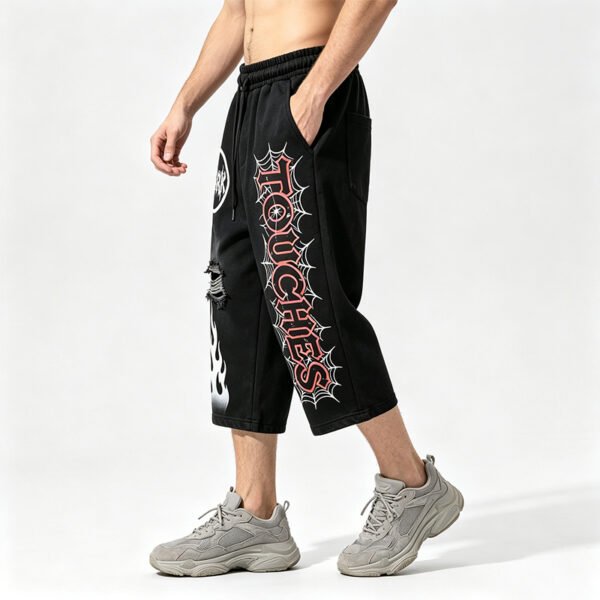
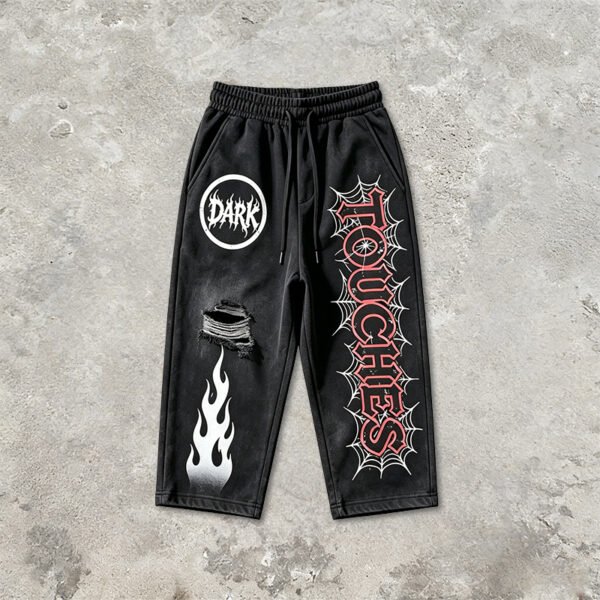
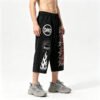


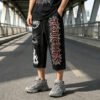


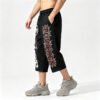
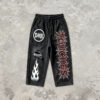
This custom cropped graphic pant is developed around proportion, not decoration alone. The supplied image shows a high elasticated waist, broad leg, mid-calf ending, and strong outer-leg artwork. VeeWen can convert that visual balance into a measured block for repeatable sampling and production approval.
The Proportion Thesis
The visual identity depends on controlled interruption of the leg line. A high waist anchors the body, while the broad cropped leg creates volume below the hip. If the rise drops or the hem narrows, the garment can lose its intended balance and read like shortened trousers.
The image also shows how artwork participates in proportion. The long outer-leg graphic visually extends the side seam, while the mid-calf hem creates a clear stopping point. Together, these elements require coordinated measurements rather than independent styling decisions during development.
Rise and Waist Behavior
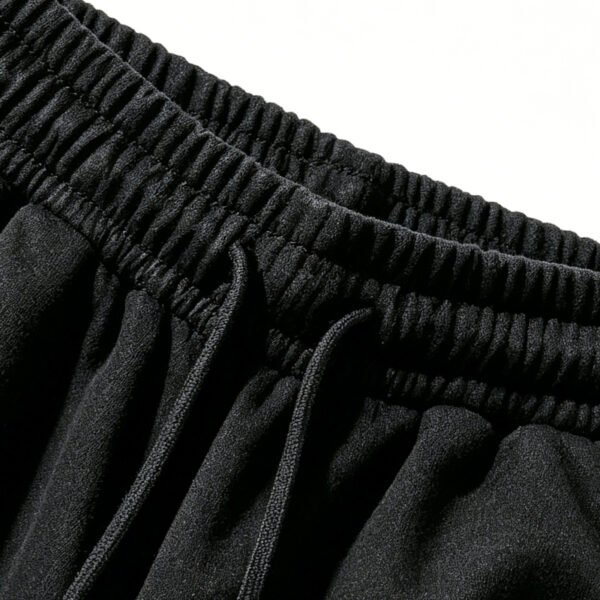
The elasticated waist is visually substantial and appears supported by a drawcord, giving the wearer adjustment without changing the design language. The rise should therefore be tested for waistband roll, front comfort, and pocket access across the intended size range.
A rise that is too shallow can pull the crotch upward when seated, while an overly deep rise may exaggerate the cropped effect. VeeWen's sample review should compare standing and seated wear, recording the approved rise against the waistband construction and body measurements.
Inseam and Hem Opening
The supplied front view places the hem around mid-calf and keeps the opening generous. That relationship allows the pants to sit over substantial footwear while preserving airflow and movement. The approved inseam must be assessed together with leg width, because either change alters the visual proportion.
Hem-opening measurement is especially important for grading. A fixed visual width may become restrictive in larger sizes or overly expansive in smaller sizes. The pattern should establish a controlled opening rule, then verify it on samples styled with the target sneaker or boot profile.
Graphics and Distressing Placement
The image presents a strong vertical outer-leg graphic, a circular upper-leg mark, a flame-like lower-leg motif, and localized ripped distressing. These placements create directional movement across the cropped block and should be mapped from stable pattern landmarks instead of positioned by eye.
Artwork and distressing can also affect perceived width. A large side print may make the leg appear narrower or longer, while a thigh opening interrupts the surface near the widest area. Approval should check print scale, seam clearance, and distress location after washing or finishing trials.
VeeWen Development Workflow
VeeWen should begin by translating the reference silhouette into a measurement sheet covering rise, inseam, knee width, hem opening, waistband height, and drawcord position. The first sample then tests the complete proportion system on-body, with comments separated between fit, artwork, and finish.
After the buyer approves the block, the development record can lock grading rules and placement coordinates before production preparation. MOQ: 100 pieces per style applies to the commercial plan, while fabric composition, wash recipe, and print durability remain approval checkpoints.
Buyer Approval Checkpoint
The buyer should approve this style only when the cropped length remains intentional across sizes and the broad opening works with the collection's footwear. Review front, side, and seated views, because the supplied image confirms appearance but not comfort or movement.
A final sign-off should record the rise, finished inseam, hem opening, waistband dimensions, graphic coordinates, and distressing boundaries. Those decisions protect the garment's identity during grading and manufacturing, while unverified material and performance details stay explicitly open for confirmation.
Buyer Questions
What is the key development risk for these cropped pants?
The main risk is imbalance between rise, inseam, and hem opening, because changing one measurement can alter styling, footwear clearance, mobility, and perceived leg volume.
Can the graphics and distressing be repositioned?
Yes, placement can be developed through approved artwork maps and pattern landmarks, while final scale, seam clearance, and distress boundaries should be confirmed on samples.
What material information is currently verified?
No composition percentage, fabric weight, or performance claim is verified by the supplied evidence. VeeWen should confirm those details through the selected fabric and approved sample.
What is the minimum commercial quantity?
The commercial minimum is MOQ: 100 pieces per style. Final planning still depends on approved specifications, colorways, artwork, materials, and production documentation.
Approve the Proportion Block
Send the target size chart, footwear references, and artwork files so VeeWen can develop the rise, inseam, hem opening, and finish checkpoints for approval.



Reviews
There are no reviews yet.