


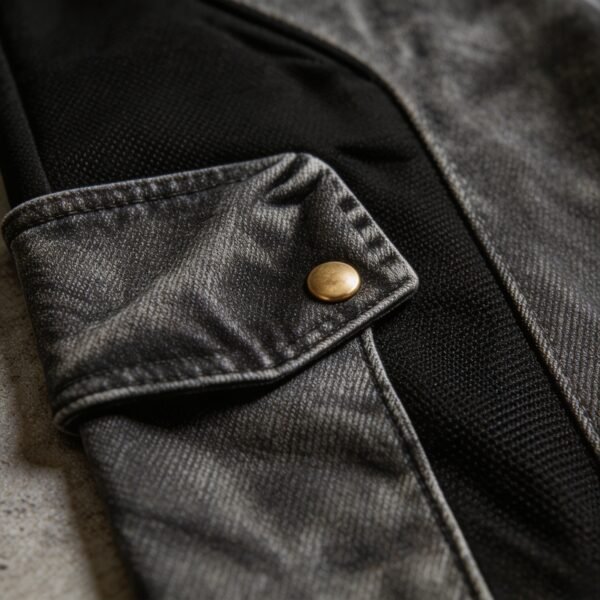
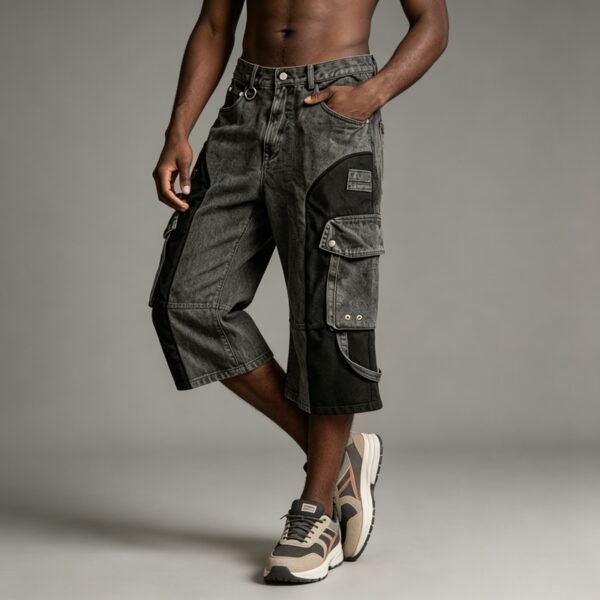


This cargo capri develops its identity through controlled contrast: an irregular acid-washed body carries structured utility pockets and dark metal hardware. The commercial question is whether plating remains consistent while treatment creates the intended vintage surface, giving buyers a clear approval gate before production begins.
Treatment Must Precede Final Hardware Approval
Acid washing changes shade depth, hand appearance, and surface contrast across every panel. Those changes can alter how plated components read against the garment, especially where pocket edges, belt loops, and hanging accessories concentrate attention. The sample should therefore establish the treatment range before final hardware approval.
The image shows a gray body with visibly non-uniform tonal movement rather than a flat solid color. That variation is commercially useful, but excessive contrast can make hardware appear mismatched. VeeWen should record approved light, medium, and dark wash references alongside plating samples for direct comparison.
Plating Needs a Treatment-Aware Test Plan
Metal components should be reviewed after the selected wash process, not only in their pristine pre-treatment condition. The supplied image shows dark hardware against gray fabric, so any brightening, staining, or loss of finish could disrupt the intended utility contrast and change the product's visual hierarchy.
The buyer should inspect clips, rings, zipper pulls, and decorative attachments for color consistency, edge sharpness, and secure anchoring after finishing. Exact alloy, coating, and corrosion performance remain to confirm. VeeWen's sample review can isolate component changes before bulk cutting commits the full style.
Pocket Structure Controls Hardware Loads
Cargo pockets create concentrated stress where hardware hangs from loops or connects to pocket panels. In the supplied image, several accessories descend from the front waist area, making reinforcement and stitch placement important. The development sample should demonstrate that attachments do not distort the waistband or pull.
A practical approval review should examine bar-tacks, seam allowances, rivet placement, and local fabric recovery after repeated handling. The visual evidence confirms utility hardware, but it does not verify construction details. Those details should be engineered from the chosen material and accessory weight during technical development.
The Cropped Flare Balances Utility and Movement
The capri length exposes the lower leg and gives the flare a strong role in the silhouette. Because the supplied image shows a widening hem below the knee, the opening must remain deliberate without catching against footwear or making the cargo pockets appear visually heavy.
VeeWen should grade the inseam, knee position, hem sweep, and pocket placement together rather than independently. A small change in crop length can shift the flare's balance and alter how hardware sits during movement. The buyer should approve a complete styled fitting before confirming measurements.
VeeWen Workflow: Sequence Treatment, Trim, and Fit
VeeWen's product-development workflow should begin with a measurement block, wash swatch range, and hardware board that reflect this exact contrast. The first prototype can then test body proportions and pocket placement, while a treated trim sample checks whether plating remains compatible with the selected wash appearance.
After comments, the technical file should lock approved wash references, hardware color, reinforcement locations, and graded measurements together. This sequence keeps treatment decisions connected to construction decisions, allowing the buyer to approve the complete visual system instead of isolated components.
Approval Gate for Bulk Development
The buyer's decision is not simply whether the pants look vintage. Approval should confirm that the acid-wash range is repeatable enough for the collection and that hardware remains intentionally dark, securely attached, and proportionate to the cropped flare silhouette shown in the supplied evidence.
Request a final pre-production sample with the selected treatment, plating, pocket reinforcement, and complete trim set. Confirm the approved reference, size range, labeling requirements, and MOQ: 100 pieces per style before authorizing the next commercial stage.
Buyer Questions
What material should buyers specify for this style?
The images suggest a denim or twill base, but fiber composition, weight, and stretch content remain to confirm through the approved technical specification.
Can the hardware finish be customized?
Yes, buyers can review alternative hardware colors and forms, subject to sample approval, component availability, attachment engineering, and the required MOQ: 100 pieces per style.
How should the acid wash be approved?
Approve physical wash swatches and a complete treated sample, comparing tonal range, pocket contrast, hardware appearance, and acceptable variation before confirming production references.
What is the commercial minimum?
MOQ: 100 pieces per style applies. Final quantities, size ratios, trims, labels, packaging, and any additional development requirements should be confirmed in the purchase specification.
Approve the Treatment and Hardware Direction
Send your target measurements, wash reference, hardware preference, size range, and labeling brief to VeeWen for a coordinated sample review and MOQ: 100 pieces per style planning.


Reviews
There are no reviews yet.