
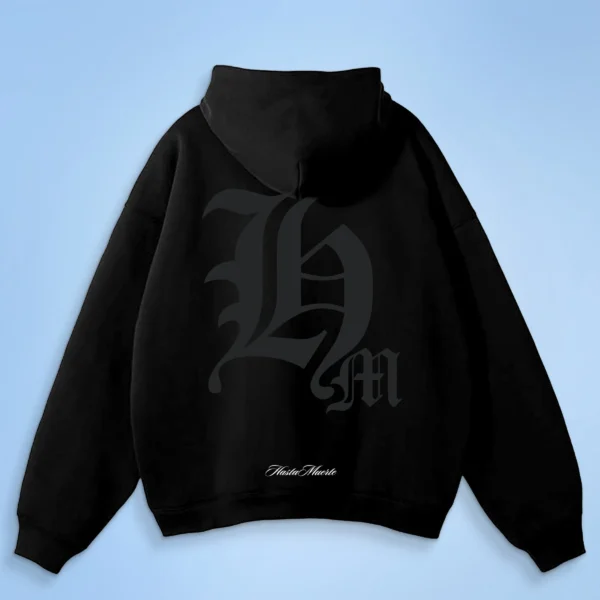
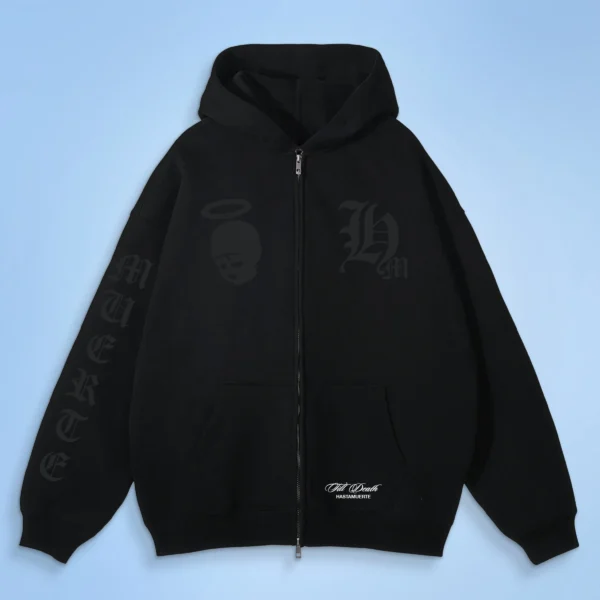


This custom black zip hoodie is built around finish coordination: hardware plating must support the garment treatment without overpowering the tonal back graphic, while the lightweight construction keeps the result wearable, layered, and commercially legible in close viewing and photography.
Hardware and Treatment Must Be Designed Together
On a black hoodie, zipper hardware becomes a concentrated point of reflection and contrast. A bright or mismatched plating can pull attention away from tonal artwork, while an overly dark finish may disappear or look unfinished against a treated surface.
The supplied image shows a black back with restrained tonal artwork and a small light detail near the hem. Because those contrasts are intentional, the zipper finish should be reviewed as part of the same visual system, not as an isolated trim choice.
Protect Tonal Graphic Legibility
The large back graphic relies on close tonal values rather than high contrast, so garment treatment can either deepen its presence or flatten the artwork. Uneven application may create unintended halos, streaks, or contrast changes across the print area.
VeeWen's workflow should separate graphic placement approval from treatment approval while reviewing them together on the same black base. Compare untreated and treated panels, inspect the artwork edges, and record the acceptable contrast window before sampling continues.
Manage Lightweight Construction Risk
The source wording identifies a lightweight hoodie, which changes how hardware weight and treatment tension affect wear. A heavy zipper assembly can pull the front edge, while aggressive treatment may expose distortion more quickly on a lighter fabric.
The buyer should confirm the intended layering role before selecting the zipper specification. Test the front opening during wear, inspect the hood balance, and check whether the back graphic remains stable when the garment is zipped, folded, and carried.
Choose Plating for the Intended Mood
Plating changes how a black zip hoodie reads under daylight, studio lighting, and close retail photography. Gloss emphasizes the closure, muted plating integrates more quietly, and a dark finish may reinforce the tonal graphic direction without guaranteeing visible separation.
Rather than naming a finish by trend language, approve physical plating references against the actual black garment treatment. The decision should consider reflection, scratch visibility, zipper pull readability, and whether the closure supports the intended understated presentation.
Align Treatment with Graphic Placement
The back graphic occupies a dominant panel, while the small light detail sits near the lower hem. That arrangement creates a vertical reading path, so treatment boundaries, seam shadows, and surface variation should not interrupt the artwork or crowd the lower signature area.
During development, VeeWen can mark artwork, zipper, hood, and treatment zones directly within the technical pack. This coordination helps the sample review focus on finish interaction, rather than discovering placement conflicts after the garment has been processed.
Lock the Finish Package Through Approval
The final approval should establish one relationship among fabric surface, black treatment, graphic contrast, zipper plating, and trim appearance. Changing any one element afterward may alter the visual balance, especially when the design depends on subtle differences.
For VeeWen, the production checkpoint is a signed finish board supported by a treated garment sample and hardware reference. Confirm the approved visual under consistent lighting, then release the package for costing and production planning at MOQ: 100 pieces per style.
Buyer Questions
Which hardware finish suits this hoodie?
Select plating only after comparing physical references with the treated black garment, because gloss, reflectivity, and tonal integration depend on the final surface.
Will treatment change the graphic appearance?
It can. Treatment may alter contrast or surface uniformity, so approve treated artwork panels and define acceptable edge and color variation before production.
Is the lightweight construction fully verified?
The source wording indicates lightweight construction, but the supplied evidence does not verify GSM, fiber content, backing, or durability.
What is the minimum order quantity?
VeeWen's commercial minimum is MOQ: 100 pieces per style, with final acceptance dependent on approved specifications and confirmed development details.
Approve the Finish Relationship
Share the target treatment, graphic artwork, and preferred hardware references so VeeWen can align plating and surface contrast before the hoodie enters production planning.


Reviews
There are no reviews yet.