
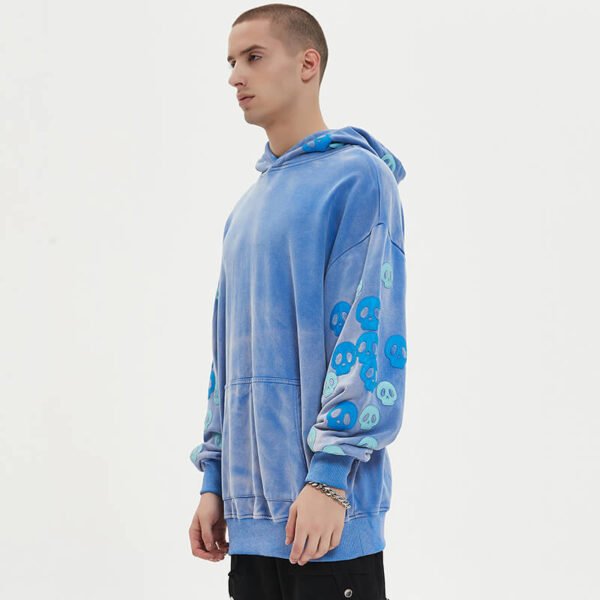
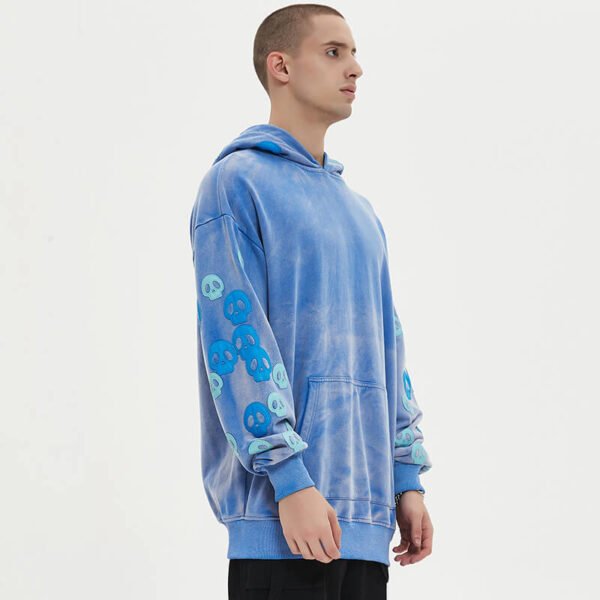

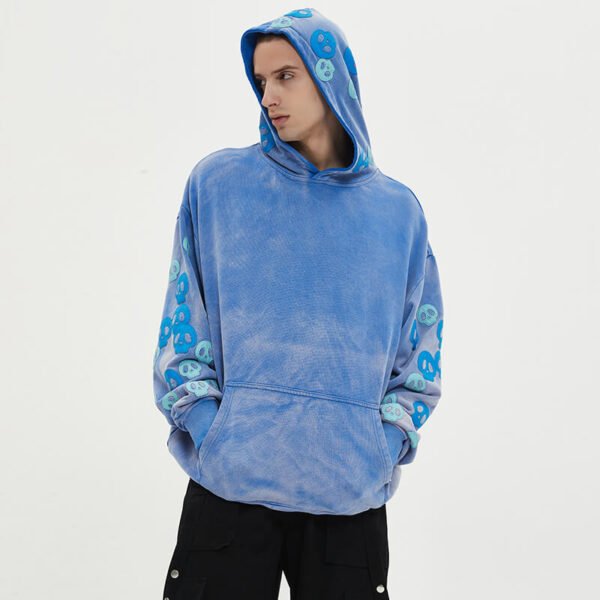
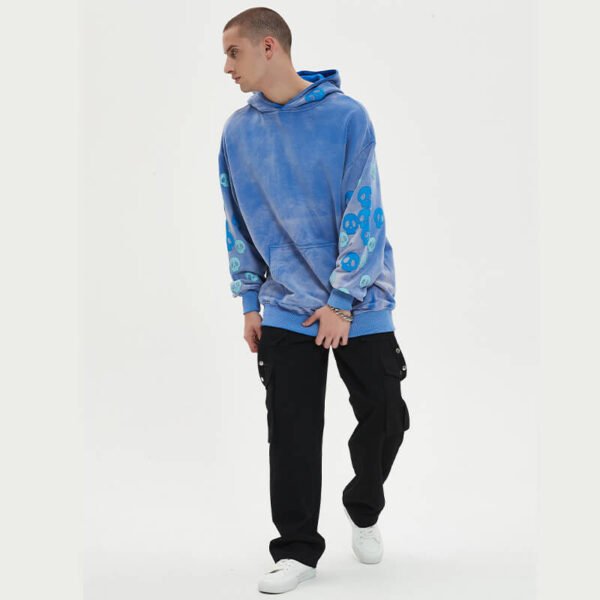
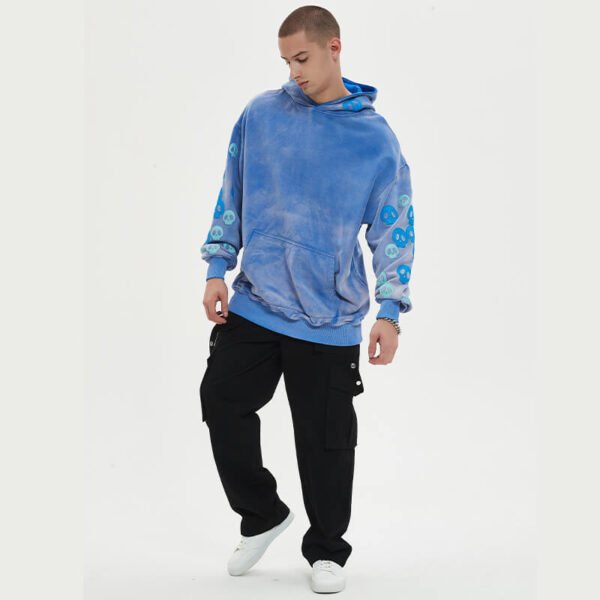
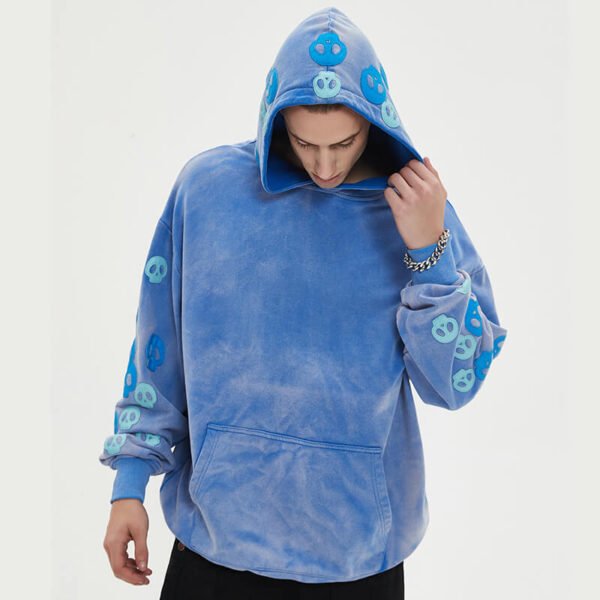
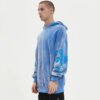

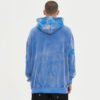
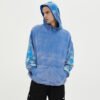


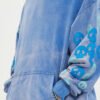


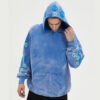
This custom blue washed pullover hoodie is a development study in how the hood opening, neckline, and possible center-front closure must resolve together. The image shows a clean uninterrupted front, while concentrated applique and embroidery create controlled visual weight around the upper body and sleeves.
Read the Front Transition Before Approving Artwork
The front image presents a pullover body with no visible zipper, so the collar-to-zipper axis becomes a transition study rather than a finished closure claim. The hood opening must sit cleanly against the neckline while preserving uninterrupted front artwork space and comfortable head entry.
The hood appears broad and layered at the upper edge, with blue decorative elements visible near the opening. That placement makes seam allowance, stitch density, and edge turn important approval points, because added bulk can distort the opening or pull the neckline away from the body.
Control Hood Geometry and Neckline Balance
A hood opening that is too shallow can restrict entry, while one that is too generous may collapse around the neck. VeeWen should convert the image reference into measured opening depth, front overlap, hood height, and neckline circumference before cutting the first development sample.
If a later version introduces a zipper, its top stop, tape width, and guard must meet the hood seam without creating a hard ridge. For this pullover reference, the same area should remain smooth, stable, and visually quiet when the closure is omitted.
Keep Artwork Clear of Mechanical Stress
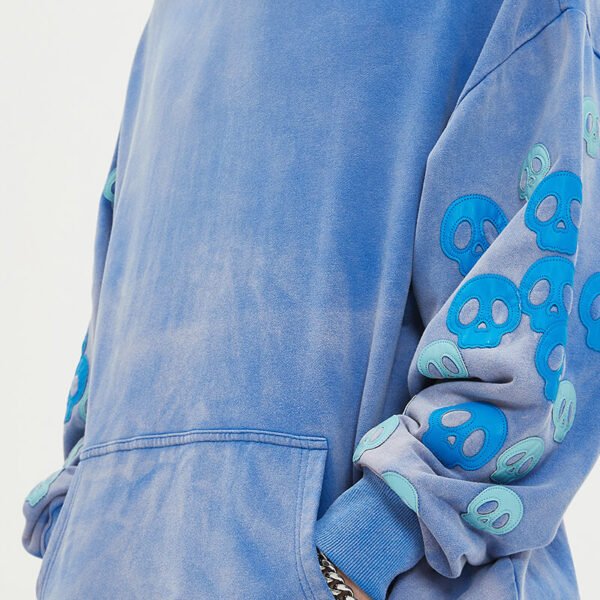
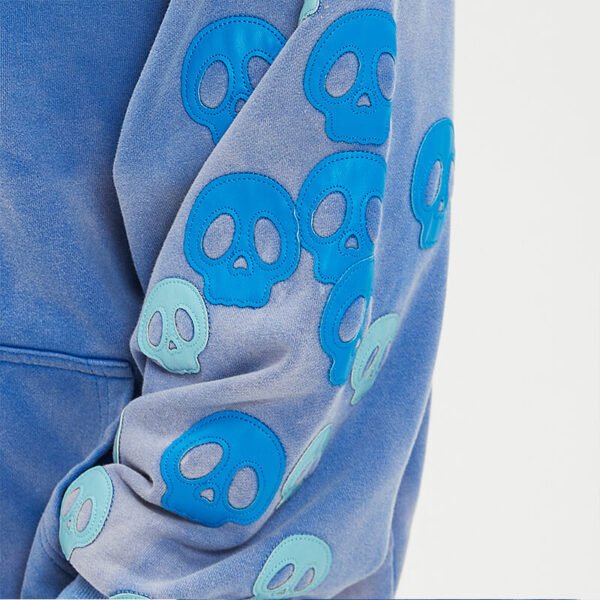
The image concentrates skull-like applique motifs along the sleeve and near the hood, creating a directional flow away from the center front. This arrangement reduces direct interference with a potential zipper, but the artwork still requires clearance from neckline seams and fold lines.
Applique edges can add stiffness where the garment needs to flex during dressing. During development, VeeWen can map each motif against the hood opening and front seam, then adjust placement, backing, or stitch perimeter to protect both movement and visual continuity.
Translate the Washed Appearance into Repeatable Approval
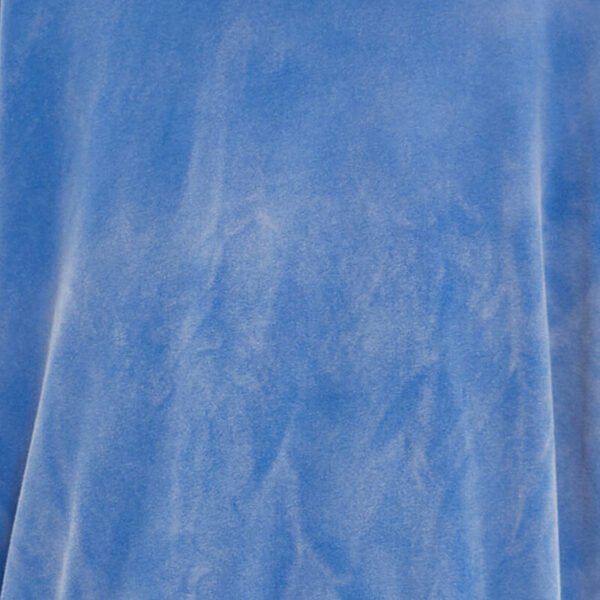
The blue body shows visible tonal variation across panels and sleeves, indicating that the wash effect is part of the design language rather than a flat color choice. Buyers should approve a controlled wash reference with acceptable contrast boundaries before artwork and trims are finalized.
Wash development can change seam appearance, shrinkage, and the relationship between the neckline and hood opening. VeeWen's workflow should therefore sequence fabric confirmation, prewash measurements, sample decoration, and postwash inspection around the same transition point.
Fit the Relaxed Shape Around the Intersection
The model image shows a roomy torso, lowered shoulder line, long sleeves, and ribbed lower finishing. Those proportions create a casual silhouette, but excessive neckline depth or hood weight could make the upper body appear unbalanced and shift the intended center-front line.
A fit sample should assess head entry, hood recovery, shoulder slope, sleeve mobility, and hem hang together. The buyer's approval should identify whether the relaxed volume supports the artwork or makes the collar-to-closure area visually heavy.
VeeWen Development Checkpoint
VeeWen should build the first sample around a neckline worksheet that records hood dimensions, front opening, closure option, seam intersections, decoration boundaries, and wash-stage measurements. This connects the assigned manufacturing axis directly to pattern engineering and sample-room decisions.
At the approval gate, the buyer should compare the sample before and after the intended wash treatment, checking opening stability, artwork clearance, and closure readiness. Release the style only when the upper transition remains comfortable, repeatable, and aligned with the collection brief.
Buyer Questions
Is this hoodie confirmed to contain leather?
No. The source wording references leather, but supplied evidence does not verify composition or leather content. Confirm the approved fabric specification, trims, and labeling requirements before production.
Can the pullover be developed with a zipper?
Potentially, subject to pattern and sample approval. The image shows no visible zipper, so any closure addition requires new neckline geometry, hood allowances, and artwork clearance.
What should buyers approve first?
Approve the hood opening and neckline transition first, then review decoration placement, wash behavior, and relaxed fit. These decisions control the garment's most sensitive visual and functional intersection.
What is the minimum order?
The commercial minimum is MOQ: 100 pieces per style. Final specifications, colors, decoration methods, and production requirements should be confirmed during development.
Approve the Neckline Transition
Send your artwork, target measurements, closure preference, and wash reference to VeeWen. We will develop the transition sample for review before confirming the full style package and MOQ: 100 pieces per style.


Reviews
There are no reviews yet.