


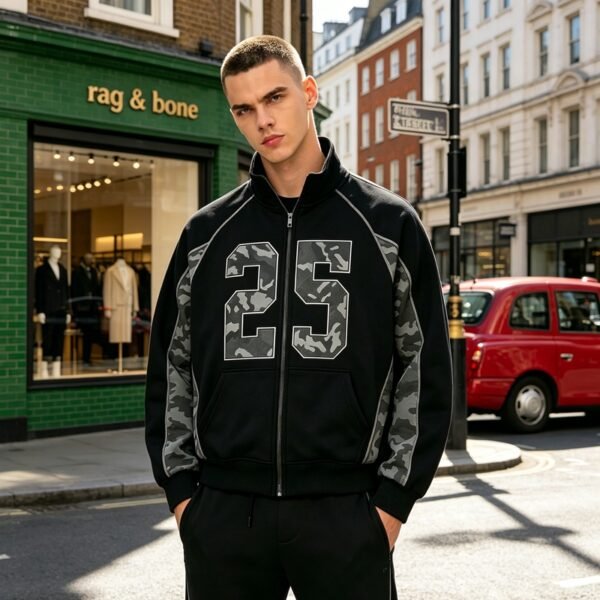
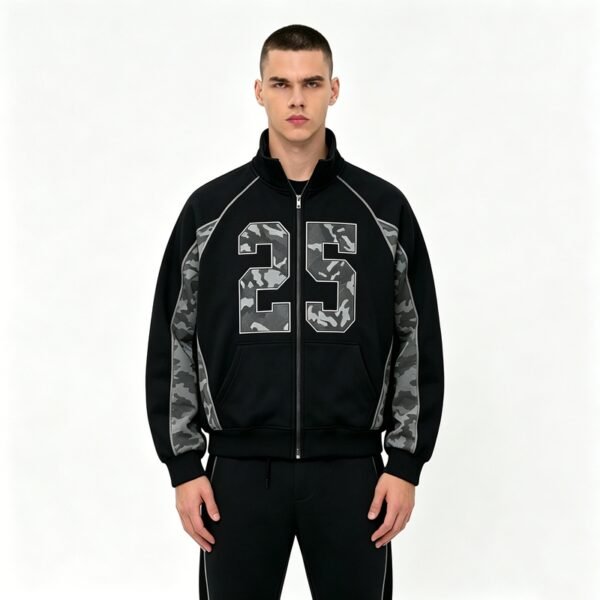
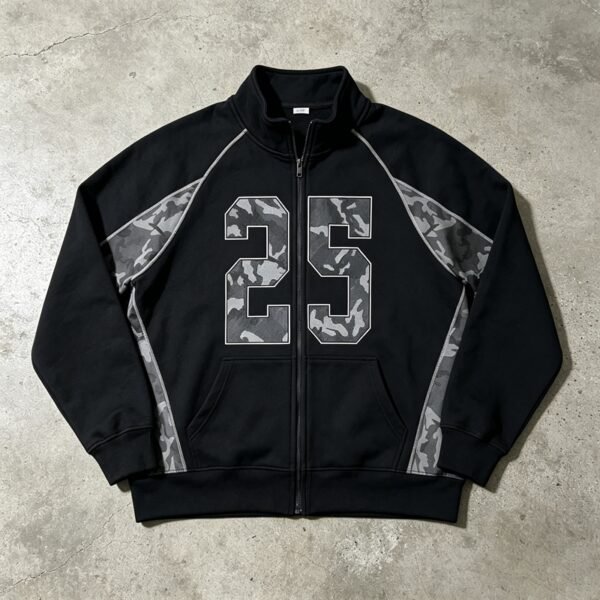

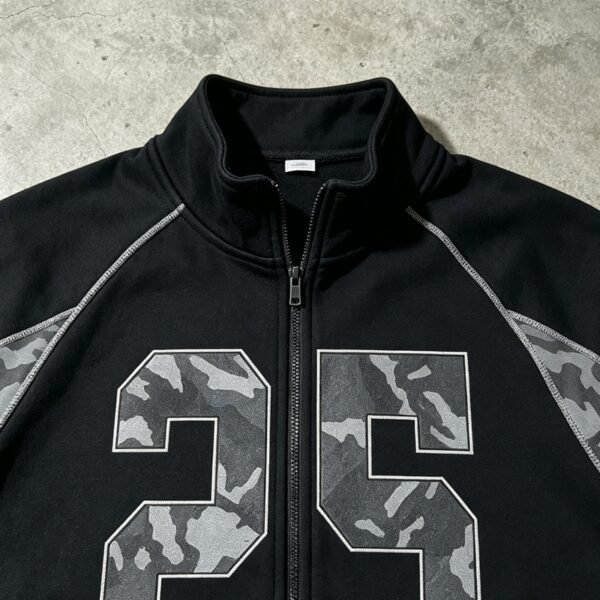
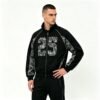
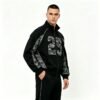




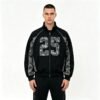

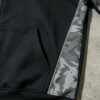
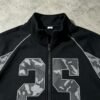
This custom full-zip hoodie is developed around controlled hood volume and neckline pull, so the collar stays purposeful when open or closed. The supplied image shows a stand collar, deep hood, curved contrast sleeves, front zipper, and ribbed edges suitable for an urban layering program.
Why Neckline Pull Controls the Silhouette
A full-zip hoodie changes shape whenever the zipper opens, so collar height and neckline tension must work together. The image shows a stand collar rising above the zipper, giving the garment a defined frame instead of relying on hood fabric alone.
If the neckline pulls too strongly, the collar can distort and the hood may sit backward; if too loose, the opening loses structure. VeeWen should measure collar circumference, hood attachment length, zipper tape position, and recovery after repeated opening during development review.
Reading the Supplied Garment Evidence
The front image identifies a hood that appears deep enough to cover the head while remaining visually integrated with the raised collar. Curved gray camouflage panels travel across the shoulders and sleeves, making proportion changes immediately noticeable around the upper torso and armhole.
The central zipper divides the outlined number graphic, while ribbed cuffs and hem visually contain the body. These details suggest a design where front opening balance matters: graphic alignment, zipper waviness, collar height, and hood exposure should be reviewed together.
Pattern Engineering for Layering
The intended streetwear shape benefits from enough hood volume to sit over a tee or light layer without forcing the neckline forward. Sleeve curvature and shoulder width should therefore be developed alongside hood depth, because excess upper-body fabric can change the collar pull.
A regular fit offers a practical starting point, but final ease remains to confirm from the size range. Prototype review should compare zipped, half-open, and fully open positions, documenting how the hood falls and whether the collar remains comfortable across sizes.
Reflective-Looking Detail and Graphic Control
The image shows narrow light-colored lines tracing collar and sleeve-panel boundaries, creating a reflective-looking technical effect against the black ground. Whether these lines are reflective tape, printed artwork, piping, or another method remains unverified and must be specified.
The large outlined number graphic crosses the zipper area, creating a registration challenge during cutting and assembly. VeeWen's development file should define panel artwork alignment, zipper interruption rules, line width, and wash or abrasion expectations before approval.
VeeWen Development Workflow Checkpoint
VeeWen should translate the hood-and-neckline argument into a measurable tech pack: hood height, opening width, collar stand, neckline seam length, zipper length, rib dimensions, and graded tolerances. The supplied image becomes a proportion reference, not a substitute for measurements.
During sample review, the buyer should inspect the garment on-body in three zipper positions and record hood balance, collar recovery, and front graphic alignment. Once those checkpoints pass, the approved specification can proceed toward the stated MOQ of 100 pieces per style.
Buyer Approval and Trade-Offs
More hood volume can improve coverage and layering appeal, but it adds weight and may pull the collar backward. A firmer neckline can sharpen the silhouette, yet excessive tension may restrict movement or expose zipper distortion during wear.
The key decision is not simply whether the hoodie looks bold; it is whether the hood, collar, zipper, and graphic remain coordinated in use. Approve the style after confirming comfort, recovery, alignment, and appearance across the intended size set.
Buyer Questions
What should be confirmed first for this hoodie?
Confirm hood depth, collar stand, neckline circumference, zipper length, and graded tolerances first because these variables control the garment's central silhouette.
Are the light-colored seam lines verified reflective details?
No. The image shows light-colored lines, but their material or application is unverified; confirm whether they use reflective tape, piping, print, or another construction.
Can the number graphic cross the zipper cleanly?
Yes, it can be developed with defined center alignment and zipper interruption rules, but artwork registration must be reviewed on the approved pre-production sample.
What is the minimum order for this style?
The commercial minimum is MOQ: 100 pieces per style, with final production proceeding after specifications, sample approvals, and commercial details are confirmed.
Approve the Hood and Collar Prototype
Send your target size range, artwork files, and preferred handfeel to begin a hood-and-neckline prototype review with VeeWen, then confirm the approved specification against MOQ: 100 pieces per style.


Reviews
There are no reviews yet.