


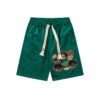


This short is best developed as a lightweight graphic bottom whose success depends on preserving clean drape while resolving the assigned fill-distribution question early. The image shows a heather gray base, elastic waist, long drawcords, side pockets, and a concentrated cartoon motif on one leg.
Read the Existing Silhouette Before Adding Fill
The image presents a soft, unquilted-looking short with a straight relaxed leg and uncomplicated front. Introducing batting, foam, or compartmented fill could change the fall, increase leg stiffness, and make the graphic area appear heavier than intended.
Because no quilt channels, loft, or insulated panels are visible, the working assumption should remain an unfilled shell. VeeWen's development workflow can record fill as a deliberate exclusion, then test a controlled padded option only if the buyer has a functional reason.
Map Bulk Around the Waist Mechanism
The gathered waistband already creates localized volume, while the long drawcords hang through the center front. Any added fill near the waist could interfere with gathering, cord exit stability, pocket opening alignment, or comfortable sitting during active wear.
VeeWen should convert this visual risk into a pattern checkpoint: mark the waistband seam, cord channel, and pocket bags separately from any proposed fill zones. A fit sample can then reveal whether the waist remains flexible before artwork approval.
Protect Artwork Balance During Construction
The multicolor cartoon motif is concentrated on the lower right leg, creating a deliberate asymmetry against the quiet gray ground. Additional fill behind that area could alter surface tension and make edges look raised, distorted, or uneven after laundering.
The workflow should therefore review the graphic with the shell first, then with any proposed internal layer. Buyers should approve the decoration method, artwork scale, and allowable distortion together, because construction decisions can change visual weight even when the file remains unchanged.
Separate Source Claims From Verified Material Data
The source wording references polyester and quick-dry use, but the supplied evidence does not verify fiber percentage, fabric weight, finish chemistry, or test performance. Those details must remain open rather than being treated as fixed production specifications.
For VeeWen's workflow, the material brief should list the source reference beside confirmation fields for composition, absorbency behavior, drying performance, and handfeel. The buyer can select a suitable shell after comparing swatches, while avoiding unsupported claims in line sheets and product pages.
Resolve the Decoration and Care Trade-Off
A dense leg graphic may be printed, embroidered, appliqued, or produced through another process, yet the image alone cannot establish which method was used. Each route changes surface hand, flexibility, cost structure, and interaction with a possible filled layer.
VeeWen can use the first development sample to compare the intended graphic route on the chosen shell, then inspect edge clarity, stretch recovery, and care-label implications. The approval checkpoint is a decoration strike-off that remains balanced when the shorts are worn and moved.
Set the Buyer Approval Gate
The buyer should approve the unfilled silhouette, waist flexibility, pocket function, artwork position, and material reference before discussing a padded variation. This sequence keeps the product's visible identity stable while making the unusual fill-distribution axis measurable.
At bulk handoff, the technical pack should identify confirmed shell composition, graphic method, tolerances, and any prohibited fill zones. VeeWen's team can then develop against a documented decision instead of inferring hidden construction from a flat product image.
Buyer Questions
Is this short quilted or padded?
No quilting or padding is visibly established in the supplied image. Treat it as an unfilled shell until the buyer confirms a functional need for internal material.
What material is specified?
The source wording references polyester and quick-dry performance, but exact composition, weight, and test evidence remain To Confirm during material development.
How should the graphic be approved?
Approve artwork scale, right-leg placement, decoration method, and surface hand together, because fill or dense decoration can change drape and perceived bulk.
What is the minimum order?
The commercial minimum is MOQ: 100 pieces per style. Final development still requires confirmed measurements, materials, decoration details, and an approved technical specification.
Approve the Shell Direction
Send the artwork, target measurements, intended material handfeel, and any padding requirement to VeeWen for a focused development review. The first checkpoint should confirm drape, waist comfort, decoration balance, and construction scope.


Reviews
There are no reviews yet.