






This cropped windbreaker is developed as a symmetry-led streetwear shell, where panel boundaries, center-front artwork, zipper placement, and paired elastic finishes must resolve as one coordinated system. The visible purple-white layout gives buyers a clear approval target before material, grading, and production decisions move forward.
Symmetry Starts with the Front Panel Map
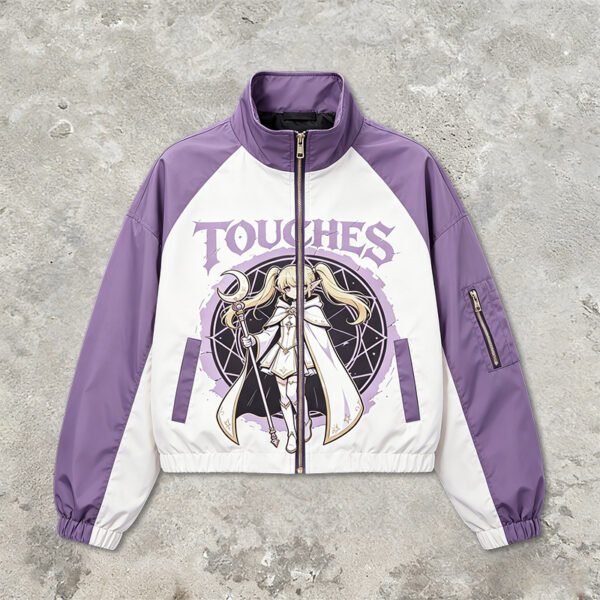
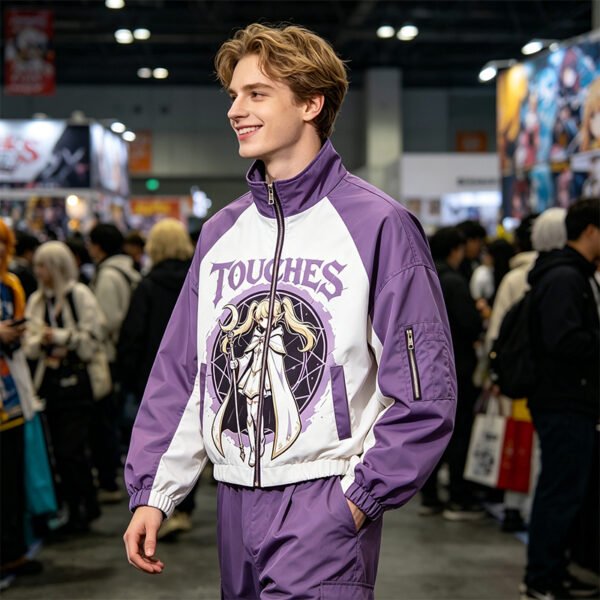
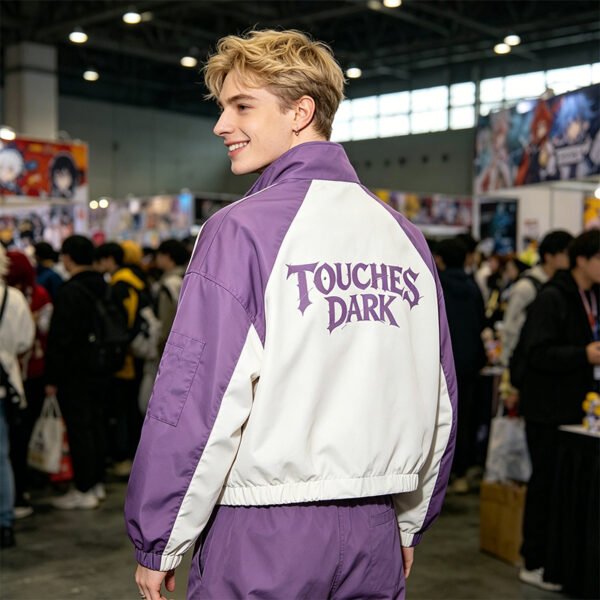
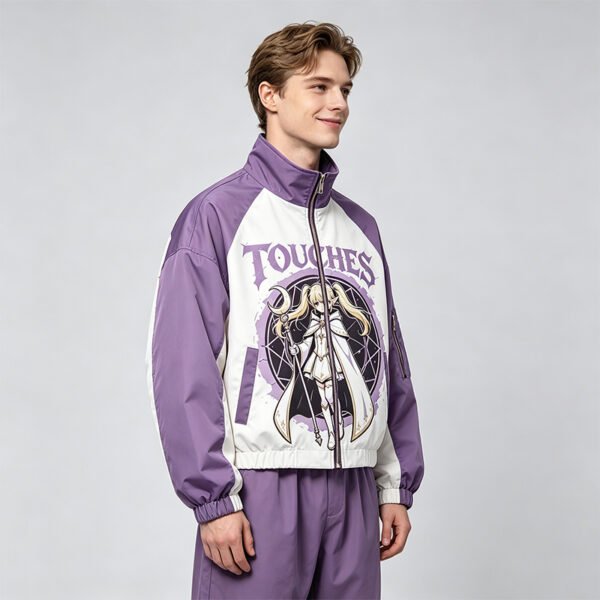
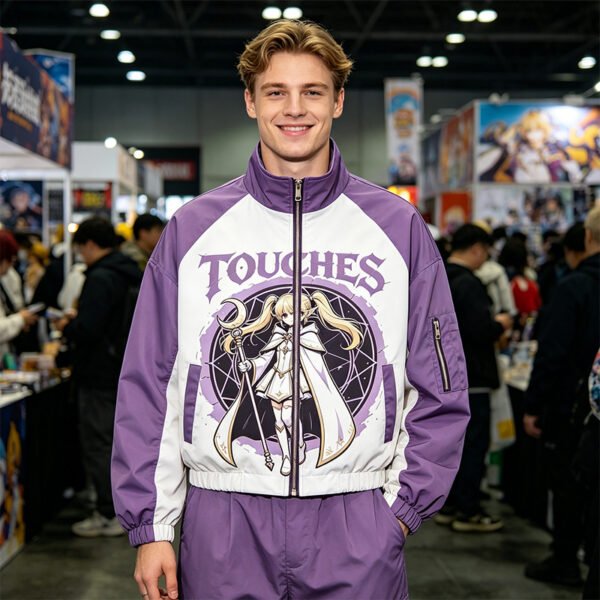
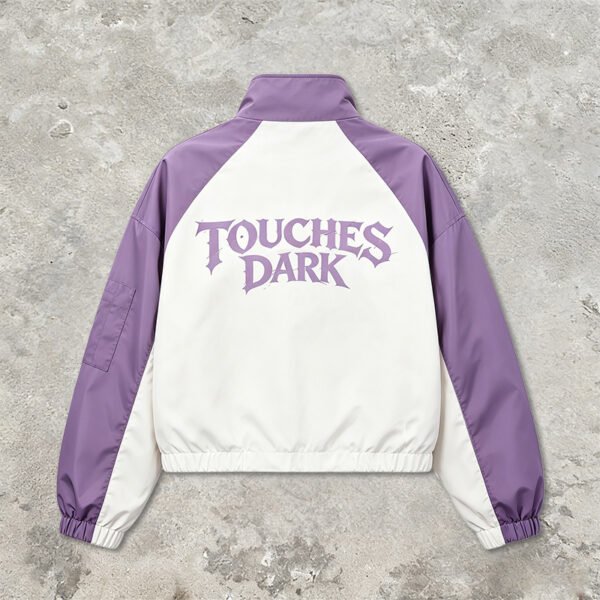
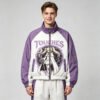
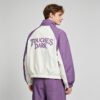
The image presents a white central torso bordered by matching purple shoulder and sleeve sections. That arrangement makes seam locations highly visible, so the technical pattern must establish equal left-right widths before artwork placement or grading begins.
A centered zipper appears to continue through the printed front graphic, creating a strong reference line for inspection. VeeWen's development workflow should lock the center front, panel notches, collar joins, and hem relationship on the first technical drawing.
Color Blocking Requires Controlled Component Matching
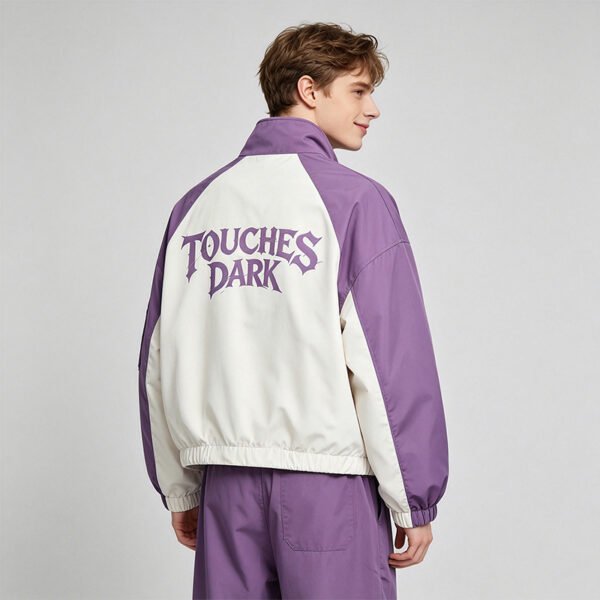
Purple appears on both upper sleeves and shoulders, while white continues through the lower sleeves and torso. Buyers should treat those color transitions as paired components, confirming that fabric lots, seam allowances, and cut orientation preserve visual continuity.
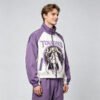
The sleeve pocket is positioned on one arm, so it is functional asymmetry within an otherwise balanced shell. During development, VeeWen can separate structural symmetry from utility placement, preventing a single-pocket detail from forcing unnecessary changes to the main panel architecture.
Artwork Must Respect Construction Lines
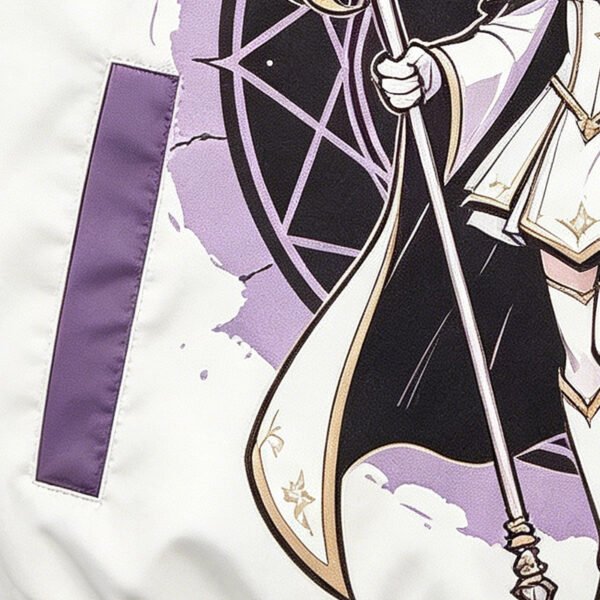
The large front screen print is visually dominant and sits behind the center zipper, with portions appearing to continue across the closure area. That relationship requires artwork files, seam allowances, and zipper installation to be reviewed together rather than approved independently.
A pre-production sample should be evaluated zipped, open, and laid flat. Those views reveal whether the printed character, lettering, and circular motif remain intentional when the front panels move, and whether the center break creates acceptable visual interruption for the collection.
Elastic Edges Reinforce the Cropped Proportion
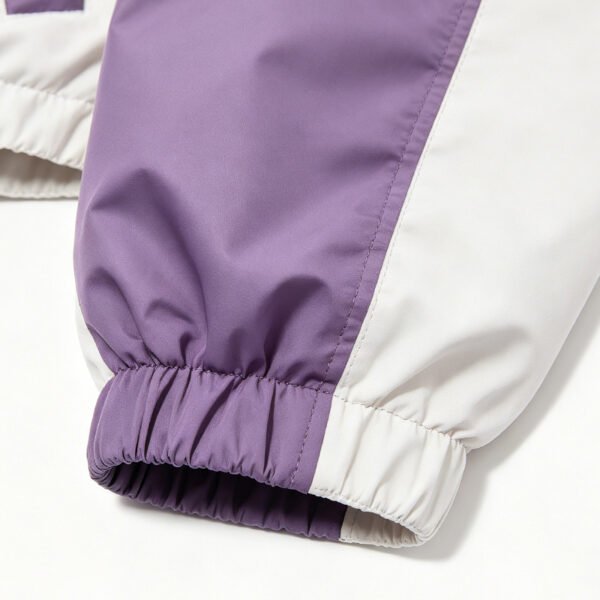
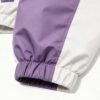
The lower edge is gathered into an elastic-looking finish, and both sleeve openings show similar gathered treatments. These paired edges visually compress the garment, supporting the cropped proportion while concentrating tolerance risk at the hem and cuffs.
VeeWen's workflow should define relaxed and stretched measurements for the hem and cuffs before size grading. Buyers should approve recovery expectations, opening dimensions, and seam bulk alongside the silhouette, because inconsistent elastic tension can make mirrored panels appear uneven.
Collar and Sleeve Details Need Separate Alignment Checks
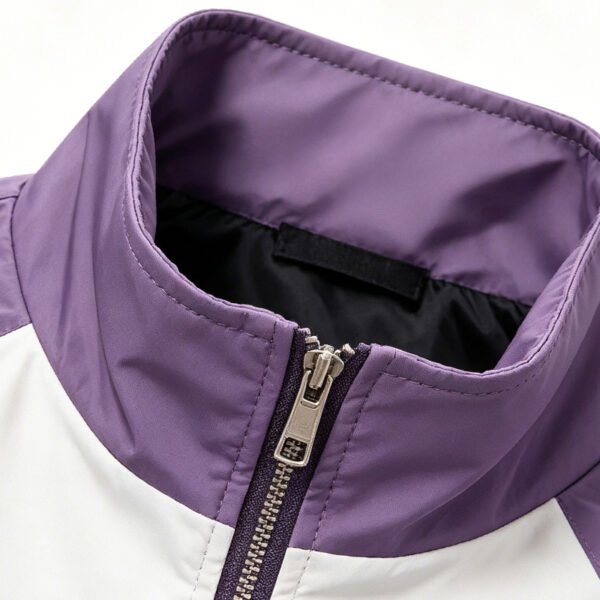
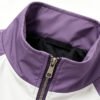
The raised collar frames the neck and meets the front zipper at the same central axis as the artwork. Its height, fold behavior, and topstitching therefore influence the entire front presentation, especially when the garment is photographed or displayed flat.
The zippered sleeve pocket introduces a second directional detail on the arm, including a visible pull and contrasting trim. During sample review, VeeWen should verify pocket angle, zipper length, and placement against the sleeve panel seam without treating them as decoration alone.
Approval Checkpoint for a Repeatable Windbreaker
The key approval is not simply whether the jacket looks balanced in one photograph. Buyers should inspect the complete sample for center-front alignment, paired panel dimensions, print registration, collar meeting, elastic distribution, and the sleeve pocket's agreed position.
Once those points are accepted, the approved sample becomes the control reference for grading and production. VeeWen's product-development handoff should record the panel map, artwork coordinates, component specifications, and measurement tolerances so each size preserves the same design logic.
Buyer Questions
What should be approved first for this windbreaker?
Approve the front panel map and centerline first, because zipper, artwork, collar, and color transitions all depend on that shared reference.
Is the sleeve pocket part of the symmetry argument?
It demonstrates controlled asymmetry. The main shell remains balanced, while the single pocket is reviewed separately for placement, function, and proportional impact.
Can the graphic cross the zipper?
It can be developed that way, but buyers should approve the zipped and open appearances before confirming artwork registration and production tolerances.
What is the minimum order quantity?
The commercial minimum is MOQ: 100 pieces per style. Final material, trim, grading, and decoration details should be confirmed during development.
Approve the Panel and Artwork Map
Send your artwork, target measurements, and preferred shell references to begin a symmetry-led development review with VeeWen's product team and confirm the first sample checkpoint.


Reviews
There are no reviews yet.