

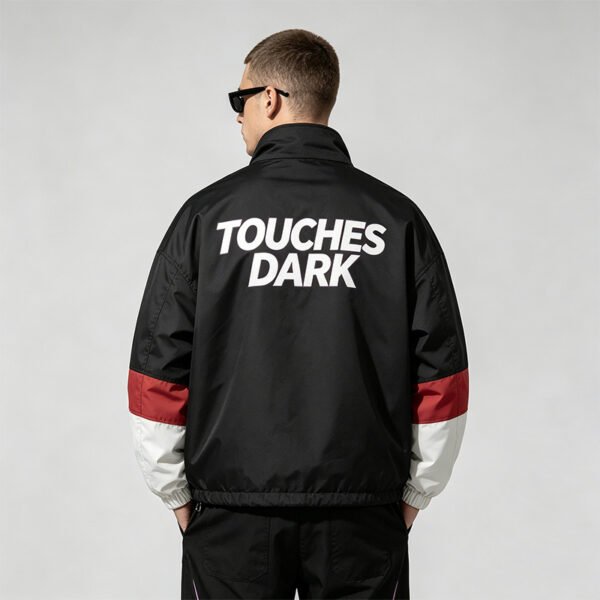


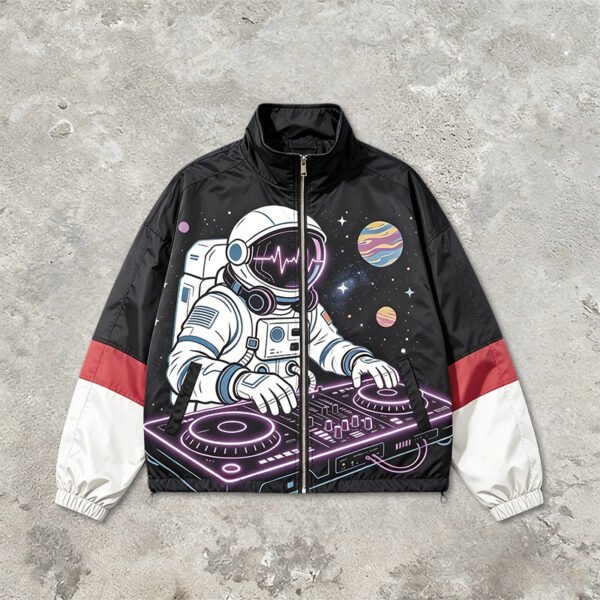


This custom graphic jacket is built around size-label logic and graded specification, because its large front artwork and high-contrast sleeve blocks expose proportion changes immediately. The development focus is a reliable size system that keeps visual placement, collar framing, sleeve balance, and wear ease coherent across the range.
The size label is a visual system, not only a.
On this jacket, the large front graphic creates an immediate reference grid for evaluating fit. If chest width, body length, or sleeve grading shifts unpredictably, the artwork can appear too high, too low, or too compressed even when basic measurements seem acceptable.
VeeWen development should therefore define the label system, base size, finished garment measurements, and graphic anchor points together. This keeps the buyer's size names connected to a repeatable physical block rather than relying on a generic small-to-large progression.
Graphic scale must follow the graded body, not distort it.
The supplied image places a detailed multicolor graphic across the central front, where zipper alignment and torso movement are most visible. A single fixed print size may suit one sample but create excessive coverage on smaller sizes or insufficient impact on larger ones.
The trade-off is between artwork consistency and proportional readability. The buyer should choose whether the graphic scales by percentage, uses controlled size steps, or retains a common dimension, then approve placement against chest width and front length for each size group.
Color-block boundaries reveal grading errors quickly.
Red and white sleeve sections create strong horizontal boundaries against the black body, making sleeve length, armhole position, and panel proportions easy to compare. Small grading inconsistencies can become visually obvious because the contrast exaggerates where each color break lands on the wearer.
A technical pack should record the boundary position from shoulder, armhole, and cuff references rather than using vague visual descriptions. VeeWen can then verify panel geometry across sizes while preserving movement allowance and preventing the color blocks from drifting toward the elbow or wrist.
The stand collar needs a stable relationship with labels.
The raised black collar frames the neck and begins the jacket's vertical front composition. Its finished height, opening circumference, and label placement must work together, especially because a bulky label or crowded seam can make the collar feel tighter than its nominal measurement suggests.
The buyer should review the collar closed and open, checking whether the label remains comfortable and whether the zipper tape sits centrally. A higher stand may strengthen the graphic-jacket identity, but excessive height can reduce versatility and create pressure during seated wear.
Size naming should match measurable wearer expectations.
A commercial size label must communicate more than a nominal letter. Chest, shoulder, sleeve, length, and hem adjustment dimensions should explain the intended silhouette, because the pictured jacket combines relaxed sleeves with a relatively controlled torso presentation.
VeeWen's measurement review should distinguish body measurements from finished garment measurements and document tolerance separately. This lets the buyer decide whether the range is regular, relaxed, or intentionally oversized, reducing customer confusion when the graphic styling suggests more volume than the block provides.
VeeWen's workflow makes graded approval production-ready.
VeeWen can begin with a base-size prototype, then map label names, measurement points, graphic anchors, panel boundaries, and collar dimensions into one development sheet. The next review should use representative size points to expose proportion changes before the full range is finalized.
Once approved, the graded specification becomes the reference for pattern release, artwork separation, size labels, and production inspection. The buyer's checkpoint is confirmation that every label corresponds to the intended measurements and that graphics remain balanced across the approved size architecture.
Buyer Questions
Why is size-label logic central to this jacket?
The large front graphic and contrasting sleeve blocks make proportion changes highly visible, so clear labels and graded measurements must protect both fit expectations and artwork balance.
Should the front graphic scale by size?
That is a buyer decision. Review fixed artwork, stepped scaling, and proportional scaling against chest width, zipper alignment, and front length before approving the artwork specification.
Which measurements need special attention?
Prioritize chest, shoulder, sleeve length, body length, collar opening, stand height, panel boundaries, and graphic anchor points across representative sizes.
What is the commercial minimum?
The exact commercial minimum is MOQ: 100 pieces per style, with final materials, measurements, artwork, labels, and approvals confirmed during development.
Approve the size architecture before artwork release.
Send your target size labels, measurement chart, and graphic files to VeeWen for a graded review covering fit, collar comfort, panel boundaries, and artwork placement.


Reviews
There are no reviews yet.