
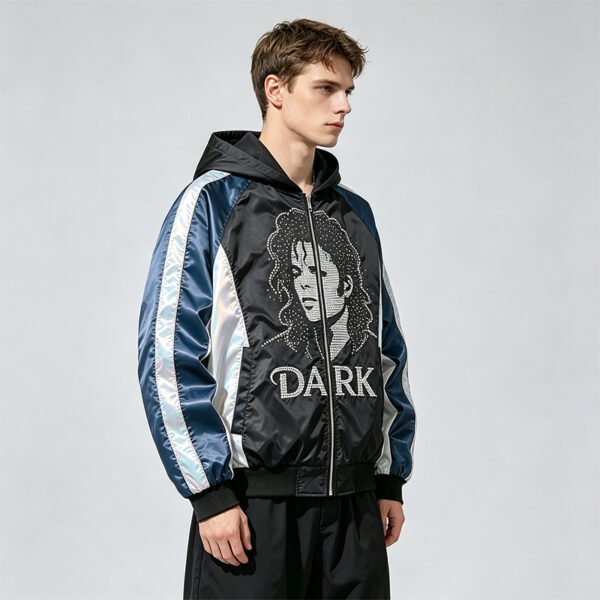

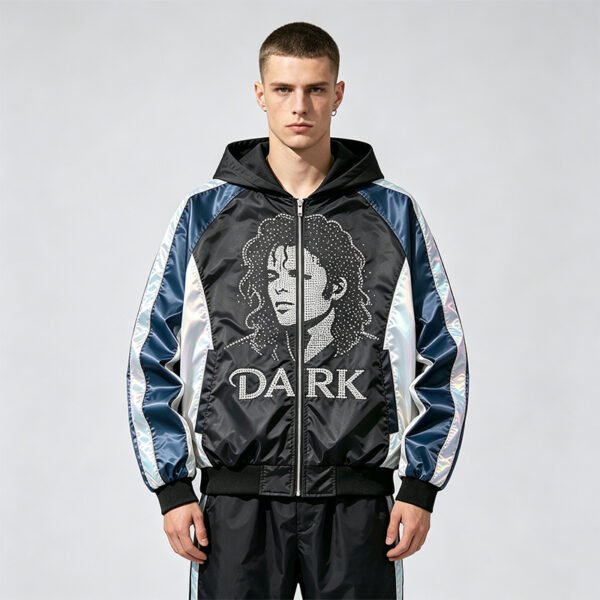













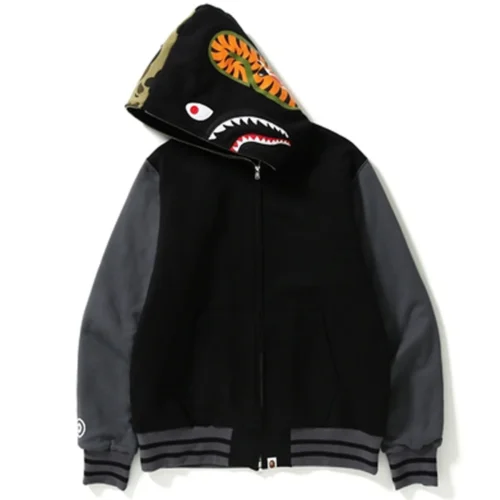
This jacket is developed around sleeve opening and layering clearance. The supplied image shows rib-knit cuffs, articulated contrast sleeves, a zipped front, and a hooded body, so the commercial decision is whether wrist control can coexist with comfortable sweatshirt or knitwear layering across the size range.
Cuff Control Sets The Wearing Boundary
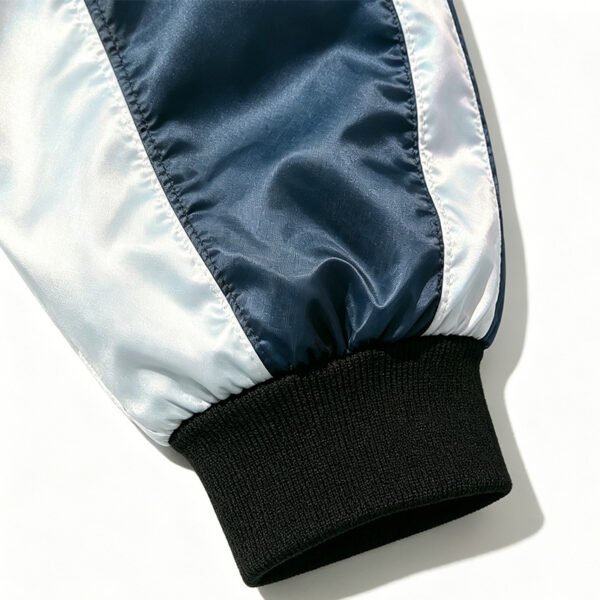
The cuff is the jacket's primary sleeve-opening control. In the image, black rib knit closes the shiny sleeve at the wrist, limiting wind entry and stabilizing the silhouette. Its relaxed circumference, rib pitch, and recovery determine whether the garment feels secure or restrictive.
A narrow opening can sharpen the cropped, athletic appearance but may resist watches, gloves, or heavier cuffs underneath. A wider opening improves layering clearance yet can reduce wrist retention. VeeWen should develop graded cuff measurements alongside stretch targets, then review comfort on representative body sizes.
Sleeve Panels Reveal Movement Requirements
The navy and silver-white sleeve panels run from shoulder toward cuff, making seam placement visually important. Any excessive armhole tension or sleeve twist will interrupt those lines. The pattern therefore needs balanced front and back ease, with the cuff positioned after natural arm movement is tested.
Because the sleeve surface appears glossy and structured, compression from a sweatshirt underneath may change drape more noticeably than on soft jersey. Development should compare a light base layer with a medium knit, checking reach, bend, and sleeve recovery before approving the final pattern.
Layering Clearance Must Protect The Artwork
The front rhinestone portrait and lettering occupy a large central area, while the zipper passes vertically through the composition. Layering pressure can pull the front apart, stressing artwork placement and changing the visual center. Chest ease and zipper stability must therefore be approved together.
A generous body may improve over-layer comfort but can weaken the intended compact streetwear proportion. The buyer should select the commercial silhouette first, then validate that hood depth, shoulder width, chest ease, and cuff position remain coherent over the planned underlayer.
Hood And Hem Complete The Closure System
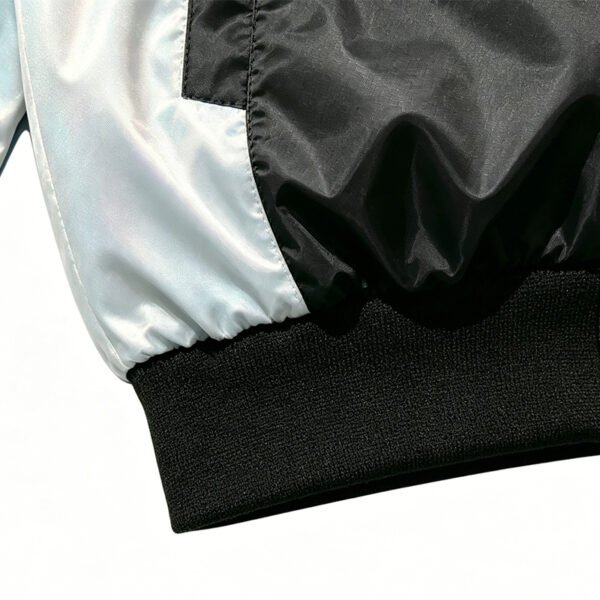
The hood adds upper-body coverage, while the ribbed hem closes the lower edge. Together with the cuffs, these components create a contained silhouette that depends on consistent recovery. If the hem grips too firmly, the jacket may ride upward when layered; if too loose, it loses shape.
The image suggests a clean center-front closure without visible storm flaps. That keeps the graphic uninterrupted but places more responsibility on zipper quality, facing stability, and seam allowance. Prototype review should assess hood overlap, neckline comfort, and hem behavior during seated and reaching movements.
VeeWen Development Turns The Axis Into Checks
VeeWen's product-development workflow should begin by locking the sleeve-opening intent in the tech pack: cuff circumference, rib specification, opening position, armhole ease, and target layering reference. The supplied image then becomes a visual checkpoint for panel direction, cuff proportion, hood placement, and front artwork scale.
At sample review, fit comments should separate wrist retention from overall sleeve comfort, because changing one can affect the other. After measurement approval, the size set should confirm grading, artwork placement, zipper alignment, and rib recovery before the style enters bulk planning.
Approval Gate For A Wearable Statement Jacket
This style succeeds when its decorative front remains visually dominant without forcing the wearer into a narrow layering window. The key trade-off is clear: tighter cuffs and cleaner volume improve definition, while additional ease supports comfort and broader seasonal use.
Approve the style only after reviewing the cuff on bare wrist, shirt sleeve, and sweatshirt sleeve. Record preferred opening measurements, stretch behavior, and sleeve ease as production standards, then confirm shell and lining materials before issuing the final purchase specification.
Buyer Questions
What is the main development risk for this jacket?
The main risk is insufficient cuff and sleeve clearance, which can restrict layered wear or distort the contrasting panels during movement.
Is the shell composition confirmed?
No. The supplied evidence shows a glossy-looking shell, but exact fiber content, lining, and finish must be confirmed through development.
What should the fit sample include?
The fit sample should be tested over a shirt and sweatshirt, with cuff measurements, armhole ease, hood comfort, and artwork alignment reviewed.
What is the minimum order quantity?
The commercial minimum is MOQ: 100 pieces per style, subject to approved specifications, confirmed materials, and production planning.
Approve The Sleeve And Layering Specification
Send your target measurements and artwork package to VeeWen for a focused development review covering cuff recovery, sleeve ease, panel alignment, hood proportions, and final material confirmation.

Reviews
There are no reviews yet.