


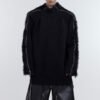


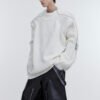




This sweater is developed around controlled rib recovery: the ability of cuffs and hem to return after wear, movement, and laundering. Its elongated black silhouette, high neckline, and exposed sleeve zippers make edge stability a visible design requirement.
Why Rib Recovery Controls the Silhouette
The image presents a sweater whose lower body falls well below the waist, so the hem frames a substantial vertical proportion. If rib recovery relaxes unevenly, the garment can lose its intended line, twist at the side seams, or appear shorter after handling.
The same principle applies to the cuffs. The sleeve ends sit beside exposed zippers and a textured outer layer, leaving little room for slack edges. A cuff that returns consistently helps keep the sleeve opening neat without competing with the zipper architecture.
Reading the Supplied Construction Evidence
Visible rib texture runs through the high neckline and main body, suggesting that edge behavior should be assessed together with the sweater's broader knit structure. The supplied image does not verify fiber content, gauge, stitch density, or finishing chemistry, so those inputs remain development variables.
The black outer texture appears fuller around the shoulders and sleeves than across the central front panel. This layered visual weight can increase stress at joins and openings, making cuff recovery and hem balance important when reviewing physical samples from multiple angles.
Development Tests for Edge Stability
VeeWen's development workflow should establish a rib recovery brief before size grading is finalized. The brief can record relaxed measurements, extension range, return measurements, and appearance after controlled wear and laundering, with separate targets for cuffs and the lower hem.
Review should include the zipper edges because opening and closing the hardware can pull adjacent fabric repeatedly. A fit sample should be photographed front, side, and sleeve close-up before and after testing, allowing the buyer to approve both function and visual proportion.
Balancing Recovery With Comfort
Higher recovery can support a cleaner hem and closer cuff, but excessive restraint may make the sweater feel restrictive or create rippling where rib meets the body. The correct target should support return without turning the edge into a visibly tight band.
For this elongated silhouette, comfort also depends on how the hem settles over lower layers. Buyers should review the sweater with the intended trouser volume and base layer, because a stable hem must remain visually relaxed while resisting progressive stretching.
Hardware and Knit Interaction
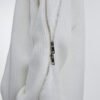
The exposed silver zippers create long visual lines from the shoulder toward the cuff, making any sleeve distortion easy to notice. The knit structure around these lines should be checked for waviness, snag risk, and opening stress during repeated operational trials.
Cuff recovery cannot be evaluated separately from zipper clearance. When the zipper is fully closed, the cuff should retain usable opening space; when partially open, it should not collapse or flare unpredictably. This relationship belongs in the approval sample, not only the tech pack.
VeeWen Approval Checkpoint
VeeWen can translate the reference into a controlled development sequence covering silhouette measurements, rib specification, zipper placement, graded patterns, and sample review. The workflow should keep the recovery requirement linked to the visible design rather than treating it as an isolated trim detail.
The buyer's checkpoint is a signed comparison of pre-test and post-test samples across cuffs, hem, neckline, and zipper-adjacent panels. Approve production only when the edges recover consistently, the elongated proportion remains credible, and comfort is acceptable in the intended size range.
Buyer Questions
What should be confirmed first for this sweater?
Confirm the relaxed measurements, rib width, extension range, recovery target, zipper placement, and intended laundering route before approving graded patterns or production quantities.
Can the outer textured layer be changed?
Yes, its handfeel, pile appearance, backing, and attachment method can be developed as separate variables, subject to sample review and confirmed material availability.
How should buyers review cuff recovery?
Measure cuffs before and after repeated extension, wear simulation, and laundering, then compare return measurements, edge appearance, comfort, and zipper operation across representative sizes.
What is the commercial minimum?
The exact commercial minimum is MOQ: 100 pieces per style, with final specifications, colorways, and development approvals confirmed before production planning begins.
Approve the Rib Recovery Brief
Send VeeWen your target measurements, size range, zipper references, and laundering expectations so the first sample can establish a clear recovery and proportion approval checkpoint.


Reviews
There are no reviews yet.