









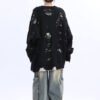
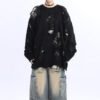
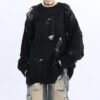
This oversized charcoal sweater is defined by distressed tonal artwork distributed across a relaxed knit body, where panel seams can interrupt visual continuity. VeeWen should develop artwork placement, knit behavior, and controlled distressing as one system, with MOQ: 100 pieces per style.
Registration Begins with Garment Geometry
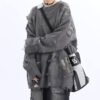
The supplied image shows distressed tonal areas distributed across the rear body and sleeves, not confined to a single front graphic. That placement makes the garment's cut lines part of the artwork, because shoulder and sleeve seams interrupt the visual field.
Before knitting or finishing, the artwork map should identify each panel, seam allowance, grain direction, and intended alignment point. A placement that looks correct on a flat file may drift once the oversized shape is assembled and worn.
Knit Stretch Alters Alignment
Knit structures can extend differently along width and length, changing the apparent position of tonal artwork after relaxation, cutting, sewing, and wear. The oversized proportions shown in the image increase the visible distance over which small registration errors accumulate.
Development should record the fabric's relaxed dimensions and compare panel artwork before and after assembly. This allows the team to distinguish true print or surface-placement error from predictable knit recovery, then set a commercially realistic tolerance.
Distress Must Respect Seams
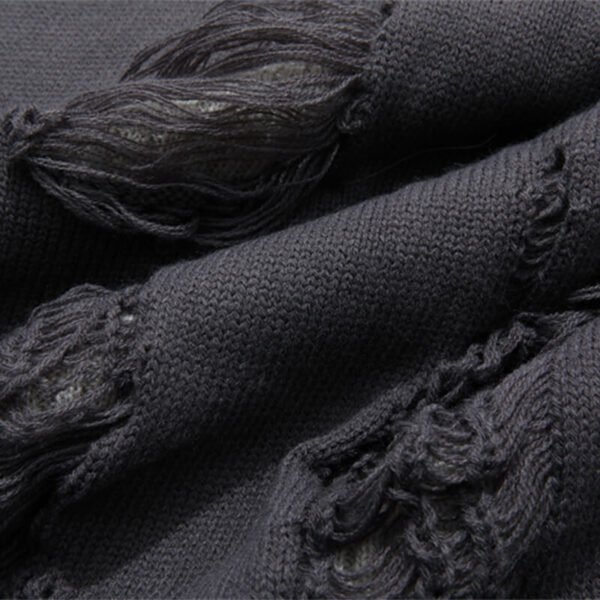
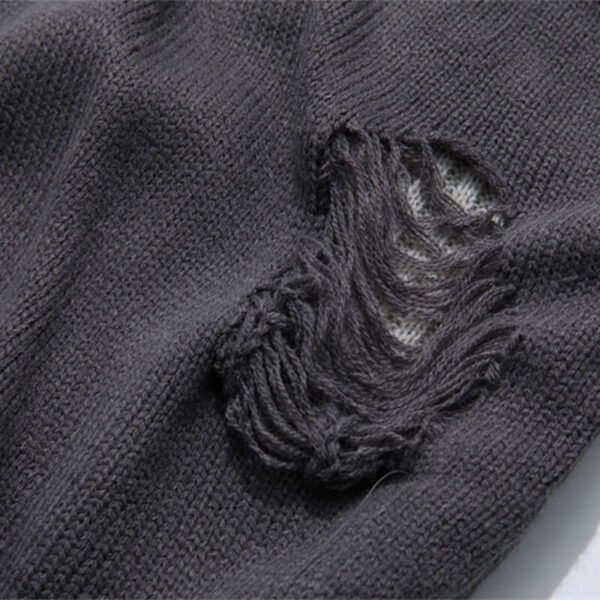
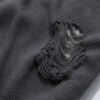
The sweater's distressed character appears through varied lighter areas and worn-looking interruptions across the charcoal ground. If these effects reach too aggressively into shoulder, armhole, or side seams, they can weaken joining zones or make alignment harder to inspect.
The distress map should reserve controlled buffers around critical seams while preserving enough irregularity to look intentional. VeeWen can review edge softness, hole limits, and tonal density alongside seam construction so the finish supports, rather than undermines, garment integrity.
Oversized Volume Needs a Stable Frame
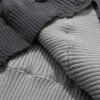
The visible dropped shoulder, broad sleeve, and roomy body create a relaxed frame for the artwork, but they also increase fabric movement during handling and fitting. The crew neckline and ribbed hem provide useful anchors for judging overall proportion and balance.
A fit sample should therefore be assessed on a form and worn, with artwork alignment checked in both states. Buyers should decide whether the design prioritizes a precise graphic grid or a deliberately relaxed, slightly shifting visual expression.
VeeWen Workflow for This Axis
VeeWen's workflow for this sweater should translate the artwork into a panel registration sheet, then test a small assembled section before committing to the full prototype. That section should include a shoulder seam, sleeve join, distressed area, and rib boundary.
The full sample can then validate placement after knit relaxation, sewing, and finishing. Revisions should address map coordinates, panel tolerances, and distress boundaries together, ensuring the approved appearance is achievable through the actual production sequence.
Approval Checkpoint Before Bulk
The buyer should approve the assembled sample from front, back, side, and worn views, checking whether tonal fields align acceptably through shoulders, sleeves, and side seams. The review should also inspect rib recovery and distress stability after care simulation.
Release is appropriate when the registration tolerance is documented and the intentional irregularity is clearly separated from accidental misalignment. Confirm composition, gauge, artwork method, and finishing limits before production, because each can alter the final visual relationship.
Buyer Questions
Can the distressed artwork be redesigned?
Yes. Artwork can be adapted by panel, tone, scale, and placement, provided the revised map respects seams, knit behavior, and agreed distress boundaries.
Is precise registration always possible?
Registration can be controlled within an approved tolerance, but knit relaxation, oversized dimensions, and finishing movement should be evaluated before promising exact alignment.
Can the sweater use another fiber blend?
Potentially. The supplied reference states wool fabric, while alternative compositions should be reviewed for handfeel, structure, artwork response, and care requirements.
What is the minimum order?
The commercial minimum is MOQ: 100 pieces per style. Colorways, artwork versions, labeling, and packaging should be finalized during development planning.
Approve the Panel Registration Map
Share your artwork files, target handfeel, distress references, and size range for a registration-led prototype. VeeWen will coordinate panel mapping and garment approval at MOQ: 100 pieces per style.


Reviews
There are no reviews yet.