
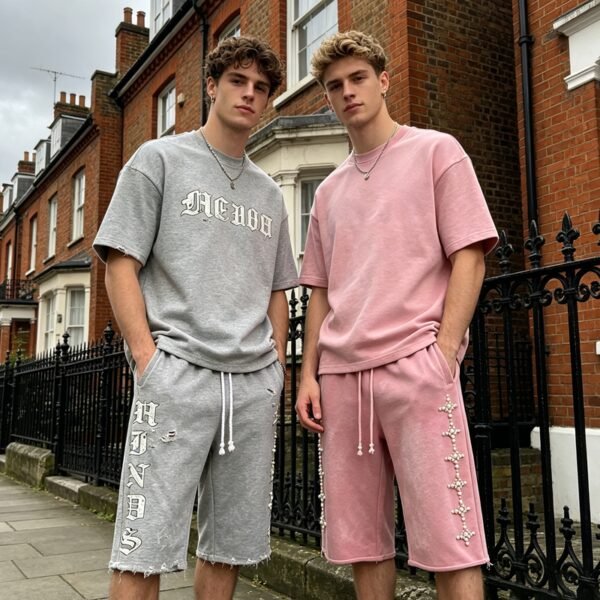
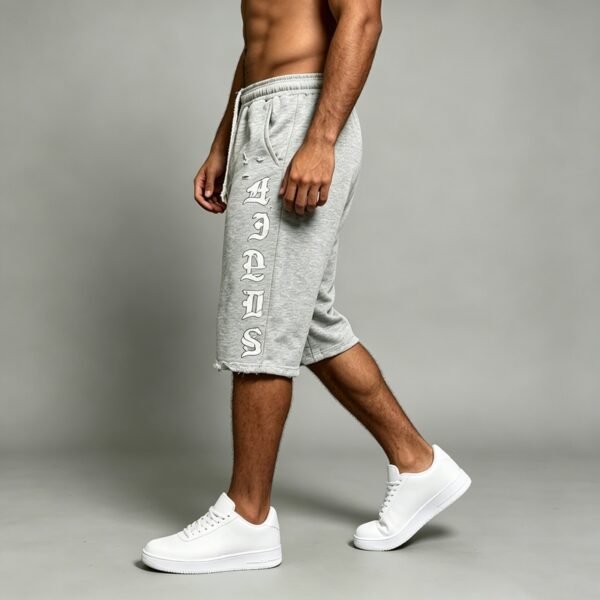
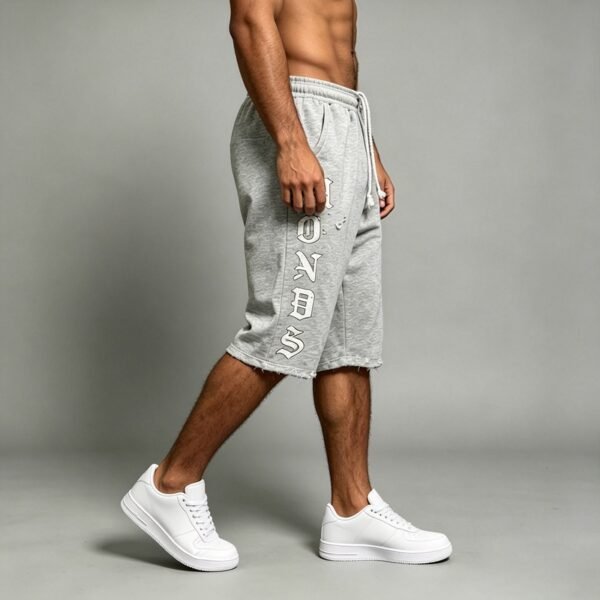
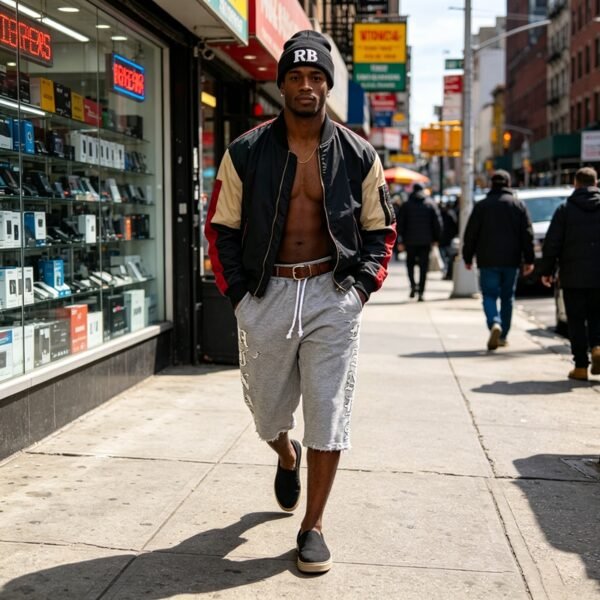
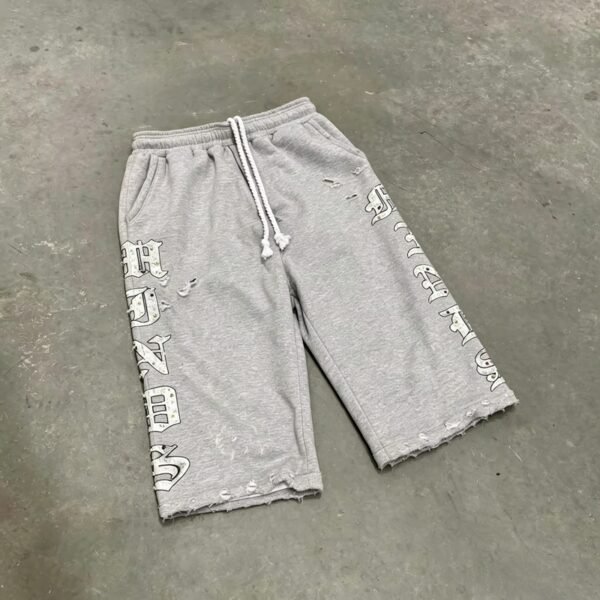
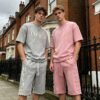
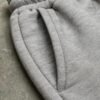

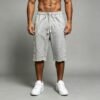
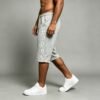
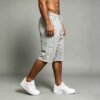

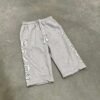
This cropped trouser concept turns label placement into a comfort decision. The visible drawstring, side pockets, raw hems, and outer-leg graphics create several pressure and abrasion zones, so branding must be positioned deliberately before the pattern is approved for production.
Comfort Starts Inside the Waistband
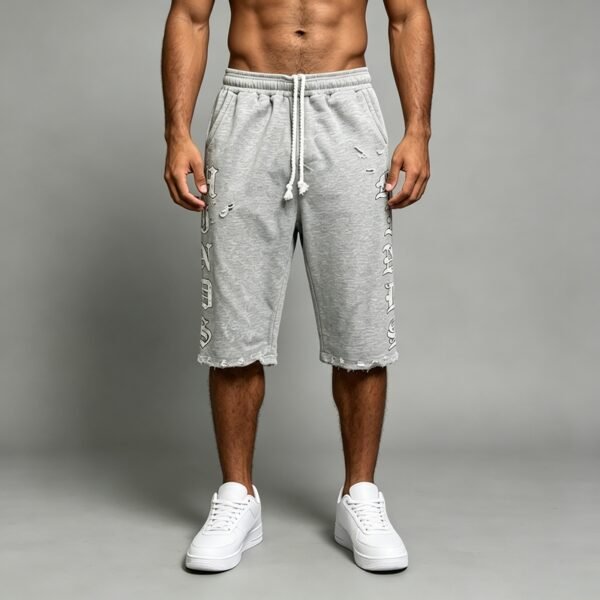
The image centers a drawstring waistband whose cords hang over the front rise. A sewn label placed inside the back waistband can keep branding readable while avoiding direct contact with the abdomen, cord channel, and frequently flexed front area.
For development, the label should be checked against seam allowances, casing turn, and cord exit positions. A stiff woven label near the drawstring tunnel may create localized bulk, while a softer printed transfer could reduce irritation but changes the branding expression.
Pocket Bulk Needs a Controlled Boundary
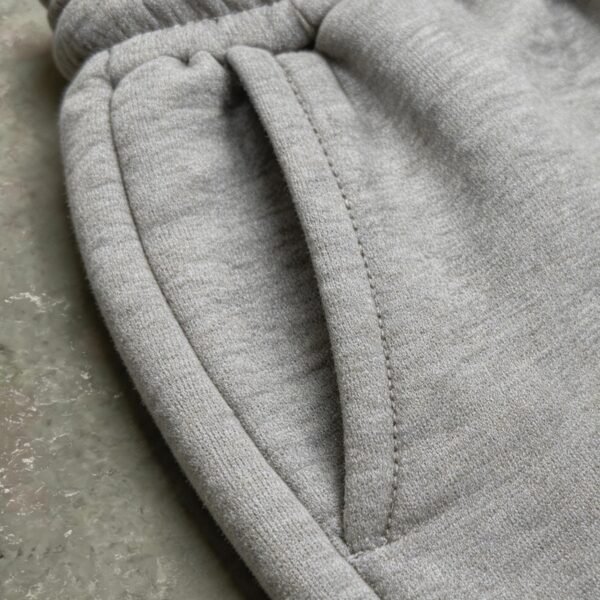
Visible side pockets sit at the front hips, where hands, phones, and sitting movement repeatedly load the garment. The label should not overlap the pocket bag or opening seam, because layered branding can create a hard ridge and interfere with comfortable hand entry.
VeeWen's pattern review should map the label, pocket bag, bartack, and side seam together on one technical drawing. That relationship lets the buyer choose whether pocket reinforcement remains visible, concealed, or minimized while maintaining dependable opening shape.
Raw Edges Change the Wear Experience
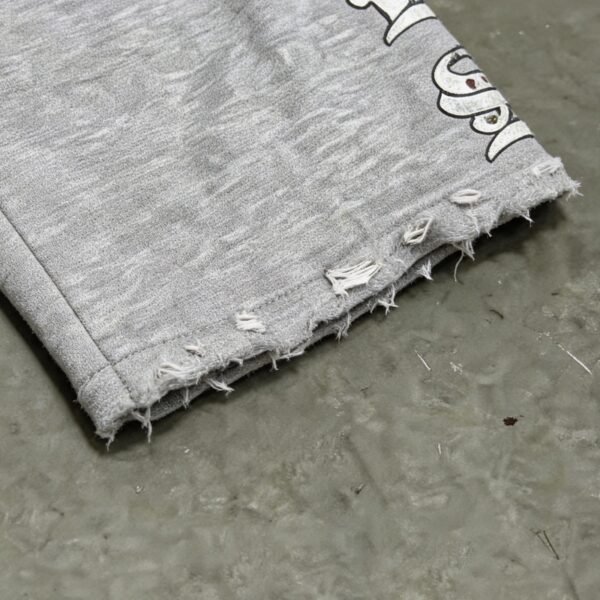
The capri hems appear intentionally unfinished, with uneven threads creating a distressed edge above the knee. This finish gives the silhouette a casual streetwear identity, yet loose fibers can brush the leg and may continue changing through laundering or repeated wear.
The approval sample should define the acceptable edge irregularity, thread length, and wash response rather than relying on a broad distressing description. Buyers should decide whether comfort requires a controlled raw edge, light stabilization, or a visibly more aggressive fray.
Graphics Add Another Contact Variable
Large vertical lettering and smaller decorative marks occupy the outer leg in the supplied image. Their placement gives the garment a directional visual story, but raised, dense, or abrasive applications can be felt when the wearer sits, crosses legs, or carries objects beside the thigh.
During product development, VeeWen can separate artwork approval from comfort approval by reviewing the graphic scale, application height, and distance from seams. The buyer should confirm whether the decoration remains soft enough for daily movement before locking the embellishment method.
Build the Approval Around Wear Zones
This product's central checkpoint is not simply whether the label looks centered. It is whether branding, cords, pocket openings, graphics, and distressed hems remain comfortable when the wearer walks, sits, reaches, and stores items in the pockets.
VeeWen's workflow should therefore record a wear-zone map beside the measurement spec, artwork file, and trim sheet. A buyer can approve each interaction visibly, then preserve the chosen comfort logic when colors, grading, or decoration quantities change.
Confirm the Production Pattern Before Branding
The pattern should be approved only after the buyer confirms label location relative to the back rise, waistband casing, and side seams. That decision controls both perceived comfort and how consistently the garment presents its brand at retail inspection.
Before issuing the production-ready package, confirm composition, GSM, cord specification, label format, pocket dimensions, and distress tolerance. The commercial minimum is MOQ: 100 pieces per style, while all unverified construction details remain subject to technical confirmation.
Buyer Questions
Where should the main label be placed?
A back-waistband position is a practical starting point, but final placement should clear the drawstring casing, seam bulk, and direct pressure points.
Is the French terry composition verified?
The source wording references heather French terry cotton, but no fiber percentages or GSM are supplied, so composition requires technical confirmation.
Can the raw hem be softened?
Yes, the distress level can be refined during sampling, subject to approval of thread length, stabilization, wash response, and the intended visual character.
What is the minimum order quantity?
The commercial minimum is MOQ: 100 pieces per style. Color splits, grading requirements, trims, and final specifications should be confirmed in the order package.
Approve the Comfort Map
Send the preferred label position, pocket dimensions, cord details, graphic files, and distress level for review. VeeWen can then prepare a coordinated development brief around MOQ: 100 pieces per style.


Reviews
There are no reviews yet.