


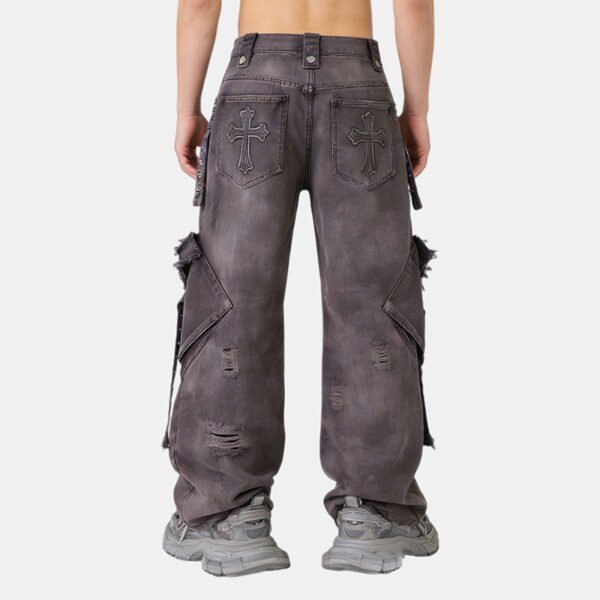


This cargo trouser reference combines a relaxed straight leg with layered utility detailing, cross embroidery, rivets, and controlled damage. Its strongest development requirement is balance: the supplied axis belongs to upper-body construction, so VeeWen should convert it into a lower-body fit and pocket-placement approval system.
Correcting the Assigned Balance Axis
Shoulder balance and sleeve pitch are not applicable measurements for trousers, because they describe upper-body posture and arm rotation. For this style, the actionable equivalent is waistband level, rise balance, inseam alignment, and leg pitch, each checked against the approved block.
The image supports that correction: the waistband appears level, the fly is centered, and both legs descend with a broadly parallel outline. VeeWen should document front and back rise, knee position, hem opening, and side-seam sweep before approving any decorative sampling.
Pocket Pitch and Utility Geometry
The cargo identity depends on side structures that run from the hip area toward the knee, creating visual weight outside the leg. Their vertical placement must follow the approved leg balance, or the pockets may pull, rotate, or interrupt walking comfort.
The visible side panels combine layered flaps, metal eyelets, and angled lower edges. During development, VeeWen should approve pocket height, flap angle, opening direction, and reinforcement positions independently from the base trouser block, then recheck the complete garment.
Embroidery Registration on Rear Pockets
Both rear patch pockets visibly carry cross-shaped embroidery, making left-to-right registration a prominent approval point. The motif must remain centered within each pocket while pocket bags, seam allowances, and wash movement are controlled through stable placement references.
This detail creates a practical trade-off: dense embroidery adds visual definition but can stiffen the pocket area or distort lightweight fabric. VeeWen should confirm thread density, backing method, motif scale, and allowable placement tolerance before grading the style.
Rivet and Eyelet Reinforcement
Metal hardware appears along the waistband tabs and side panels, where repeated attachment points concentrate stress. Rivets and eyelets should therefore be treated as structural decisions, not only decoration, with backing, hole size, edge distance, and pull resistance specified.
Hardware improves the industrial streetwear expression but adds weight and potential snag points. VeeWen's development review should compare the approved trim finish against fabric thickness, seam construction, and wash chemistry, ensuring the hardware remains secure without tearing surrounding cloth.
Damage, Fraying, and Wash Control
The image shows localized abrasions and ripped openings across the thighs and lower legs, plus frayed edges beside the cargo structures. Because these marks are intentionally irregular, the product needs placement maps and tolerance limits rather than uncontrolled manual variation.
A stronger wash or abrasion process may deepen contrast and soften the garment, but it can also enlarge holes, weaken pocket edges, or shift embroidery appearance. VeeWen should separate wash approval from damage approval, then inspect both together on the finished sample.
VeeWen Development Checkpoint
VeeWen should open development with a corrected trouser tech pack that flags the inherited axis as a taxonomy mismatch. The team can preserve the visual reference while replacing shoulder and sleeve measurements with rise, leg pitch, pocket geometry, trim mapping, and damage tolerances.
The buyer's approval sequence should be block balance first, utility-pocket placement second, and embroidery, hardware, wash, and distressing afterward. Confirming MOQ: 100 pieces per style belongs at commercial planning, while composition and performance remain open until source evidence or testing verifies them.
Buyer Questions
Is the supplied shoulder balance axis suitable for these cargo pants?
No. It is an upper-body axis, so the development record converts it into trouser balance, rise, leg pitch, pocket placement, and movement approvals.
What should be approved before decorative details?
Approve the trouser block, waistband level, rise, inseam alignment, knee position, hem opening, and pocket pitch before embroidery, rivets, wash, or distressing.
Are the visible cross motifs included in development?
Yes. The rear pocket motifs are included as visual evidence, with thread density, backing, scale, registration, and wash tolerance still requiring technical confirmation.
What is the commercial minimum for this style?
The commercial minimum is MOQ: 100 pieces per style, while final material, trim, grading, packaging, and production details require buyer approval.
Approve the Corrected Trouser Development Brief
Send the target measurements, fabric reference, trim preferences, and damage tolerance. VeeWen can then align the lower-body block, utility geometry, embroidery, hardware, and wash into one reviewable sample.


Reviews
There are no reviews yet.