

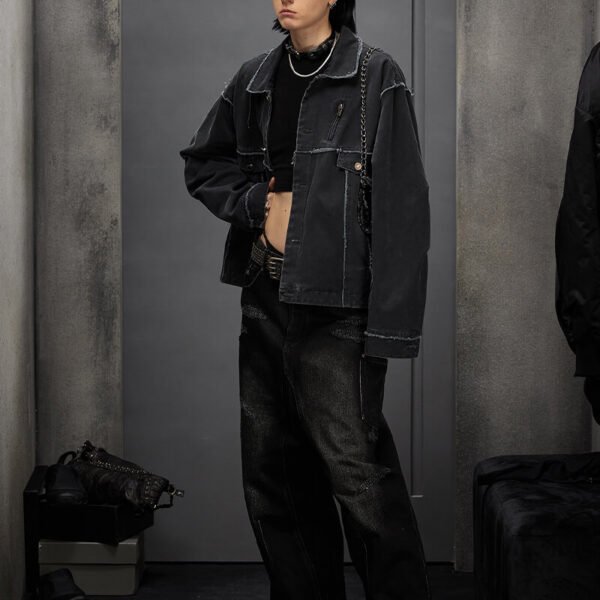


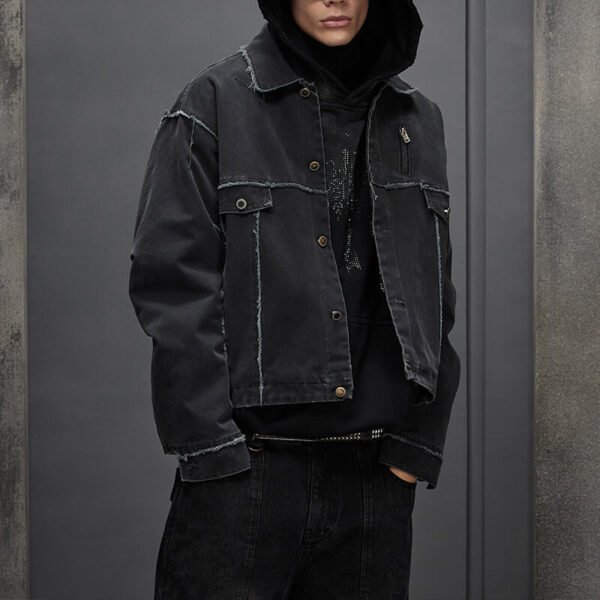


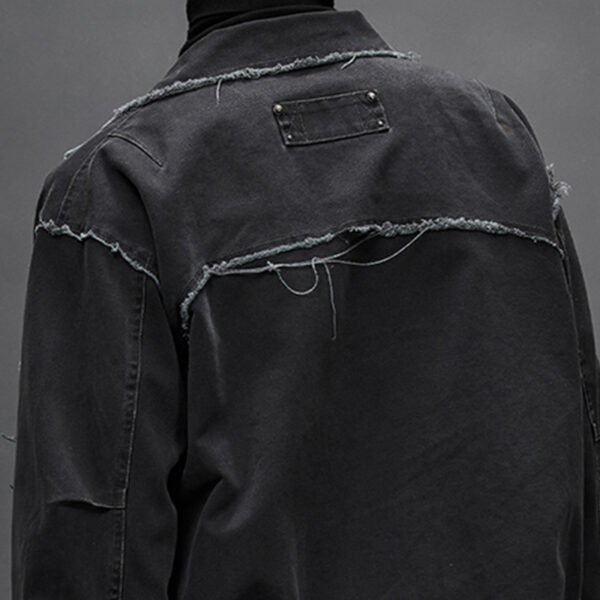







This short Harrington bomber is developed around a practical tension: the collar and neck label sit in a highly visible area, while cropped proportions and layered styling leave little room for bulky internal finishing. The development priority is discreet label integration without sacrificing comfort, structure, or distressed character.
Collar Geometry Sets the Comfort Brief
The image presents a compact collar above a cropped body, making the neckline a dominant touchpoint during wear. Because the collar sits close to the neck, label thickness, stitch density, and backing softness should be reviewed together during development before bulk approval.
A label placed too centrally may add pressure beneath the collar seam, especially when the wearer layers a high-neck top underneath. A slightly offset or carefully nested position can preserve the visual neckline while reducing concentrated friction and avoiding unnecessary seam stacking.
Raw Edges Need Controlled Internal Finishing
Visible light edges run across the collar, shoulder, yoke, cuffs, pockets, and front panels. These details create the jacket's distressed identity, but the internal seam allowance must remain stable so exposed threads do not migrate into the label area or rub against the wearer's neck.
The development sample should separate decorative abrasion from contact zones around the neckline. VeeWen's team can map the destruction artwork against pattern pieces, seam allowances, and label placement, allowing the exterior to look irregular while the inside remains deliberate and wearable.
Cropped Proportions Increase Upper-Body Pressure
The jacket finishes above the hip and uses a compact front, so movement is carried primarily through the shoulders, armholes, and upper back. A label construction that feels acceptable on a longer jacket may become distracting here because the cropped shell concentrates structure around the torso.
Fit review should therefore include reaching, sitting, and wearing the jacket open and closed. These checks reveal whether the collar rolls, the shoulder seam pulls, or the label backing becomes noticeable when the body moves through the shortened silhouette.
Pocket Hardware Must Not Compete With the Label
Several front pockets, vertical seams, and metal button closures share the same visual field as the neckline. This creates a strong utility impression, but every added component can increase local stiffness if facings, reinforcement, and internal supports overlap carelessly.
The pattern and trim plan should establish a clear hierarchy: the label remains comfortable at the neck, while pocket supports and closure reinforcements stay confined to their functional zones. This separation protects the cropped jacket's balance and prevents hidden construction from creating avoidable bulk.
Layering Tests Reveal the Real Wear Experience
The supplied image shows the jacket styled over a dark high-neck layer, which is useful evidence for development. That styling suggests the collar must retain shape without becoming abrasive when another garment presses against it during everyday movement.
A fitting review should compare direct-skin wear with layered wear, checking label corners, collar seam pressure, and sleeve mobility. The buyer should also review the jacket after repeated on-off movement, because comfort problems often appear when the collar flexes rather than when the garment stands still.
VeeWen Workflow Turns the Argument Into Checkpoints
VeeWen can translate this axis into a focused development sequence: first annotate collar contact zones, then place the label on the pattern, then align distress artwork around seam allowances before cutting the prototype. This keeps label comfort connected to actual construction decisions.
At sample review, the buyer should approve three linked items together: label position, internal backing treatment, and destruction boundary. The final production file should record those decisions beside the cropped fit measurements, ensuring the comfort solution survives revisions instead of remaining a verbal preference.
Buyer Questions
Where should the neck label be placed on this jacket?
Begin with a centered back-neck position, then test a slightly lowered or offset placement if collar seam pressure, layering, or label bulk affects comfort.
How should the distressed edges be controlled during production?
Define abrasion zones separately from contact areas, then approve thread exposure, reinforcement, and wash behavior on a complete prototype before confirming bulk specifications.
What fit checks matter most for the cropped silhouette?
Review reaching, sitting, layering, open wear, and closed wear to identify collar pressure, armhole restriction, shoulder pulling, or label discomfort during movement.
What is the minimum order for this development?
The commercial minimum is MOQ: 100 pieces per style, subject to finalized specifications, approved samples, confirmed materials, and agreed production documentation.
Approve the Comfort Map Before Bulk Development
Send your target label artwork, collar reference, size range, and distress preferences to VeeWen. We will align placement, contact-zone finishing, prototype review, and MOQ: 100 pieces per style.


Reviews
There are no reviews yet.