
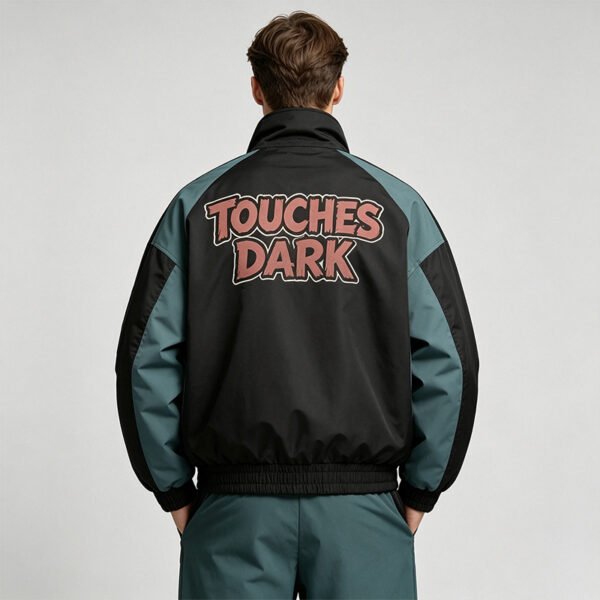
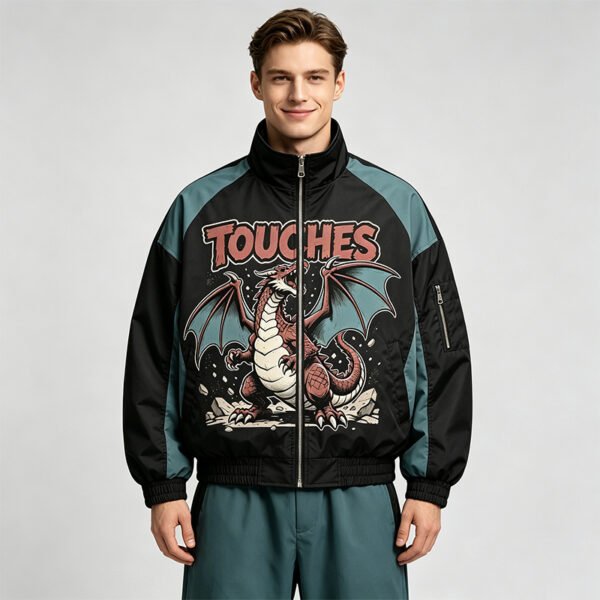
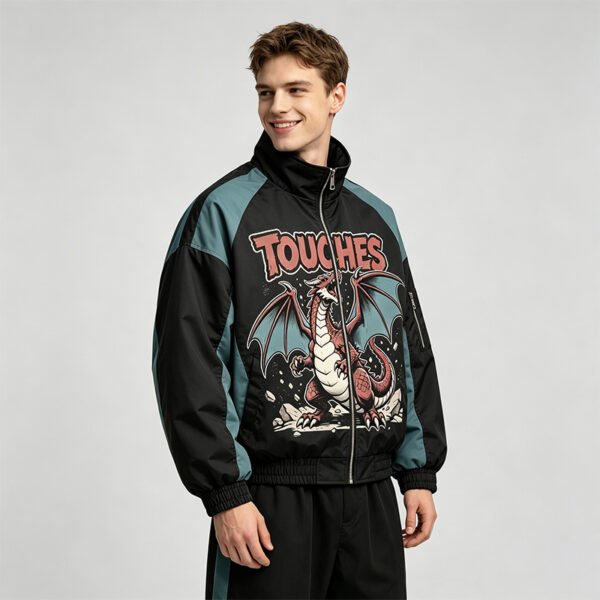
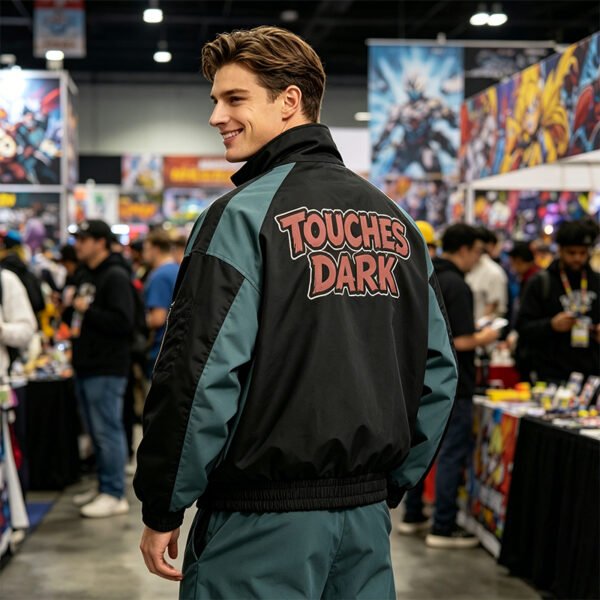
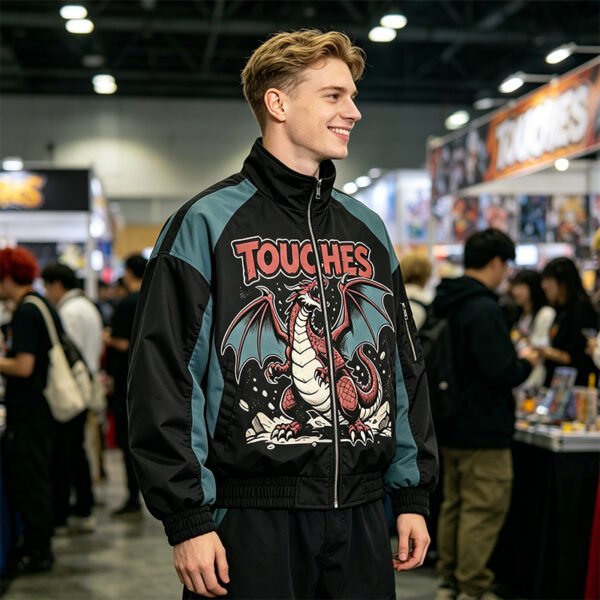
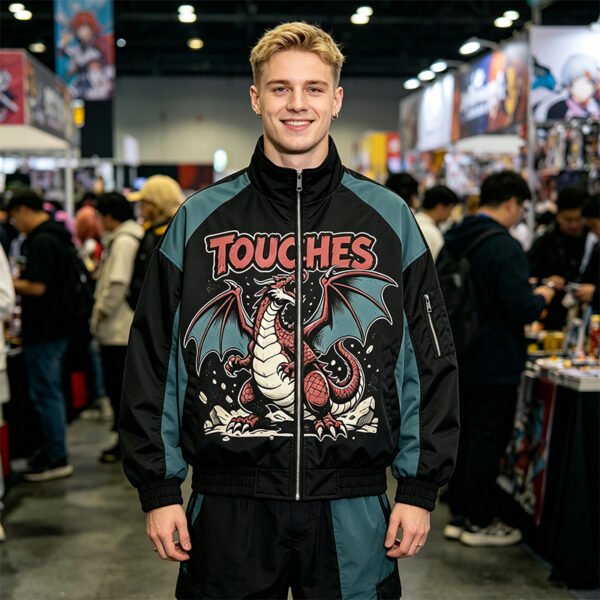
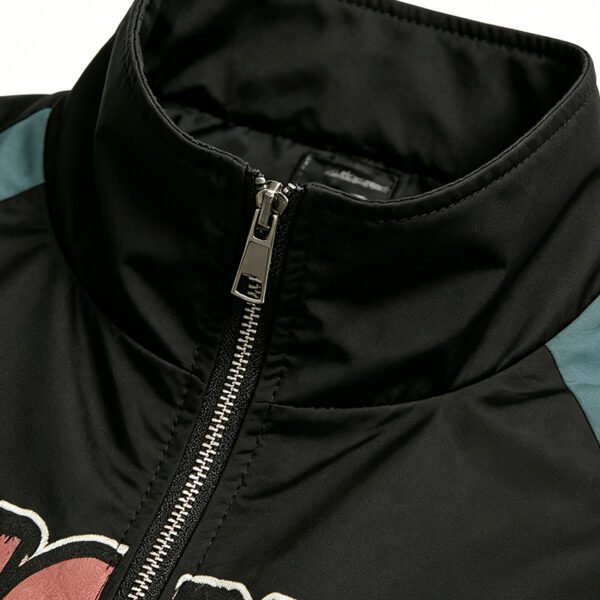
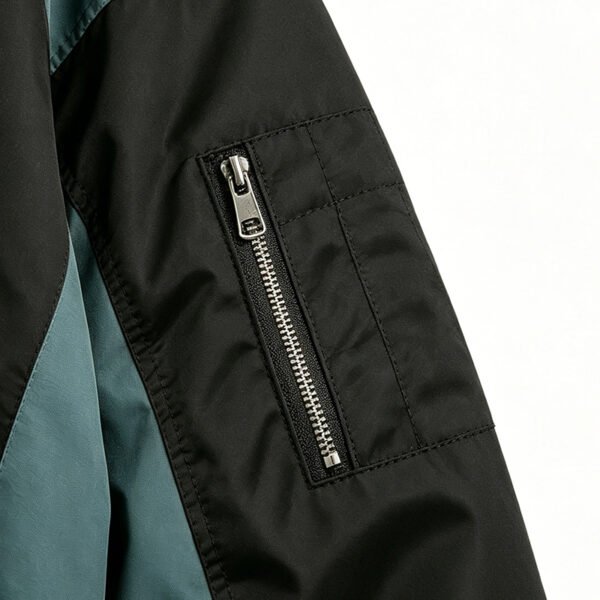
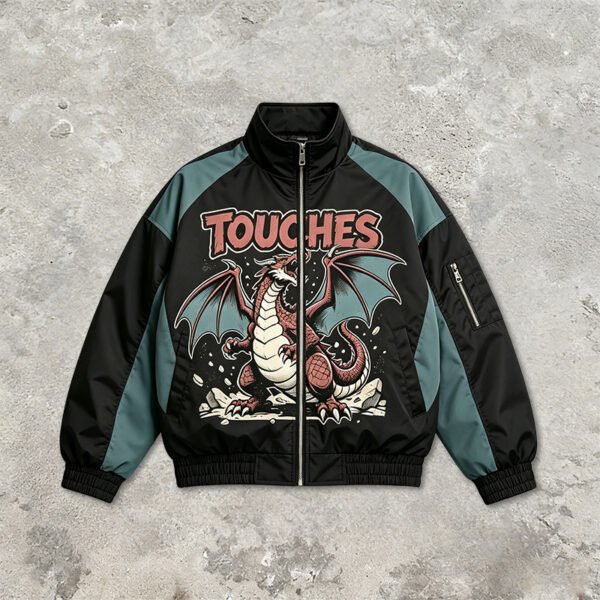
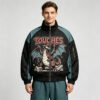
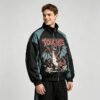


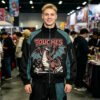
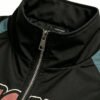
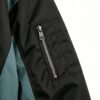

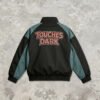
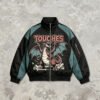
This custom windbreaker develops a bold dragon-led graphic through controlled panel contrast, while label placement protects comfort at the collar, shoulders, back, cuffs, and gathered hem. The supplied rear image shows exactly where visual density and garment contact overlap, creating a clear development checkpoint for buyers.
Map Contact Before Branding
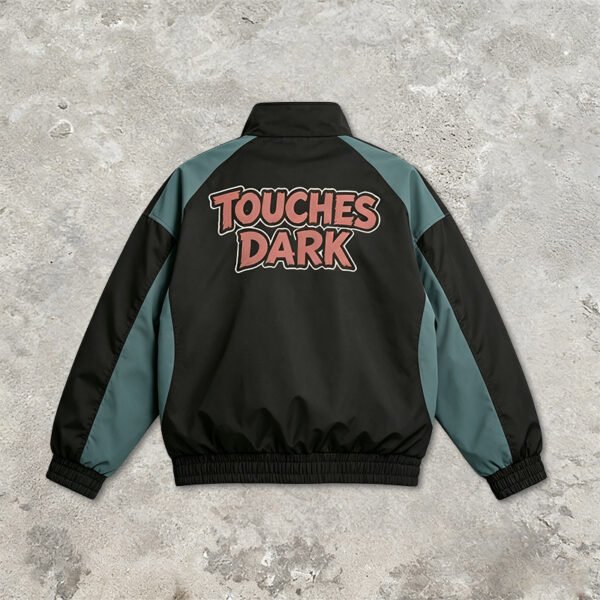
The rear image places a large graphic across the upper back, directly below a high collar. A standard woven neck label could add friction where the collar already folds, so the first approval should compare center-back, side-seam, and printed-label alternatives.
The shoulders and sleeves use contrasting teal and black panels, creating several seam intersections that can make interior labels feel bulky. VeeWen should map each proposed label against seam allowances, then review the actual contact area on a worn sample before approving production placement.
Keep the Back Graphic Wearable
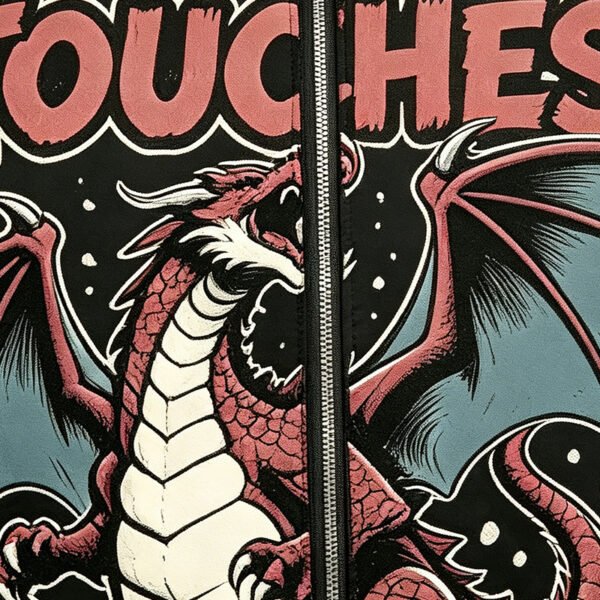
The back graphic is the garment's main visual anchor, spanning a broad black body panel and drawing attention to the upper torso. Labels should support recognition without entering that artwork zone, especially where repeated leaning or backpack contact could make layered surfaces noticeable.
A separate neck print, sleeve mark, or lower side-seam label can preserve the graphic's uninterrupted composition, but each option changes decoration cost and tactile behavior. Buyers should approve the preferred balance after reviewing artwork scale, ink or patch thickness, and inside-body comfort together.
Use Panel Geometry Intentionally
The color-block layout follows the shoulder line and continues down the sleeves, giving the windbreaker a directional structure. Labels placed near those transitions may interrupt the visual rhythm or sit over uneven seam bulk, so the placement plan should respect both pattern geometry and movement.
VeeWen's development workflow can turn the image evidence into a label-placement overlay on the technical package. The team can then test center-back, side-seam, and sleeve options against the panel pattern, preserving the intended contrast while reducing unnecessary internal layering at high-movement zones.
Manage Collar and Cuff Pressure
The raised collar visibly surrounds the back neckline, while rib-knit cuffs close the wrists with flexible tension. Those details improve coverage and retention, yet they also create sensitive contact zones where labels, care information, or folded seam ends may irritate the wearer.
The approval sample should therefore be worn with the collar open and closed, and with sleeves extended and bent. Buyers can assess whether label edges, seam transitions, or finishing layers become noticeable during movement, then select the smallest compliant information solution that remains legible.
Protect the Gathered Hem
The lower edge gathers visibly across the back, creating a fitted boundary that can press against the waist during sitting, layering, or active movement. A lower-body label placed too close to that elasticized area may add stiffness exactly where the garment compresses.
VeeWen should keep the hem zone clear while confirming the label's distance from elastic channels and seam joins. A side-seam position may distribute contact more evenly, but buyers should review accessibility, care-label visibility, and the garment's intended layering behavior before finalizing.
Approve a Wear-Tested Label Map
The final label decision should combine the large back graphic, high collar, contrasting shoulder panels, rib-knit cuffs, and gathered hem into one comfort map. Treating each feature separately could create several individually acceptable choices that become uncomfortable when combined.
At VeeWen, the buyer checkpoint is a physical fit and finishing review against the approved tech pack. Confirm artwork clearance, label edge feel, seam bulk, and wash-care positioning together, then release the style only when branding remains visible without compromising everyday wear.
Buyer Questions
Where should the main brand label go?
Consider a printed neck solution or side-seam label after sampling; the high collar and large back graphic make center-back bulk particularly important to evaluate.
Is the back graphic confirmed as DTG printing?
The source wording references DTG, but the supplied image alone cannot verify the final decoration method, artwork hand, durability, or production settings.
What fit should buyers sample first?
Start with the visible relaxed silhouette, gathered hem, and rib-knit cuffs, then confirm shoulder mobility and layering room through a physical fit sample.
What is the minimum order quantity?
The commercial minimum is MOQ: 100 pieces per style, with final material, trims, decoration, and label specifications confirmed during development.
Approve the Comfort-First Label Map
Send VeeWen your artwork, measurement targets, label preferences, and intended size range. We will develop the placement map and sample checkpoint around the jacket's actual contact zones.


Reviews
There are no reviews yet.