
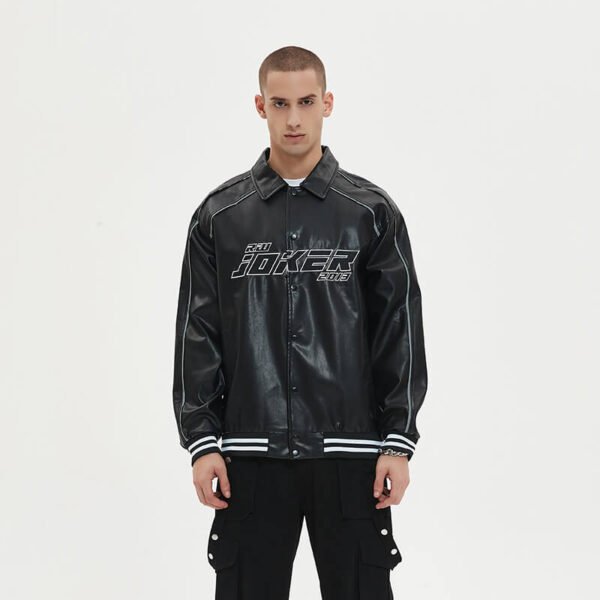
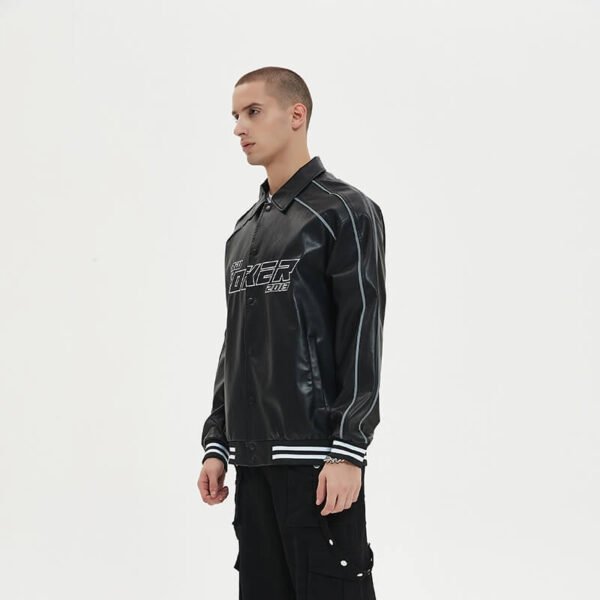
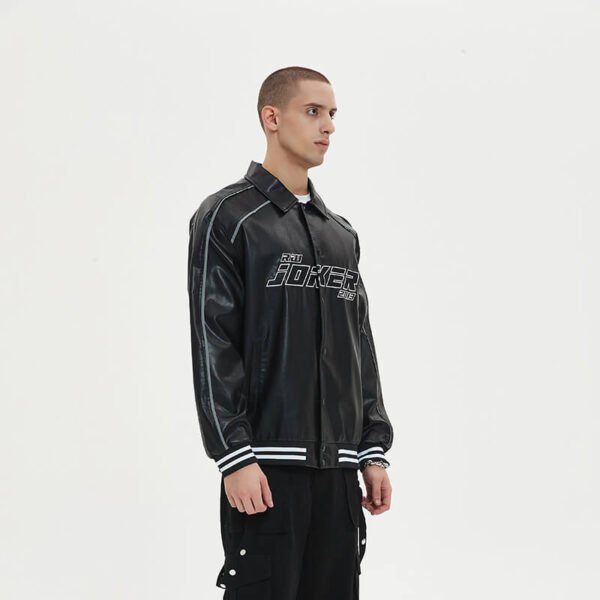
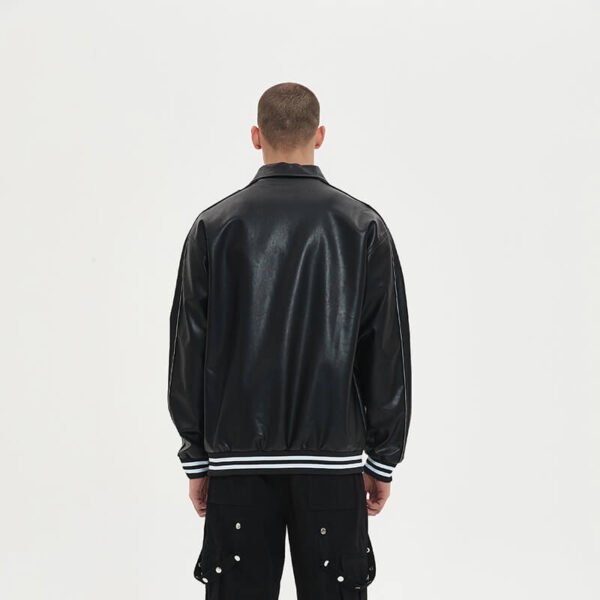

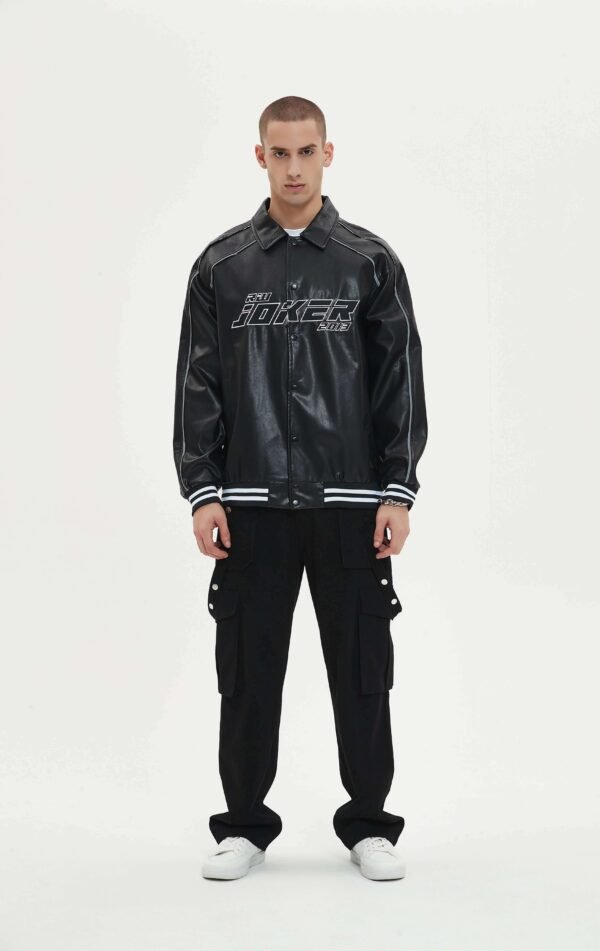
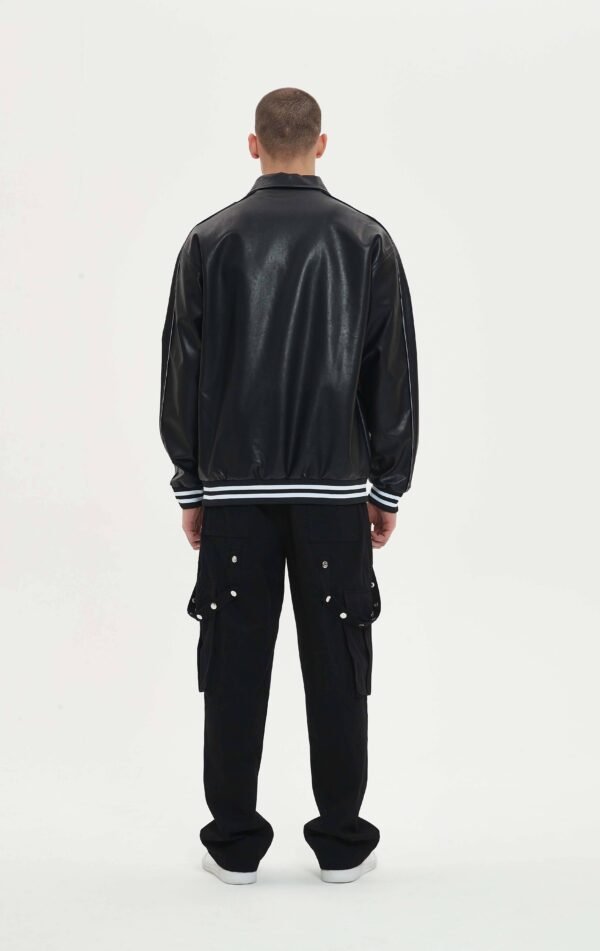


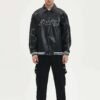
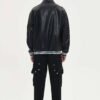
This jacket development record treats embellishment weight as a drape-control problem. The supplied image shows a relaxed black shell, a broad centered chest graphic, and ribbed edges, so the commercial approval target is expressive embroidery that remains wearable, flexible, and visually balanced.
Visual Weight Must Stay Localized
The front image concentrates embroidery across the upper chest while leaving the lower body comparatively clean. That distribution gives the graphic authority without turning the entire shell into a rigid decorated panel, preserving movement through the torso.
For development, VeeWen should map the graphic as a bounded chest zone and review its stitch coverage against shell flexibility. The approval sample should demonstrate that the decorated area does not pull the placket, distort the collar, or create abrupt transitions into unembellished fabric.
Backing Controls Surface Behavior
Embroidery adds thread, backing, needle penetration, and localized compression. On a leather-look material, excessive support can create a board-like patch, while insufficient support may allow puckering around lettering, especially where the image shows a broad horizontal motif.
The practical checkpoint is a strike-off and shell test using the intended graphic scale. VeeWen's development team can compare backing options, hoop tension, stitch density, and edge finishing before the design is committed to the complete jacket sample.
Drape Depends On Placement
The visible shell folds naturally below and beside the chest graphic, suggesting that the design should avoid unnecessary extension into high-flex areas. Keeping dense embroidery away from underarm rotation and major side-body folds helps the jacket retain a relaxed streetwear hand.
Pattern review should therefore treat decoration and movement together. VeeWen can overlay the artwork on the front pattern, identify fold lines and seam intersections, then revise scale or spacing where embroidery would otherwise interrupt sleeve mobility or create uneven visual weight.
Ribbed Edges Rebalance The Silhouette
The striped ribbed cuffs and waistband provide a firm visual base beneath the glossy body. Because those components already add contrast and compression, a heavy lower-front graphic could make the jacket feel visually bottom-heavy and compete with the hem's stabilizing function.
The buyer should approve the chest graphic alongside the rib specification, not independently. VeeWen's sample review can assess cuff recovery, waistband tension, and the distance between embroidery and rib, ensuring the embellishment supports rather than overwhelms the silhouette.
Surface Contrast Requires Controlled Finish
The supplied image shows a reflective black surface contrasted with pale graphic work and lighter rib stripes. That contrast is commercially useful, but it also makes uneven stitching, puckered edges, or inconsistent thread tension more noticeable under studio lighting and close product photography.
A production-ready review should include front-light and angled-light inspection of the decorated panel. VeeWen can use the approval sample to confirm thread color, edge definition, graphic registration, and the shell's visual continuity after pressing and finishing.
Workflow Checkpoint For Bulk Approval
VeeWen's product-development workflow should begin with artwork cleanup, placement mapping, material confirmation, and an embroidery strike-off before full garment sampling. This sequence directly addresses the jacket's central risk: decoration changing the shell's intended drape.
The buyer's release decision should record approved graphic dimensions, thread colors, backing construction, shell reference, rib proportions, and tolerance expectations. With those points documented, MOQ: 100 pieces per style becomes a defined development brief rather than an open-ended decoration request.
Buyer Questions
What should be tested first for this jacket?
Test the embroidery strike-off on the intended shell, then inspect puckering, backing stiffness, stitch coverage, and drape before approving the complete garment sample.
Can the graphic be resized for different markets?
Yes, artwork scaling can be reviewed against the front pattern, but each size range should preserve collar clearance, placket balance, and acceptable movement through the chest.
What information does VeeWen need before sampling?
Provide artwork files, placement measurements, target shell reference, thread colors, rib direction, size range, labeling requirements, and the intended approval tolerance for decoration.
What is the commercial minimum?
The exact commercial minimum is MOQ: 100 pieces per style. Final development should still confirm materials, artwork, graded sizes, packaging, and production documentation.
Approve The Embroidery-Drape Trial
Send the artwork, shell reference, size range, and rib details to VeeWen for a focused strike-off and sample review, then approve the documented decoration and drape checkpoints for MOQ: 100 pieces per style.


Reviews
There are no reviews yet.