

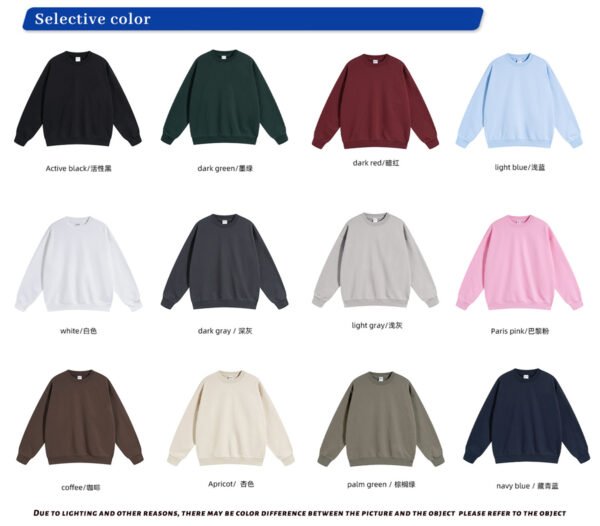




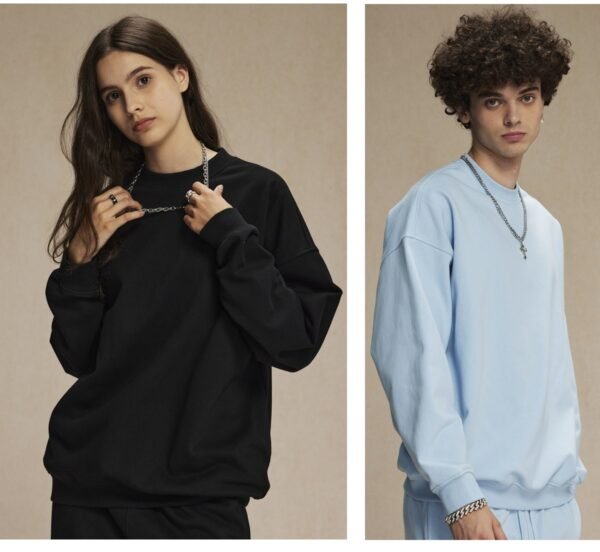
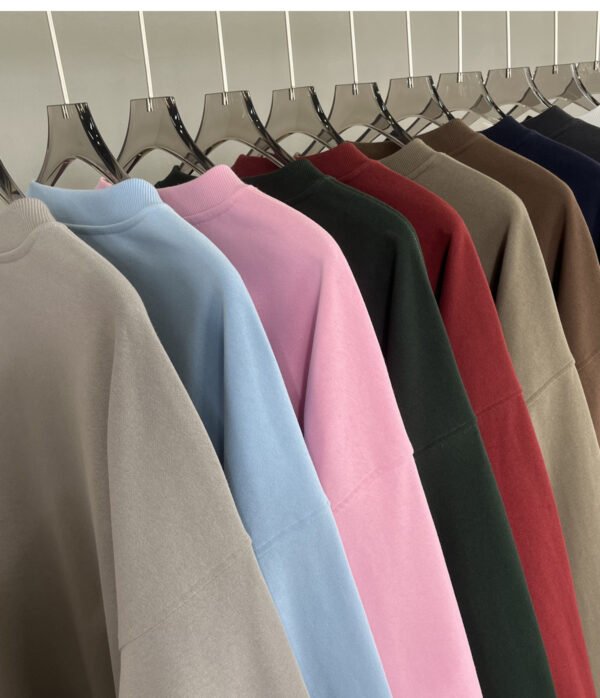
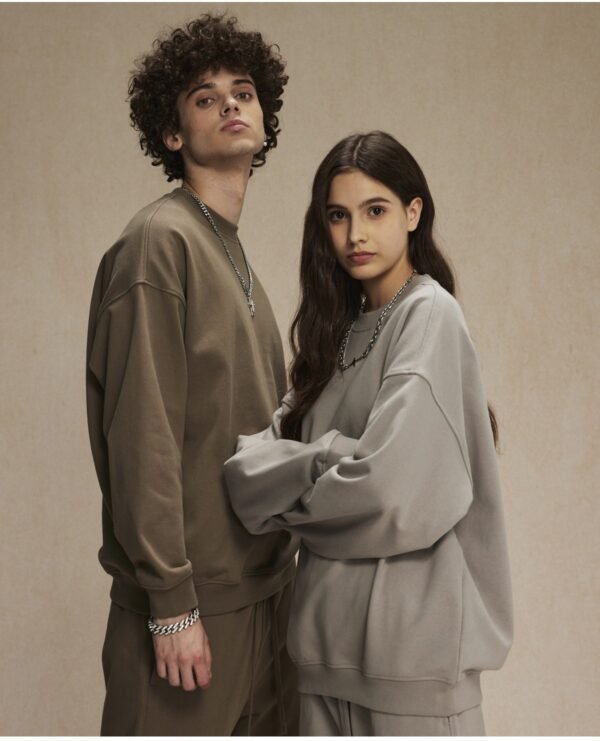











This sweatshirt is positioned around a heavy 430G terry reference and an oversized crew-neck shape. The supplied information image identifies a cotton-polyester composition, twelve colors, five sizes, washing symbols, and a measurement table, making pressing control central to surface and fit approval.
Why Pressing Is a Product Variable
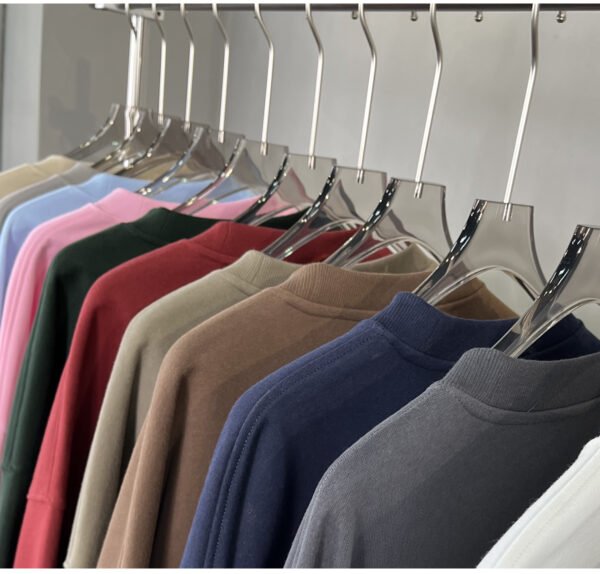
The supplied product information identifies a 430GSM sweatshirt, while the garment images show a substantial oversized crew-neck form. At this weight, pressing can influence seam definition, panel flatness, rib appearance, and the perceived loft of the terry surface.
A pressing decision should therefore be written into the technical file rather than left as an invisible factory habit. Pressure, temperature, contact time, and protective layers can affect the balance between a clean silhouette and a surface that looks overly compressed.
Protecting the Terry Pile
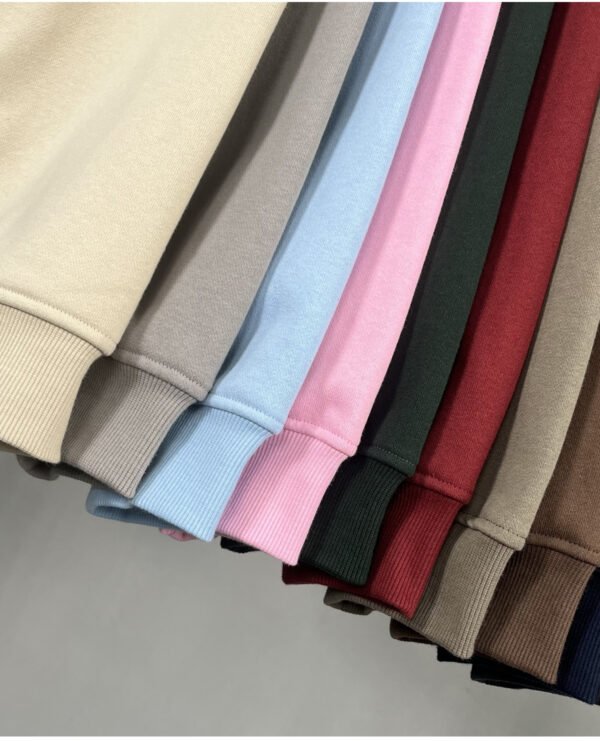
Terry contains raised loops or pile that can change appearance when exposed to direct heat, pressure, or repeated contact with a hard surface. The buyer should review the face and reverse after pressing, checking for flattened areas, shine, crushing, or directional shading.
Protection does not mean avoiding shape control altogether. The practical objective is to support collars, cuffs, hems, and seam areas while limiting unnecessary contact across broad body panels. A sample should reveal whether the chosen method preserves the intended tactile and visual character.
Composition and Heat Response
The source image states 58% cotton and 42% polyester, providing a documented blend reference for development. Cotton and polyester can respond differently to heat, moisture, compression, and recovery, so the approved pressing method should be judged on the actual fabric submission.
The blend reference does not by itself establish performance or care outcomes. Buyers should confirm whether pressing changes the hand, creates shine, affects dimensional measurements, or alters color perception. These observations matter especially when the same sweatshirt is developed in twelve color directions.
Oversized Shape Without Hard Creases
The oversized silhouette requires broad panels to remain relaxed rather than acquiring sharp, unwanted press lines. Body presentation should be checked from front, back, and side views, with special attention to shoulder fall, sleeve volume, hem balance, and the visual openness of the crew neck.
Pressing can improve shipment presentation, yet excessive shaping may make a casual oversized garment appear rigid. The approval sample should define which areas receive structure and which areas remain natural, allowing the finish to support the silhouette instead of replacing it.
VeeWen Workflow for Pressing Approval
VeeWen can place pressing notes beside the garment measurement chart, fabric reference, seam map, and approved color list. This connects the finish directly to the style's actual panels and prevents a generic instruction from overlooking heavy-fabric behavior.
Sample review should compare unpressed and pressed areas where practical, then inspect surface direction, seam relief, measurements, and color appearance. Any revision can be documented as a method change tied to the 430G reference before the MOQ: 100 pieces per style decision.
Buyer Approval Checkpoint
Approve the sweatshirt when the finished sample retains a clean oversized outline without visible pile damage, hard creasing, or unintended gloss. Confirm collar, cuff, hem, shoulder, and body-panel appearance under consistent lighting before approving the pressing instruction.
The final sign-off should also confirm the size chart, color range, care communication, and fabric reference. If one color shows stronger surface change than another, record that difference and decide whether the method, fabric, or shade requires adjustment.
Buyer Questions
Why does a 430GSM sweatshirt need pressing controls?
Heavy terry can show flattening, shine, or unwanted creasing when pressed incorrectly. Controlled contact helps shape seams and trims while preserving the visible surface character.
Does the stated fiber blend guarantee heat behavior?
No. The blend is a source reference only; actual heat, moisture, compression, recovery, and dimensional responses require confirmation on the approved fabric.
How many colors and sizes are shown?
The supplied information image shows twelve color directions and sizes S through XXL, with measurements requiring review against the final sample.
What is VeeWen's minimum order quantity?
VeeWen's exact commercial minimum is MOQ: 100 pieces per style, subject to the approved specification and production agreement.
Approve the Pressing Standard
Share the target fabric, color list, and fit priorities for VeeWen review. We can define a pressing method that protects the terry surface while retaining the approved oversized shape and MOQ: 100 pieces per style.


Reviews
There are no reviews yet.