
















This 7715 pullover hoodie is a heavyweight development option built around 430 GSM terry and a brushed interior reference. Its commercial question is not simply warmth, but whether waistband recovery remains balanced as sizes expand. VeeWen can validate that relationship through graded pattern review and sample fittings.
Why Waistband Recovery Controls the Silhouette
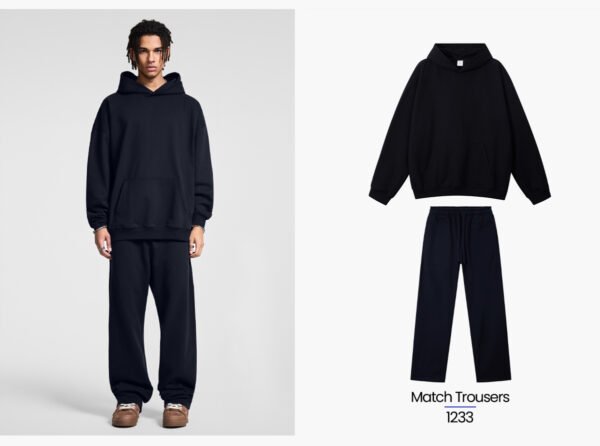
At 430 GSM, the body carries meaningful fabric mass, so the waistband must stabilize the lower edge without creating a hard horizontal squeeze. The supplied image shows substantial hems that sit visibly below the torso, making recovery central to proportion and comfort.
A waistband that relaxes too far can make the hoodie look elongated and untidy after wear, while excessive recovery can interrupt the relaxed block. The correct target should retain a clean hem line when the wearer moves, sits, and layers underneath.
The Physical Mechanism Behind Graded Recovery
Rib structure, elastic behavior, waistband height, and seam joining collectively determine how the hem returns after extension. For this style, those variables should be evaluated against the heavier brushed body, because the lower edge must resist downward drag without relying on excessive compression.
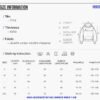
Grading should preserve the intended relationship between hem circumference and body circumference rather than simply enlarging every measurement proportionally. Larger sizes may need adjusted rib length, height, or joining tension so recovery remains visually consistent across the range.
Reading the Supplied Visual Evidence
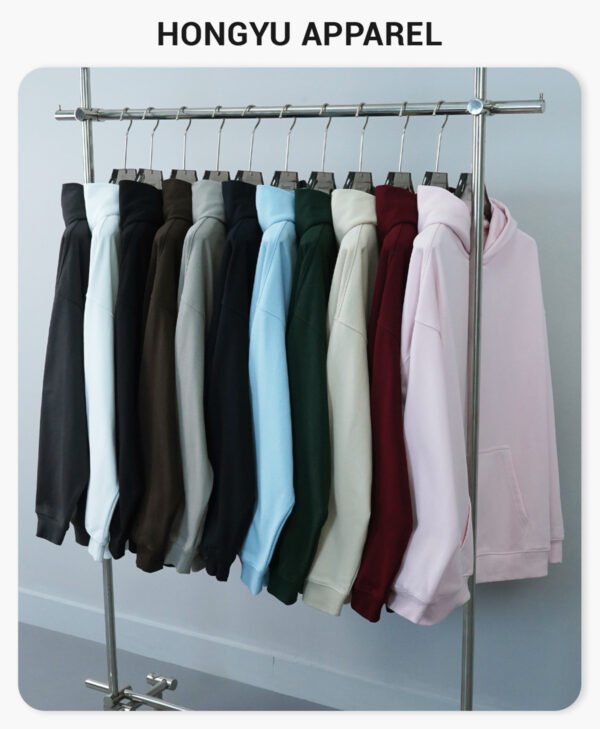
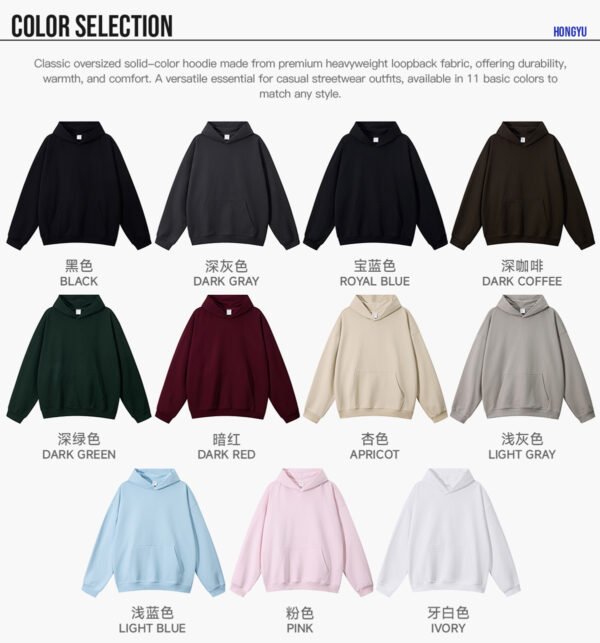
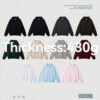
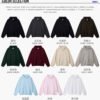
The main image presents the same pullover concept across white, cream, gray, pink, burgundy, black, green, blue, and brown colorways. Across those presentations, the ribbed waistband remains a strong visual boundary, supporting a development brief centered on hem stability and repeatable proportions.
The styling also includes male and female models with varied body frames, which supports unisex grading review rather than a single-body fit assumption. The image does not verify measurements, fiber composition, or tested recovery, so those points require technical confirmation.
Trade-Offs Buyers Should Resolve
More aggressive recovery can sharpen the silhouette and reduce hem flare, but it may restrict movement or create visible bunching over the hips. Softer recovery improves ease, yet can allow the heavy body to pull the hem downward during wear and laundering.
A buyer should therefore define the priority use case before approving the rib specification. A streetwear block may accept a firmer, more graphic hem, while a relaxed lifestyle block may require greater extension comfort and a visibly softer return.
How VeeWen Should Develop This Block
VeeWen's workflow should begin with the approved 430 GSM brushed terry reference, then map body, rib, and seam measurements through the intended size range. The first sample should test relaxed standing, arm movement, seated compression, and hem return after repeated manual extension.
Pattern comments should record waistband height, circumference, joining tension, and visual stacking at each fitting size. This makes the manufacturing axis measurable during development and gives the buyer a clear approval trail before color expansion or bulk cutting.
Approval Checkpoint Before Production
Approve the pullover block only after the waistband holds the lower edge without twisting, rolling, or excessive pressure on representative bodies. Review the largest and smallest planned sizes first, because grading errors often become most visible at the range boundaries.
The final sign-off should cover rib recovery, waistband dimensions, seam behavior, and acceptable hem appearance after handling. Once those standards are documented, the style can proceed toward color confirmation, labeling, and the MOQ: 100 pieces per style planning stage.
Buyer Questions
Is the 430 GSM specification verified?
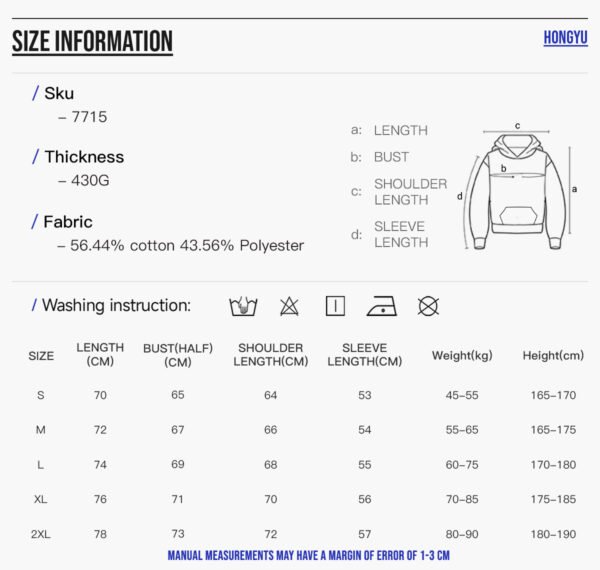
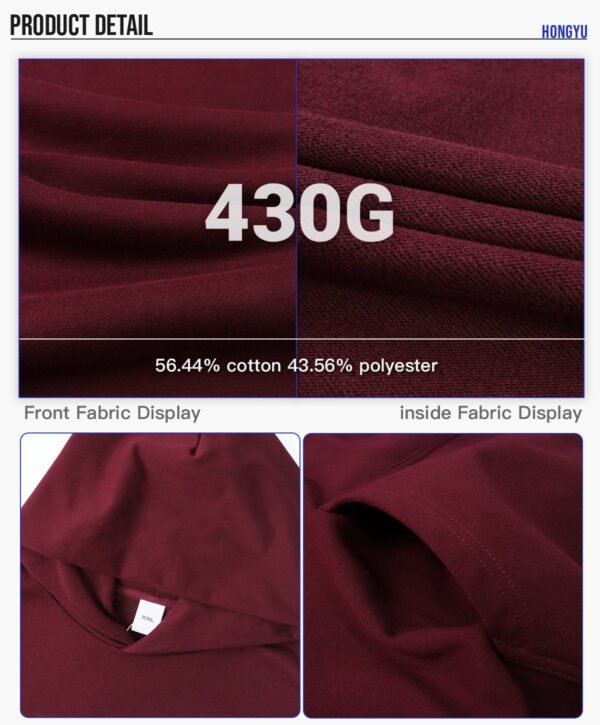
Yes, 430 GSM appears in the supplied source wording. Fiber composition, tolerance, fabric structure, and laboratory verification are not supplied and must remain subject to confirmation.
What should the first sample prove?
The first sample should demonstrate hem recovery, waistband comfort, stable joining, and consistent proportions at the smallest and largest planned grading points.
Can this hoodie use custom colors?
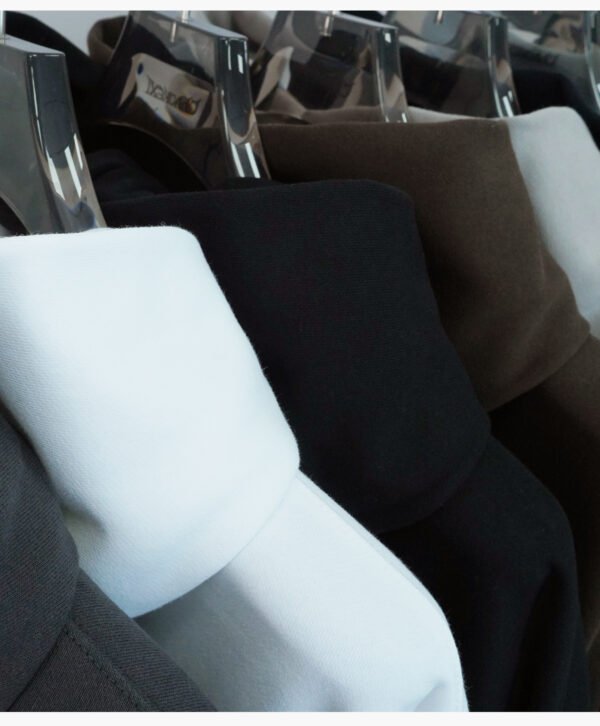
The image shows several color directions, including neutrals, pastels, dark tones, and saturated shades. Final dye standards, color approvals, and minimums require development confirmation.
What is the commercial minimum?
VeeWen's exact commercial minimum is MOQ: 100 pieces per style. The buyer should confirm size ratios, color allocation, labeling, and packaging requirements during quotation.
Approve the Hem-Control Development Brief
Send the intended size range, fit preference, and recovery priority to VeeWen for waistband grading review, sample planning, and MOQ: 100 pieces per style production evaluation.



Reviews
There are no reviews yet.