


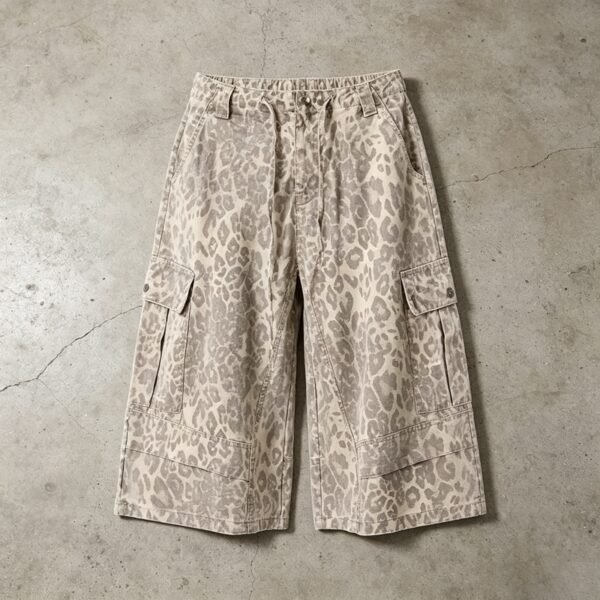





This wide cropped cargo trouser is a development study in controlled waistband flexibility. Its gathered elastic, front drawcord, metal eyelet, button closure, belt loops, and tonal leopard surface create multiple load paths that must be balanced before approval.
Why the Waistband Becomes the Product Decision
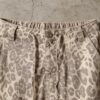
The supplied close-up shows an elasticized inner waistband gathered behind a more stable outer waistband. That arrangement can improve comfort while preserving a trouser appearance, but the drawcord channel must not collapse, twist, or expose uneven fullness during repeated adjustment.
The front closure and belt loops place additional tension beside the drawcord exits. A development sample should therefore assess whether buttoning, belt use, and cinching compete for the same fabric area, especially when the wide silhouette encourages frequent movement and styling changes.
Eyelet and Exit Reinforcement
A visible metal eyelet surrounds one drawcord opening, creating a defined path through the waistband facing. Its value is mechanical: it limits abrasion at the exit, but it also concentrates force where the facing, interlining, and channel stitching meet.
VeeWen should map the reinforcement behind both openings rather than treating the eyelet as an isolated trim detail. The approval sample should compare bar-tack, patch, and layered-facing options against the desired hand feel, because excessive reinforcement can make the waistband rigid.
Channel Geometry and Cord Control
The drawcords descend visibly from the waistband center, so channel width and exit alignment will influence how evenly the garment cinches. A narrow channel may control the cord neatly, while a loose channel can improve movement but allow bunching or asymmetric tightening.
During pattern development, VeeWen can establish the channel as a measured construction zone with dedicated seam allowances. The key checkpoint is a fully adjusted sample photographed and measured flat, confirming that the cord remains accessible without distorting the front rise.
Balancing Comfort with Trouser Structure
Elastic provides ease, yet the outer waistband, button closure, and belt loops signal a more structured trouser expectation. If elastic recovery is too strong, the front may gather excessively; if too weak, the drawcord must carry comfort and security alone.
The product team should set a target balance between relaxed wear and a clean front presentation. This means reviewing waistband height, elastic width, facing stability, and cord tension together, rather than approving each component from a disconnected trim checklist.
Pattern and Surface Coordination
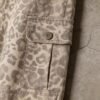
The beige and taupe-gray leopard surface is visually irregular, while the waistband and pocket edges use tonal construction lines. Such a print can disguise minor alignment shifts, but it cannot hide a channel that pulls the pattern into unwanted ripples.
VeeWen's development workflow should place the reinforcement map onto the actual printed or simulated surface before cutting approval. Review should cover front rise, pocket opening, waistband seam, and drawcord exits, ensuring mechanical changes do not interrupt the intended visual rhythm.
VeeWen Development Approval Gate
For this style, VeeWen's workflow should begin with a construction brief identifying cord diameter, eyelet finish, channel width, reinforcement method, waistband recovery target, and measurement points. Those decisions translate the visual reference into an executable sample package.
Before the MOQ: 100 pieces per style production decision, the buyer should approve a corrected sample after adjustment, laundering review, and pull testing appropriate to the program. The checkpoint is documented construction acceptance, not simply a visually similar first sample.
Buyer Questions
Can the drawcord system be changed for a private-label collection?
Yes, cord width, tip treatment, eyelet finish, channel dimensions, and exit placement can be specified during development, subject to sample approval.
Does the image confirm the trouser fiber composition?
No. The image shows a woven-looking surface, but fiber content, blend, GSM, and performance claims require source confirmation.
What should buyers inspect on the approval sample?
Inspect cord smoothness, eyelet seating, channel stability, waistband recovery, front-rise distortion, button security, and comfort after repeated adjustment.
What is the commercial minimum for this style?
The commercial minimum is MOQ: 100 pieces per style, with final specifications and production details confirmed through the approved quotation.
Approve the Reinforcement Map
Send your target measurements, cord preferences, and surface direction to VeeWen for a focused sample review covering channel stability, eyelet seating, and waistband recovery.


Reviews
There are no reviews yet.