
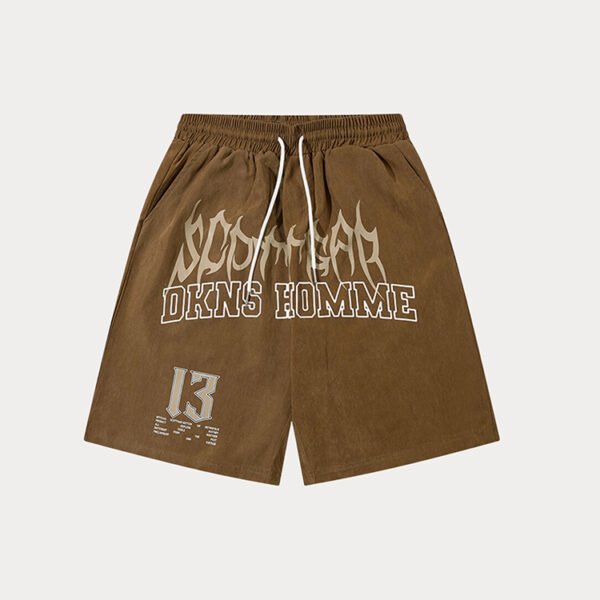



This short development record centers on how front embellishment changes the behavior and perception of a loose silhouette. The supplied image shows broad legs, a gathered waistband, long drawcords, and two graphic scales that require coordinated placement and drape approval.
Drape Is Shaped by Visual Mass
The shorts hang with generous volume through both legs, but the large front lettering introduces a concentrated visual block across the upper thighs. That relationship determines whether the garment reads fluid and relaxed or visually weighted toward its decorated front.
Development should assess the front and side views while the shorts hang naturally, then repeat the check during walking and sitting. The objective is not simply centered artwork; it is a balanced silhouette that keeps both legs visually open and proportionate.
Two Graphic Scales Need Coordination
The supplied image combines broad outlined lettering near the upper front with a smaller numbered and text element lower on one leg. This hierarchy creates interest, but the two zones must be spaced so they support one another without making one leg appear heavier.
A placement map should define artwork width, vertical distance, and relationship to pocket openings, inseam, and hem. The smaller detail can act as a counterweight, yet its position should be tested on graded sizes before the layout is commercially approved.
Waist Details Affect the Silhouette
The gathered elastic waistband and long white drawcords create a bright, high-contrast center at the top of the garment. Their visibility pulls attention upward, while the decorated thighs pull attention downward, so the final styling depends on controlled proportion across both zones.
VeeWen should review cord length, exit spacing, and waistband gathering alongside the graphic sample. Excessive cord length may compete with the lettering, while insufficient gathering can reduce the relaxed shape that gives the shorts their intended streetwear volume.
Pocket and Artwork Boundaries
The side pockets sit behind the main decorated field, making their opening direction and bulk relevant to the front appearance. Graphic placement that crosses too near a pocket can interrupt lettering, create uneven visual tension, or complicate handling during sewing and finishing.
The buyer should approve artwork clearances from pocket bags, side seams, inseams, and hems. These boundaries protect the graphic hierarchy while allowing the pocket construction to function without forcing the leg panels into a visibly distorted shape.
VeeWen Workflow for Drape Approval
VeeWen can develop this style through a silhouette sample, embellishment placement board, and movement review using the same decorated front. That sequence makes the weight-versus-drape decision visible before the buyer commits to the final production specification.
For the MOQ: 100 pieces per style route, approval notes should capture leg opening, waistband gathering, drawcord presentation, artwork scale, and pocket clearance. These checkpoints connect design intent with patternmaking, decoration placement, sewing, and final inspection decisions.
Trade-Offs and Final Checkpoint
Heavier or more extensive decoration can increase graphic presence, but may make the front feel rigid or visually dense. A lighter treatment preserves movement and softness, yet can reduce the assertive hierarchy shown by the large lettering.
Before production release, inspect the decorated sample from front, side, seated, and walking views. Confirm even leg drape, stable artwork placement, usable pockets, controlled cord presentation, and acceptable balance between statement graphics and physical movement.
Buyer Questions
Is the product color confirmed as brown or green?
The supplied image appears earthy brown, while the source wording references green. Final colorway and approved lab standard remain To Confirm before production development.
What embellishment arrangement is visible?
Large outlined lettering spans the upper front, with a smaller numbered and text detail near the lower left leg. Final artwork files and methods require confirmation.
Are the drawcord dimensions confirmed?
The image shows long contrasting drawcords centered at the waistband. Exact length, diameter, tip treatment, and safety requirements remain To Confirm during sampling.
What is the minimum commercial quantity?
The exact commercial minimum is MOQ: 100 pieces per style. Final quantities, size ratios, colorways, and packaging requirements should be confirmed during quotation.
Approve Embellishment and Drape Together
Send VeeWen the artwork files, preferred color direction, size range, and movement priorities. We can coordinate the decorated front, loose pattern balance, and your MOQ: 100 pieces per style decision.


Reviews
There are no reviews yet.