

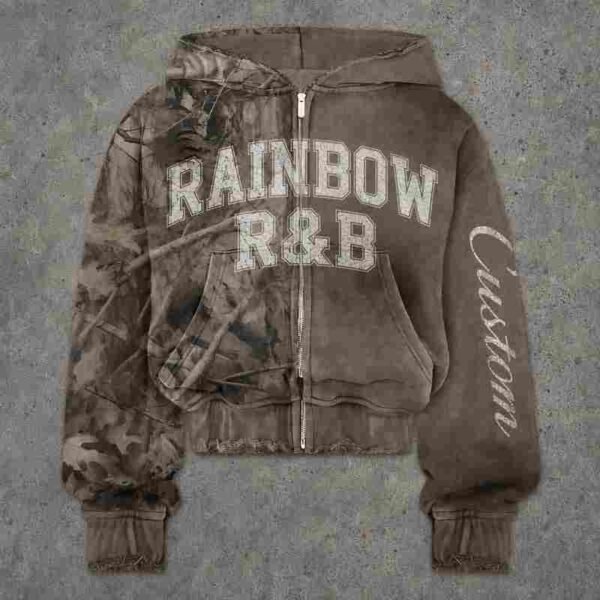


This hoodie concept is defined by a dark camouflage panel treatment, screen-print intent, and a source-referenced 450g cotton blend. The central development risk is not the motif itself, but whether size labels, base measurements, and graded increments describe the same physical garment consistently.
Make the Base Size the Single Reference Point
A graded hoodie range can drift when labels are assigned after measurements are created. Establish one base size first, record every measurement from that sample, and define adjacent sizes through documented increments rather than informal visual scaling.
The base size must include chest, body length, shoulder, sleeve length, hood dimensions, cuff, hem, and closure placement. Once approved, those measurements become the reference against which every label and subsequent size sample is checked.
Separate Label Names From Actual Measurements
A size label is a communication device, not proof of fit. Buyers should specify whether the range uses numeric, lettered, or regional labels, then map each label to finished measurements and permitted tolerances in the technical specification.
This matters especially for a heavy hoodie, where fabric bulk and panel construction can change perceived volume. A consistent label system helps merchandising, packing, and buyer review, but it cannot replace measured garment dimensions or a fit evaluation.
Grade Panels Without Distorting the Graphic
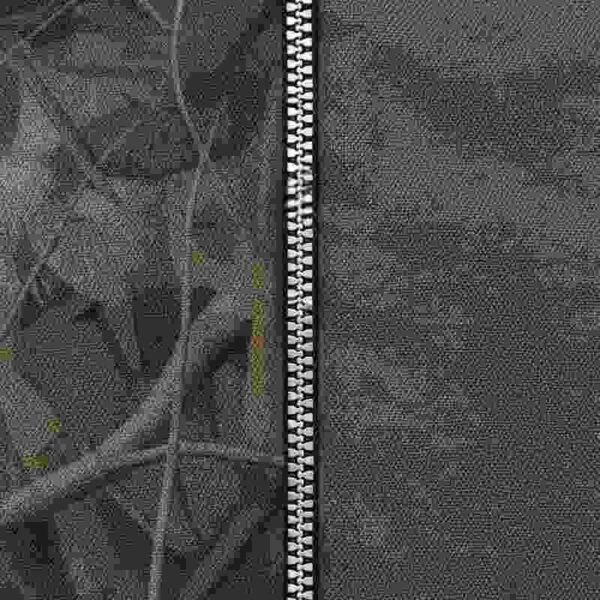
The supplied image shows a dark camouflage-like panel adjacent to another textured surface, with a strong vertical closure line between them. Grading should preserve panel proportion, artwork relationship, and closure alignment as body width and length increase.
Screen-print placement must be checked against each size's pattern pieces rather than copied from one sample. Confirm whether the artwork sits on a dedicated panel, crosses seams, or remains confined to one surface before finalizing print screens and tolerances.
Connect VeeWen's Workflow to Size Governance
VeeWen's product-development workflow should begin with a size architecture review: identify the base size, define label terminology, list point-of-measure locations, and agree grade increments before the pattern is extended to the full range.
At sample review, compare labeled garments with the approved chart and inspect panel balance, hood proportion, sleeve length, and closure position. Record corrections by size so the next pattern revision resolves measurable problems rather than relying on general fit impressions.
Control Heavy-Fabric Assumptions
The source title provides a 450g reference and identifies a cotton blend, but it does not verify percentages or finished specifications. Confirm whether the stated weight refers to fabric, garment, or source nomenclature before using it in a buyer-facing specification.
Heavier fabric can influence seam bulk, hood collapse, cuff recovery, print registration, and grading tolerance. These are development questions, not verified performance claims, so test the selected construction through approved samples and documented buyer comments.
Set the Final Size Approval Gate
The final gate should combine a signed size-label map, approved base-size measurements, grade rules, panel artwork placement, closure details, and a size-set review. Each item should be traceable to a specific revision of the technical pack.
Before production release, the buyer should confirm the material reference, screen-print method, label wording, tolerance policy, and acceptable visual variation. The commercial minimum remains MOQ: 100 pieces per style, while all other commercial conditions require confirmation.
Buyer Questions
How should the hoodie size labels be defined?
Choose one label convention, such as letters or numbers, then map every label to approved finished measurements. Keep that mapping consistent across patterns, samples, packing, and production documents.
Does 450g confirm the fabric GSM?
No. The source wording gives a 450g reference, but its measurement basis is unclear. Confirm whether it means fabric weight, garment weight, or another source convention.
Can the camouflage panel remain consistent by size?
It can be managed through size-specific pattern artwork, placement references, and tolerance notes. Confirm seam relationships and print boundaries before approving screens or bulk artwork.
What should be approved before a size set?
Approve the base size, label map, points of measure, grade increments, panel proportions, closure placement, and material reference before evaluating the complete size range.
Approve the Hoodie Size Architecture
Share the intended size labels, base-size measurements, grade increments, artwork files, and material target so VeeWen can align the technical pack. MOQ: 100 pieces per style applies to production discussion.



Reviews
There are no reviews yet.