


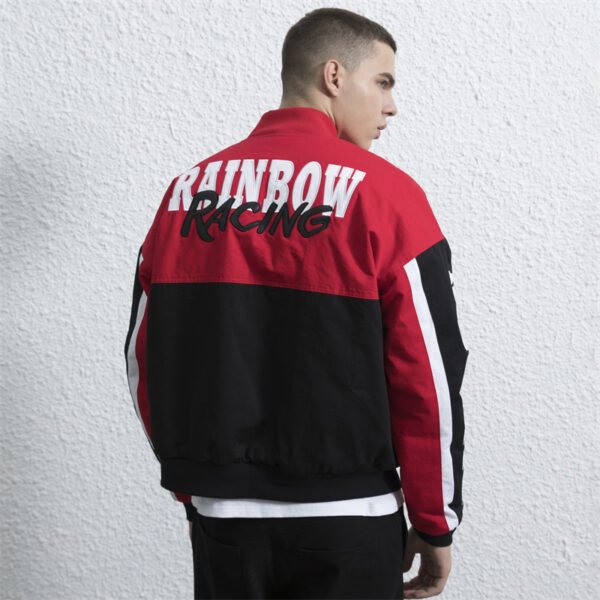




This jacket is developed around a practical streetwear tension: embroidered and graphic details need authority, while the body must still move like a bomber. The supplied image shows decoration distributed across panels, sleeves, pockets, and piping, creating a clear load-management brief for production.
Decoration Weight Starts With Placement
The visual evidence places decoration across the upper chest, both sleeves, and lower pocket areas rather than concentrating every element on one panel. That distribution matters because a heavily loaded chest can stiffen the front and disturb the jacket's natural fall.
For development, VeeWen should translate each visible element into a placement map identifying patch, embroidery, print, piping, and blank-space zones. The objective is not maximum coverage; it is a deliberate balance between recognizable racing energy and enough unburdened fabric to preserve movement.
Sleeve Graphics Need Movement Allowance
The sleeve carries large vertical lettering and curved light lines, making it the most demanding decoration area in the image. Sleeves rotate, bend, and compress repeatedly, so dense stitching or inflexible backing can create drag, puckering, or an awkward collapsed arm shape.
A buyer should approve sleeve artwork with seam relationships, grain direction, and bend allowance clearly marked. VeeWen's sample review can assess whether the graphic remains legible in a natural hanging position, while the wearer bends an elbow and reaches forward.
Contrast Panels Stabilize Visual Density
The jacket's white upper panels and black lower body create a strong visual break between large chest lettering, smaller badges, and lower-pocket graphics. This color blocking gives decoration a controlled field, helping multiple motifs read as a system instead of unrelated applications.
The production risk is seam drift between contrasting pieces, especially where graphics approach the center zipper or pocket openings. The technical file should therefore lock panel dimensions, seam allowances, artwork offsets, and zipper alignment before decoration placement is finalized.
Piping Adds Structure Without Broad Coverage
Narrow light piping outlines the sleeves, pocket edges, and front area in the supplied image. Compared with a fully decorated panel, this linear treatment adds motion and definition with limited surface weight, making it a useful counterbalance to larger patches and chest graphics.
Piping still introduces construction decisions around corner turns, seam intersections, and compression beneath the presser foot. VeeWen should confirm whether the desired effect uses inserted cord, applied tape, printed lines, or another method, because each option changes flexibility and visual precision.
Ribbed Edges Protect the Bomber Character
The ribbed collar, cuffs, and hem visibly anchor the decorated shell and keep the garment recognizable as a bomber rather than a flat graphic overshirt. These elasticized boundaries also frame the body, so excessive decoration should not visually overpower the silhouette's clean termination points.
During approval, inspect how the loaded front and sleeves settle against the ribbed edges. A buyer should check whether decoration pulls the hem upward, twists the cuffs, or causes the collar to sit unevenly when the jacket is zipped and worn over a base layer.
VeeWen Workflow Converts Visual Balance Into Controls
VeeWen should begin with an artwork and construction matrix for this style, separating decoration by technique, panel, stitch or print area, and movement exposure. That matrix turns the image's distributed visual language into measurable sample checkpoints instead of leaving balance to final inspection.
The approval gate is a decorated fit sample reviewed on-body and laid flat, followed by confirmation of backing, thread or ink choices, placement tolerances, and panel alignment. Once those controls are accepted, the 100-piece style minimum can support a focused production brief.
Buyer Questions
What fabric should buyers specify for this jacket?
The source evidence does not verify shell, lining, or insulation content. Buyers should select fabric hand, weight, weather intent, and lining requirements during sampling before approval.
Can the decoration be changed for a private label?
Yes, the development brief can replace visible graphics with buyer artwork, provided each application, placement, backing requirement, and seam relationship is confirmed through sampling.
Why is sleeve decoration a major approval point?
Sleeves bend and rotate more than the body. Dense or rigid applications may restrict movement or distort the sleeve, so artwork scale and backing require on-body review.
What is the minimum order for this style?
The commercial minimum is MOQ: 100 pieces per style. Final quantities, size ratios, colorways, and decoration variations should be confirmed in the purchase specification.
Approve the Decoration and Drape Brief
Send your artwork, target fabric direction, size range, and preferred decoration methods to VeeWen for a placement-led development review and sample approval.


Reviews
There are no reviews yet.