
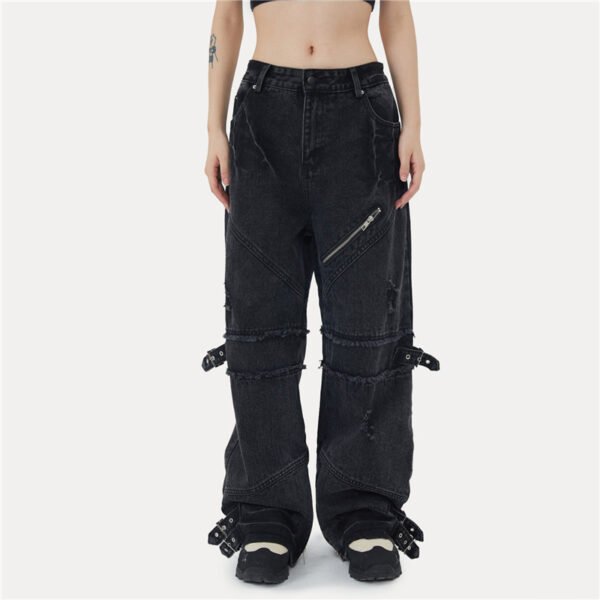



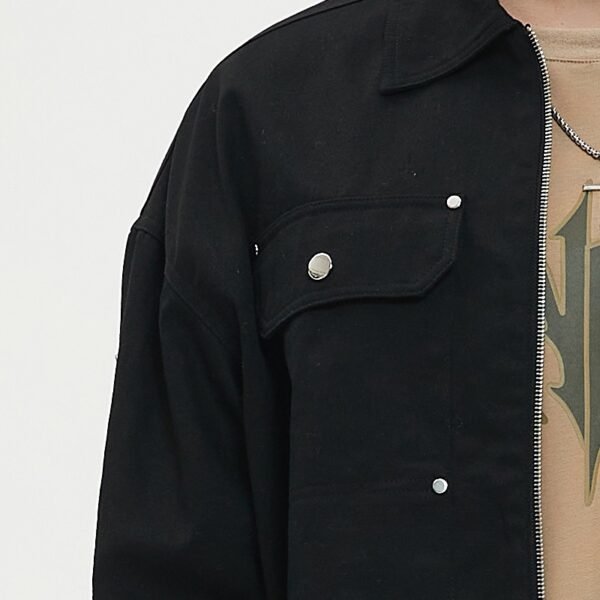
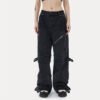




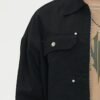
This custom cargo trouser concept uses layered panel construction as its central design feature. The supplied image shows overlapping leg sections, exposed edge treatment, diagonal seam geometry, and adjustable hardware. VeeWen development should control how those layers stack, flex, and remain visually intentional after grading.
Applique Edges Define the Product
The image presents several lower-body layers with deliberately exposed boundaries, including rough-looking panel edges above and below the knees. Those edges create the product's attitude, but uncontrolled turnback, seam allowance, or fraying could make the silhouette appear accidental instead of engineered.
VeeWen should establish an edge-control map for every applique boundary, specifying whether the sample uses clean topstitching, secured raw edges, controlled abrasion, or another finish. The approval target is consistent visual irregularity, where variation feels designed while stress points remain stable during wear.
Layer Bulk Must Follow Body Movement
The trousers build volume through stacked sections rather than one uninterrupted leg. The photographed design shows distinct upper, knee, and lower-leg zones, so each additional layer can change bending comfort, drape, and the apparent width of the finished garment.
Development should assess bulk at the knee, seat, and hem while the wearer walks, sits, and climbs stairs. A visually strong sample may still need thinner supporting layers, reduced seam overlap, or localized easing if the construction restricts flexion or causes the leg to twist.
Panel Geometry Controls Proportion
Diagonal seams across the upper legs visually direct attention toward the zippers and create a tapered transition into the knee sections. This geometry is not decorative only; it determines how the leg appears divided and where layered thickness becomes most noticeable.
The pattern team should lock key seam angles against the approved size sample before grading. If angles expand unevenly across sizes, the pockets, zippers, and applique edges may drift out of alignment, weakening the intentional architecture visible in the supplied reference image.
Hardware Adds Weight at Critical Zones
The image shows metal-look zipper details near the upper legs and buckle-style straps near the knees and hems. These elements reinforce the utility character, yet they add localized weight that can pull layered panels away from the body or distort edge alignment.
VeeWen's sample review should check hardware anchoring, backing, and placement relative to seam intersections. Buyers should approve whether the hardware remains tactile and prominent or is reduced for lighter wear, lower component complexity, and cleaner movement through the leg.
VeeWen Workflow for Edge Approval
For this product, VeeWen's workflow should begin with a construction board showing each layer, edge treatment, seam overlap, and hardware position. The first prototype should isolate bulk and edge behavior before decorative abrasion is finalized, keeping the technical decision visible and measurable.
The buyer checkpoint is a fit-and-construction review using front, side, seated, and walking views. Approve the sample only when the applique edges retain their intended character, the leg remains mobile, and hardware stays aligned without collapsing the layered silhouette.
Commercial Specification Checkpoint
Because the source wording references cotton twill but does not provide composition, weight, or performance data, material selection remains an open development variable. Fabric hand, recovery, and thickness will directly influence how much layered construction the trouser can carry.
Before production approval, the buyer should confirm the fabric specification, wash direction, edge finish, hardware package, size grading, and acceptable abrasion range. The commercial decision is whether the approved balance delivers recognizable layered utility without unnecessary bulk or uncontrolled visual wear.
Buyer Questions
Is the cotton twill composition verified?
No. Cotton twill appears in the source wording, but percentages, weight, stretch, finishing, and performance should remain To Confirm during material approval.
What should buyers approve first?
Approve the layered edge map, knee mobility, lower-leg bulk, and hardware placement first, because these variables define both the visual identity and wearing behavior.
Can the abrasion be adjusted?
Yes, the abrasion range can be developed as a controlled appearance decision, but buyers should approve placement, intensity, repeatability, and acceptable variation before bulk production.
What is the minimum order quantity?
The exact commercial minimum is MOQ: 100 pieces per style. Final quantities, component sourcing, and development requirements should be confirmed within the quotation and approval process.
Approve the Layered Construction Direction
Send VeeWen your target measurements, fabric references, hardware preferences, and edge-treatment expectations. The next checkpoint is a sample review focused on mobility, layer bulk, applique consistency, and proportion across the approved size range.


Reviews
There are no reviews yet.