


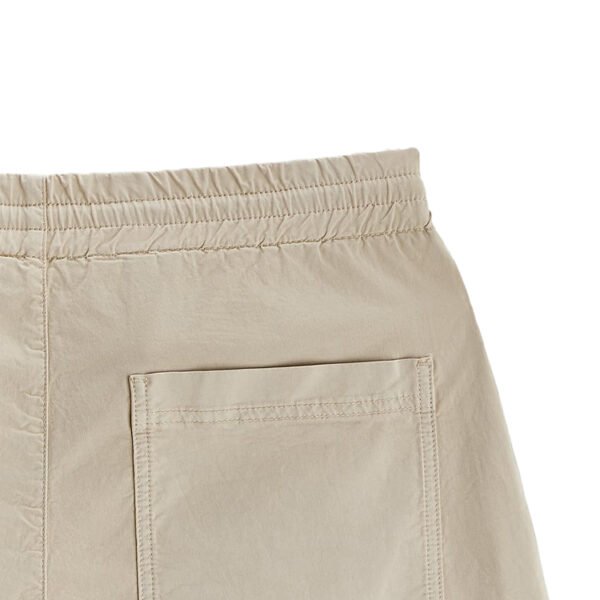

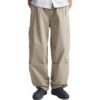

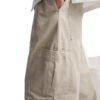

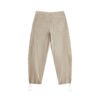

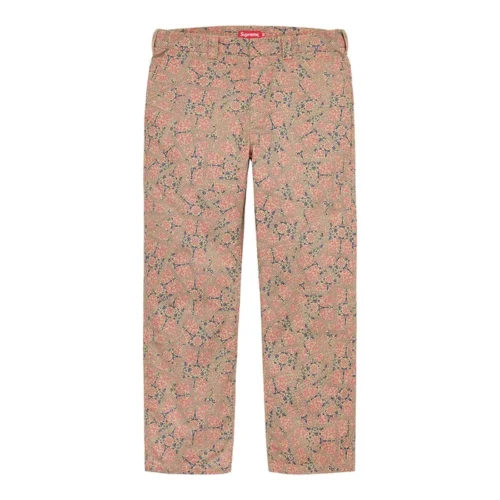
This wide-leg utility pant is developed around stable ground fabric and controlled embroidery density, so pocketed panels retain shape while decoration stays legible. The supplied image shows a straight, relaxed silhouette, articulated lower-leg seams, side cargo pockets, and a muted light beige colorway suited to workwear-led private labels.
Embroidery Density Controls Surface Flatness
Embroidery density matters where decorative stitches meet broad, moving panels. Dense fill can concentrate tension, draw cloth inward, or expose puckering after laundering. The expansive thigh and knee areas therefore require calibrated stitch count, underlay, and backing before approving logo placement.
Base-fabric stability controls whether embroidery remains flat as the wearer bends, sits, and carries tools. The pictured trousers use large uninterrupted leg surfaces beside seamed cargo pockets, making grain alignment and recovery important. A fabric trial should compare stitch spread, seam distortion, and post-wash appearance.
Articulated Panels Change the Decoration Map
The visual pattern uses a roomy leg with horizontal articulation around the knees, creating movement through joined panels rather than a narrow tailored block. Each added seam interrupts fabric continuity, so embroidery should avoid seam allowances and be positioned after the graded pattern is frozen.
The trade-off is clear: heavier stabilisation can protect dense decoration but may add stiffness or a visible backing shadow. A lighter treatment preserves drape yet increases distortion risk. Approve the balance only after reviewing decorated and undecorated swatches on the intended base fabric.
Cargo Pockets Create Localised Tension
Side cargo pockets are prominent functional features, with rectangular faces and flap-like upper edges visible on the outer thighs. Their volume changes local weight and can pull the leg outward. Decoration near these pockets must respect opening lines, pocket bags, and reinforcement zones.
Tooling-focused styling invites practical loading, but pocket fullness can magnify embroidery misalignment during wear. Keep dense motifs on stable pocket faces or upper leg zones, while reserving flexible areas for lighter marks. Confirm pocket dimensions after laundering, not only on the flat sample.
VeeWen Workflow Turns the Axis Into Tests
Within VeeWen's development workflow, this style should begin with a measurement-led pattern review that maps leg articulation, cargo pocket boundaries, and proposed embroidery fields. The development team can then build a fabric-and-stitch test panel using the actual seam intersections before approving the first complete sample.
Sample review should record stitch density, backing behavior, grain movement, and visual registration across sizes. Grading can shift pocket edges and embroidery scale, so the approval checkpoint is a size-set comparison that confirms the motif remains balanced without compromising movement or pocket access.
Fabric Handfeel Requires a Deliberate Compromise
A stable woven base supports crisp decoration and structured pockets, yet excessive firmness can reduce the relaxed character shown in the image. A softer base improves comfort and drape but may demand lower stitch density. The final handfeel depends on fabric selection, embroidery coverage, and finishing.
Color also influences perceived density: the light beige ground makes dark thread contrast highly visible, while tonal embroidery would look quieter and conceal minor variation. Request contrasting and tonal stitch trials, then select according to the label's visual hierarchy and target wear context.
Approval Depends on Decorated Wear Samples
Approve this pant when the decorated fabric panel stays flat through bending, the knee articulation remains clean, and cargo pockets hold their intended profile. The image supports the silhouette and pocket direction, but embroidery performance still requires physical validation against the selected base cloth.
Buyer sign-off should cover motif scale, stitch density, backing removal, pocket clearance, and wash appearance in the graded size range. If the fabric cannot support the planned coverage, reduce density or relocate decoration before committing the production pattern.
Buyer Questions
Where should embroidery be placed on these utility pants?
Prioritise stable upper-leg or pocket-face zones, avoiding seam allowances, pocket openings, articulated knees, and areas experiencing repeated bending or loading.
Can dense embroidery work on a softer woven base?
It can, but stitch count, underlay, backing, and motif scale may need reduction to preserve drape and prevent puckering after laundering.
Why test embroidery across multiple sizes?
Grading changes panel dimensions, seam relationships, and pocket positions, so a motif that works on one size may appear shifted or crowded elsewhere.
What is the commercial minimum for this style?
VeeWen's exact commercial minimum is MOQ: 100 pieces per style, subject to final specifications, approved development details, and production confirmation.
Approve the Embroidery and Pattern Map
Send your artwork, target fabric direction, size range, and pocket requirements for a focused development review. VeeWen can align stitch testing with pattern approval before you commit to MOQ: 100 pieces per style.



Reviews
There are no reviews yet.